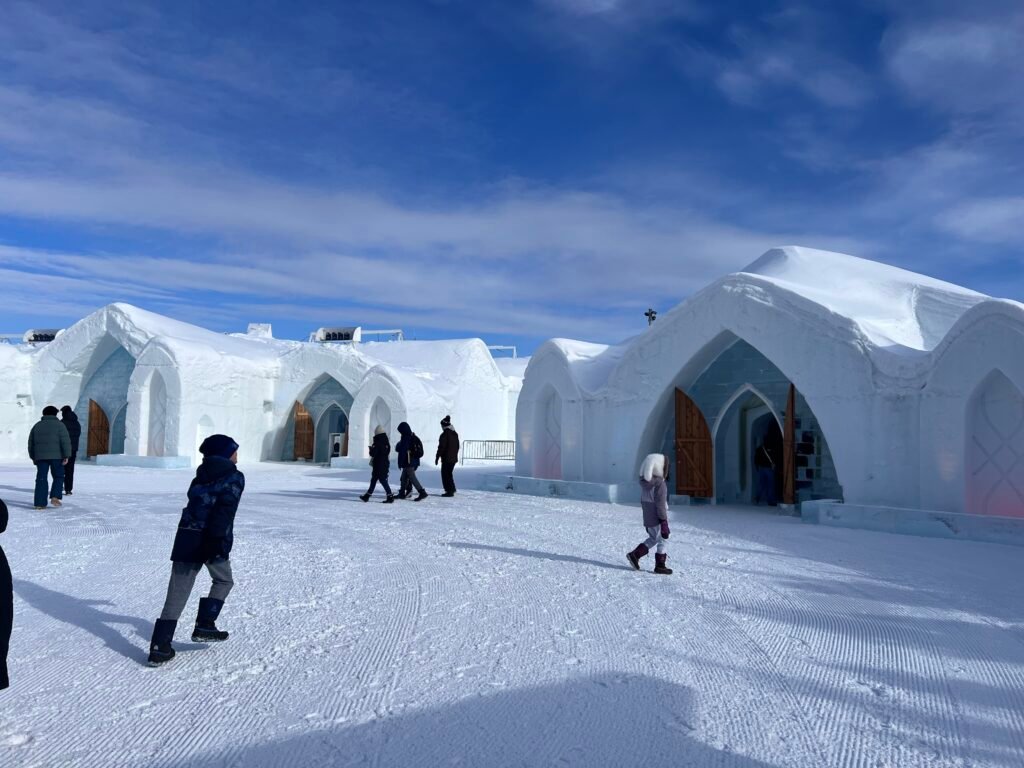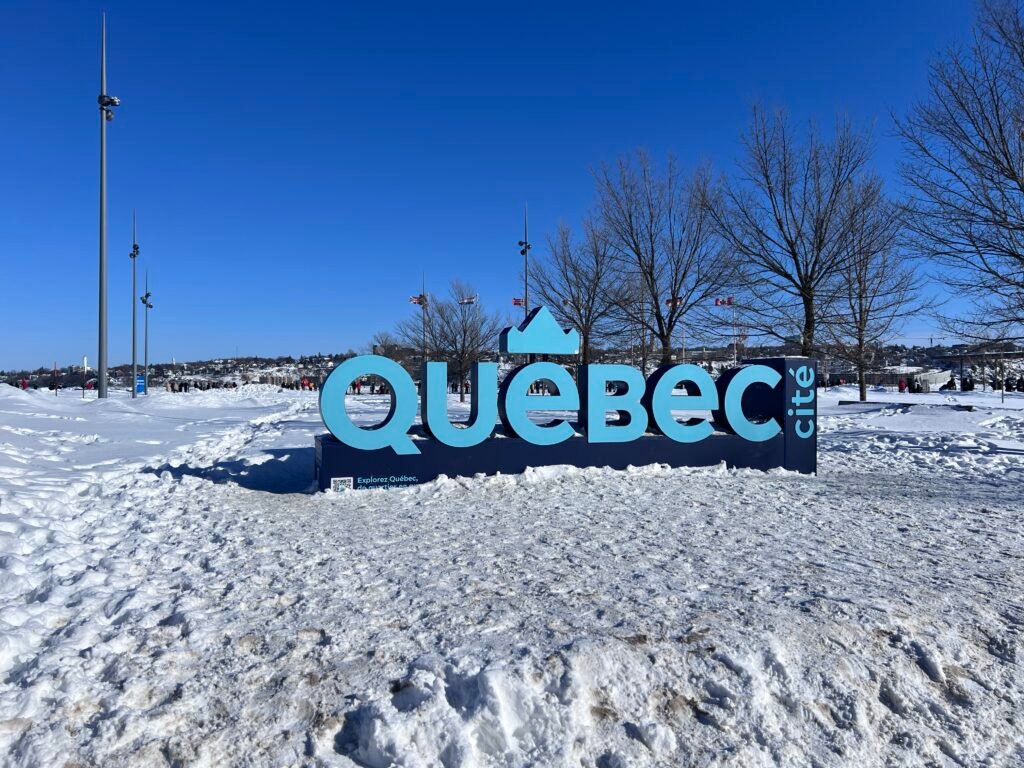
Negative fifteen degrees celcius with wind chill making it feel even colder, and I’m standing outside with hundreds of other people, in the cold, to see Bonhomme’s Ice Palace. A few kilometres away, another crowd is queuing for the toboggan slide at Dufferin Terrace. Tomorrow, I will watch grown adults willingly dive into a snowbank wearing nothing but a swimsuit. I’m not brave enough to participate in that one.
The Québec Winter Carnival is one of the clearest examples of a city turning its biggest weakness into one of its smartest economic assets. While many destinations struggle through winter, Québec City has spent decades transforming cold weather into a tourism product that attracts hundreds of thousands of visitors every year.
In February, the middle of Canadian winter season, Quebec City was very much alive. If you ignored the jackets and winter accessories we had on, you could easily believe this was peak summer season.
Table of Contents
- Winter Should Have Been a Problem for Québec City
- The Start of Québec Winter Carnival
- Quebec Winter Carnival Revenue Stream
- Quebec City Hotels and Restaurants Love Carnival Season
- The Multiplier Effect Behind the Festival
- Logic Behind the Carnival Pass Pricing
- Québec Winter Carnival’s Advantage Over Other Winter Festivals
- The Role of Culture, Place, and Bonhomme
- The Biggest Threats to the Carnival’s Future
- What Other Cities Can Learn From Québec City
Winter Should Have Been a Problem for Québec City
Before the carnival became the global winter attraction it is today, winter posed a real economic challenge for Québec City. Cold-weather cities often face what tourism experts sometimes call a seasonal slump. Visitors stop coming, hotel rooms are empty, restaurants see fewer customers, and public spaces quiet down. Québec City had an added challenge, much of its economy outside tourism depended heavily on government work. That meant the city was particularly exposed during the long winter months. Hotels still had to cover their fixed costs, restaurants still had to pay staff and keep the heat on, but far fewer visitors were coming through. The winter decline was quite expensive for the city.
The Start of Québec Winter Carnival
In 1954, a group of local businesses came together to relaunch the winter carnival with a goal of boosting the local economy and reviving the tradition of winter festivities. The first edition of the Québec Winter Carnival was in 1955. Historical reports actually show that the tradition of celebrating during this period had been around long before then. The first major winter carnival in Quebec was held as far back as 1894!
By today’s standards, the first edition was modest, but the core idea remains the same; instead of treating winter as a season to survive, Québec City could turn it into a reason to visit. What began as a local winter celebration evolved into one of the largest and most recognizable winter festivals in the world.
Quebec Winter Carnival Revenue Stream
The Québec Winter Carnival may feel like pure fun on the surface (it was indeed a lot of fun), but economically it is a very smart machine. For roughly 10 days each February, the city receives a huge surge of visitors bringing money into the local economy from multiple directions. The biggest revenue buckets are accommodation, food and beverage, transportation, ticketed events and carnival passes, and sponsorship. That is before you even get into the wider ripple effect on the city.
Quebec City Hotels and Restaurants Love Carnival Season
Hotels
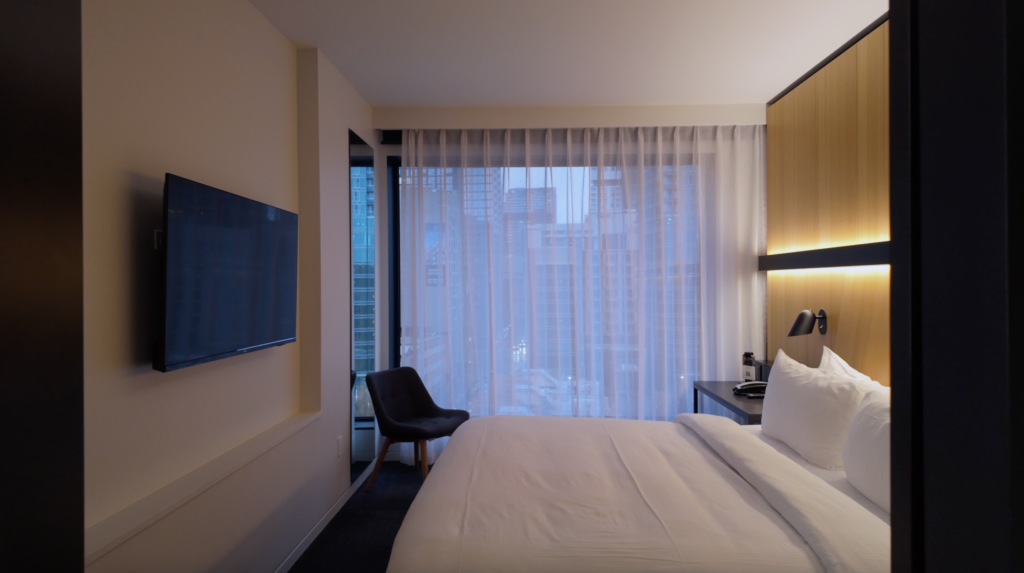
Accommodation is one of the most visible beneficiaries from the winter carnival. Most of the people that attend come from outside of the city and outside of the country. During carnival season, hotel demand rises sharply. Rooms that might be difficult to fill in an ordinary February suddenly become much easier to sell, often at higher prices. Winter would otherwise be one of the hardest times of year for hotels in a city like this but the carnival turns that weak season into a period of strong demand. That kind of event-driven demand gives hotels real pricing power.
Restaurants
The same logic applies to restaurants. Winter can be tough for food businesses in cold-climate cities. Carrying staff and staying open during slow months is expensive. Carnival changes the equation. Instead of facing weak winter demand, restaurants in Old Québec suddenly deal with packed dining rooms, long wait times, and waves of visitors looking for warm food and drinks between events. For some businesses, those ten days can become one of the most important periods of the year.
The Multiplier Effect Behind the Festival
The carnival’s economic impact is not limited to official festival spending and this is where the multiplier effect comes in. A tourist might spend money on a hotel room. That hotel then pays staff, those staff spend money locally, nearby cafés, transport services, shops, and suppliers all benefit from the increased activity. The same thing happens across the city. Airports and train services see more traffic, taxis and rideshares get more customers, car rentals sell out, retailers benefit from festival crowds, nearby attractions get spillover visitors. So even spending that does not go directly to the carnival still exists because the carnival created the reason for the trip. This is part of what makes the event such a strong economic engine.
Logic Behind the Carnival Pass Pricing
One of the smartest parts of the carnival model is its pricing strategy. The carnival pass, often called the effigy, is priced to be accessible rather than exclusive, and that is important. If the event were priced too high, it would become more of a niche luxury product, and niche products do not create the same broad economic impact. The carnival does not maximize value by charging each visitor as much as possible. Instead, it benefits from getting as many people into the city and into the ecosystem as possible. That means more hotel bookings, more restaurant spending, more activity across local businesses, more repeat interest and future tourism.
Québec Winter Carnival’s Advantage Over Other Winter Festivals
Lots of cities host winter events, but only a few manage to turn them into something this economically powerful. Québec City’s carnival works because several things come together at the same time, and they reinforce one another.
1. Strategic timing
The carnival takes place in early to mid-February, which is a very smart window. The excitement of New Year’s has already faded, but spring break has not started yet. That creates a gap in the travel calendar that the carnival fills perfectly. It is also a time when Québec City is reliably cold enough to feel like a real winter destination.
2. Scale
This is one of the biggest reasons the festival succeeds. Small winter festivals can be enjoyable, but many do not justify a long trip or a multi-night stay. Québec’s carnival does. There are enough activities, enough variety, and enough energy to make people feel a longer trip is worth it, and that changes the economics dramatically. A visitor staying several nights spends much more than someone making a quick day trip.
3. Cultural authenticity
This may be the hardest advantage to copy. Québec City already feels unique within North America. Its architecture, French-speaking culture, historic streets, and fortified old town create an atmosphere that feels real rather than manufactured. The carnival fits naturally into that setting. It does not feel like a generic winter event dropped into an empty parking lot. It feels tied to the city’s identity, and that authenticity makes the whole experience stronger.
4. Infrastructure advantage
Québec City has had decades to build infrastructure around this event. Public spaces, parade routes, winter logistics, hotel capacity, and city-wide familiarity all help the carnival operate at a scale that newer festivals struggle to match. The city also benefits from long-term brand recognition. After many decades of media coverage and tourism promotion, the carnival has become part of Québec City’s global winter identity.
5. Government support
Government funding often raises eyebrows, but in this case the business case is fairly clear. When an event generates major visitor spending, strong hotel demand, restaurant revenue, and tax activity, public support can function less like a subsidy and more like an investment. The carnival is not simply being kept alive. It helps produce the economic activity that justifies continued support.
The Role of Culture, Place, and Bonhomme
One of the most fascinating parts of the Québec Winter Carnival is how effectively it blends economics with culture. A lot of the festival’s appeal comes from things that are not easy to measure but are still incredibly valuable. Take as an example, Bonhomme as a recognizable symbol, local traditions like the snow bath, the parade moving through centuries-old streets, the feeling that people here are not just enduring winter, but celebrating it. Bonhomme, especially, is more than a mascot, he is a branding asset. He gives the festival continuity, personality, and emotional familiarity across generations. That kind of cultural symbol is hard to manufacture, and even harder to replace.

The Biggest Threats to the Carnival’s Future
For all its strengths, the carnival is not invincible and some factors pose a threat to its sustained existence
Climate change
This is probably the biggest long-term risk. The festival depends on real winter. Snow, ice, and freezing temperatures are not optional extras, they are central to the experience. If winters become warmer and less reliable, some of the carnival’s biggest attractions become harder to sustain.
Competition
Other winter festivals continue to grow, both in Canada and internationally. Québec City still has a strong edge in atmosphere and authenticity, but it cannot assume that advantage will last forever without ongoing reinvestment and innovation.
Overtourism
Success also creates its own problems. Old Québec was not built for the scale of modern festival crowds. If the event becomes too crowded or too commercial, there is a risk of weakening the local character that makes it special in the first place. That balance between growth and authenticity will be important going forward.
What Other Cities Can Learn From Québec City
The biggest lesson here is not just about one festival, it is about how a city chooses to respond to its disadvantages. Every city has some version of an off-season, a weak period, or a condition that seems like a liability. The easy response is to endure it and wait for better months. Québec City chose something else. It took one of its hardest conditions, and turned it into identity, demand, and revenue.