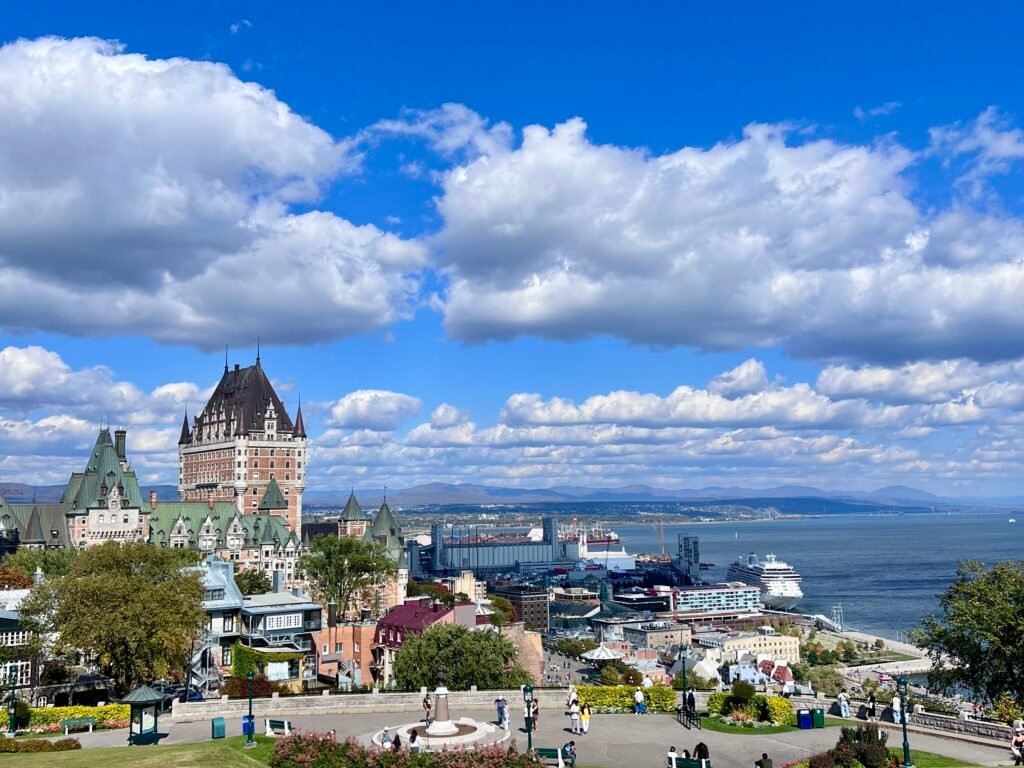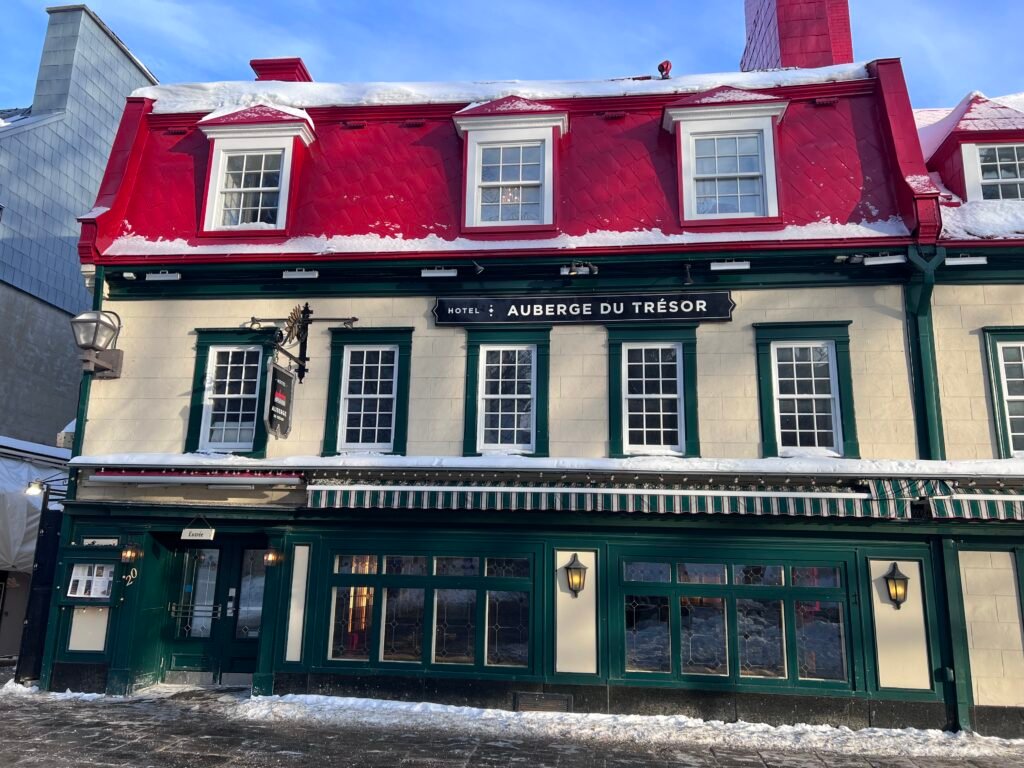
Right next to one of the most famous hotels in Canada is a much smaller competitor. On one side, there is Fairmont Le Château Frontenac, a grand landmark with more than 600 rooms, global brand recognition, and full-service luxury. On the other, there is Auberge du Trésor, a tiny 22-room boutique hotel tucked into the historic heart of Old Québec.
Traditional hotel logic says bigger usually wins. Bigger hotels have more rooms to sell, larger marketing budgets, stronger buying power, and more amenities. So how does a 22-room independent hotel survive, and even thrive, right next to one of the most iconic hotels in the world?
Auberge du Tresor has 22 rooms; right next door is Fairmont Le Château Frontenac with more than 600 rooms. When I was booking during Quebec’s Winter Carnival, the Fairmont still had rooms available. Auberge du Trésor was sold out. And yes, I know the number of room differential partially offers a partial explanation for this. I eventually stayed here for $284 a night. Not the cheapest- budget chain hotels were around $200, also not the most expensive either- the Fairmont was more than triple the price.
The Heritage Advantage
First thing you notice when you arrive is that the building is old. Like, really really old. You can’t just decide to build another 17th-century stone building in Old Quebec. Heritage rules basically freeze supply. So there will only ever be a limited number of historic boutique hotels like this. Chains can build another property somewhere else, but they can’t replicate this. That scarcity quietly creates pricing power.
Yes, maintaining stone walls and heritage features is expensive. Renovations take longer, approvals are stricter. But guests are willing to pay a premium for the feeling of staying somewhere with history, and that premium adds up over the year. In other words, the building itself is part of the business model.
Room Tour
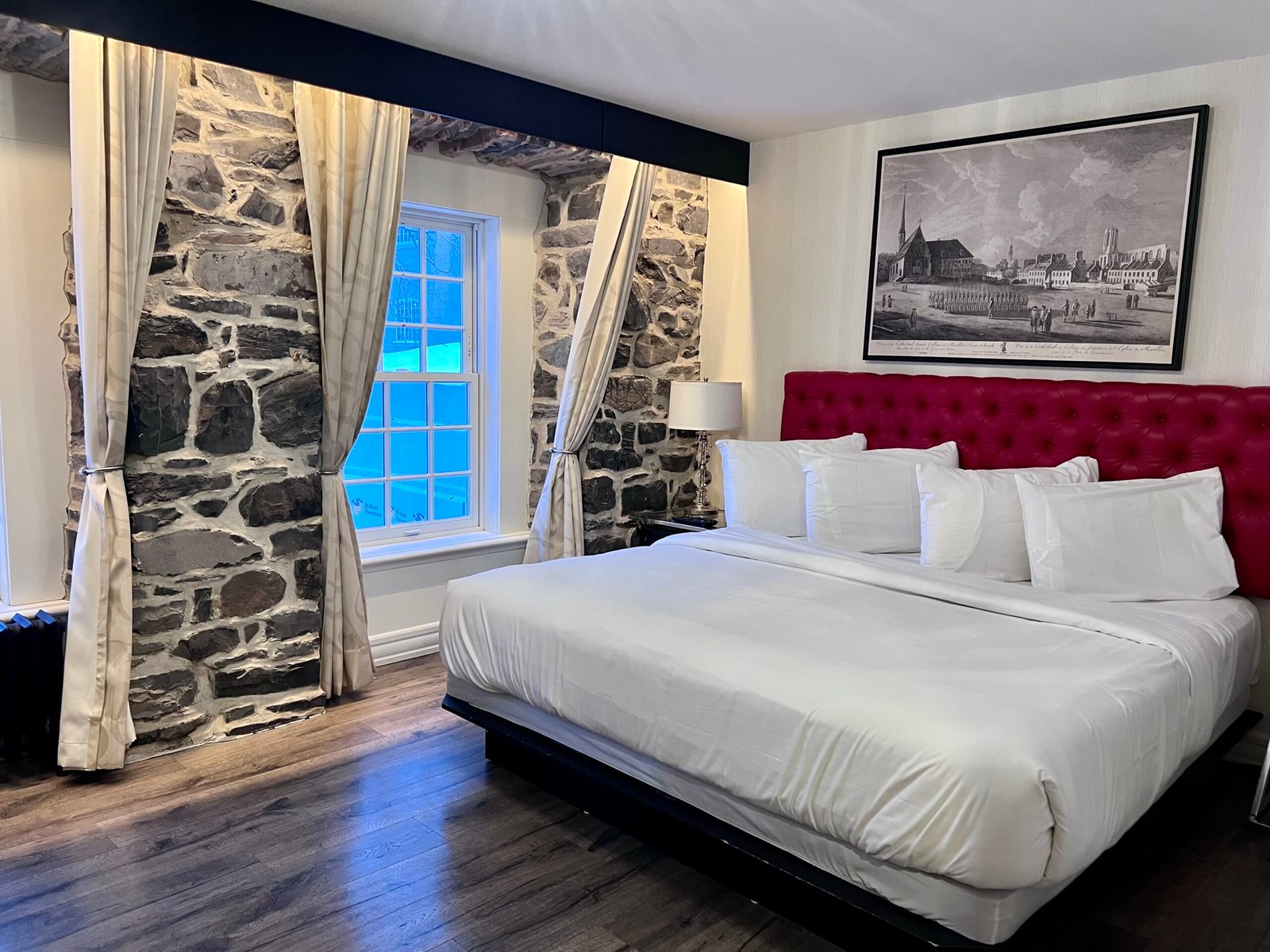
For the room, you get a comfortable bed, nice linens, stone walls, a small but well-done bathroom and a lot of character. Now, they do have the basics; there’s a minibar fridge, a desk phone, a TV. But the TV isn’t some massive seventy-inch screen that costs a fortune to mount and maintain. It’s appropriately sized. There’s no elaborate in-room safe with digital keypads and IT infrastructure. No complex entertainment systems with twelve remotes. No automated everything- curtains, lighting, climate control tied to apps. At first glance it might seem simple, but it’s actually intentional. They invested where it matters: a really good bed, quality linens, maintaining these incredible heritage features.
The window frame is over three hundred years old. You can’t buy that at IKEA. And they also avoided the amenity arms race. Chains keep adding features because competitors have them, not because guests actually want them. This hotel focused on what people actually remember about their stay. The comfort of the bed and the character of the building. Not whether the TV was five inches bigger.
How the Business Model Works
Let’s talk about what’s happening behind the scenes.
Independent- No Franchise Fees
It’s an independent hotel, ad because they’re independent, they’re not sending a slice of revenue to a global brand every month. That alone can mean keeping a meaningful chunk of income that chains would normally pay in royalties and marketing fees. For a small property, that matters a lot.
Lean Operations
The team is small so decisions happen quickly. If something needs adjusting, whether pricing, guest requests, or little operational tweaks, it can happen immediately. Compare that to a large hotel with layers of management.
Strategic Simplicity
But notice what they don’t offer. No big conference facilities, no pools, no sauna, no gym. Those things are incredibly expensive to build and run, and only a portion of guests actually use them. Honestly, if you are already walking up and down the hilly streets of Old Quebec, you probably don’t need a gym while you’re there. So instead, they’ve made a deliberate choice to focus on travellers who don’t need those amenities. By narrowing the offering, they are able to keep costs under control without lowering perceived value.
Lower Break-Even Pressure
Here’s a subtle but important point. To cover costs and break even, a 22-room hotel doesn’t need that many guests each night. A 600-room hotel needs hundreds. That difference reduces pressure during slower periods, especially in shoulder seasons. It’s easier to fill a small number of rooms consistently.
Knowing Exactly Who They Serve
This place isn’t trying to be everything. It’s clearly aimed at couples on romantic getaways, culture-focused travellers, people who want atmosphere over amenities. They are not targeting large tour groups or people here on business conferences or luxury amenity seeker. By being specific, they become the obvious choice for the group they want to serve. Meanwhile, large hotels have to serve a much broader audience.
The Fairmont tries to serve everyone (well, everyone with a lot of money to spend). This boutique serves one segment extremely well.
The Tradeoffs
Of course, it’s not all upside. There’s a natural revenue ceiling; you can only sell so many room nights. They’ll never be a $50M property. Owner makes a comfortable living but is probably not building an empire. Staffing is also less flexible. If someone calls in sick, it’s felt immediately. I think I saw just one cleaning staff while I was there. Because technology is simpler, there’s no big loyalty ecosystem driving repeat bookings.
Also, small properties are more exposed to tourism swings. If carnival or summer tourism drops, Fairmont with diversified revenue from conference facilities or restaurants can absorb. Auberge faces concentrated risk and would get a harder hit. These are real vulnerabilities. The model isn’t perfect.
The Takeaway
What’s happening here isn’t really a competition between Auberge du Trésor and the Fairmont. It’s two entirely different businesses operating in the same neighbourhood with different models, different guests, and different definitions of success. The Fairmont can’t replicate a 300-year-old stone building, an owner who knows your name, or the decision-making speed that comes with a small operation. The boutique can’t replicate the Fairmont’s pool, its point system, its conference capacity, or its brand recognition on every continent.
If you want pools, points, and full-service luxury, the Fairmont makes obvious sense. If you want character, intimacy, and a sense of being somewhere that has actually been somewhere for a long time, the boutique delivers that. Both hotels can sit side by side and both be successful precisely because they’re not trying to do the same thing.