How two neighbouring Ontario towns with similar architecture, natural features and shared history developed very different economic trajectories.
In Wellington County, Ontario, there are two towns less than ten minutes apart that have a lot in common yet are still very different. Elora and Fergus share a deeply connected history and feature the same Grand River and 19th-century limestone architecture, but on a summer weekend, a walk down the main street of each would encounter two very different realities. Charles Allan, whose company eventually built Elora’s dam, mill, store and first Victoria Bridge in 1843, was originally from Fergus. He had helped build some of Fergus’s first houses before crossing over to Elora because he saw more opportunity there. Today, Elora has become Centre Wellington’s tourism engine, while Fergus remains a more diversified small-town economy.
In exploring destination development, investment and place-based economics, a central question is understanding what happens when a community turns its identity, culture and geography into an economic engine. Taking a closer look at these communities, how did Elora reach this level of tourism success, and can Fergus replicate some of that success?
A successful tourism destination often starts with something economists and destination marketers call a sense of place. In simple terms, that’s the combination of history, landscape, architecture and community stories that makes somewhere feel distinctive. Elora has plenty of this, with the gorge, the cliffs of the Grand and Irvine Rivers, the Quarry, historic limestone buildings and preserved 19th-century architecture being main highlights of the town.
However, Elora didn’t just have beautiful things for people to look at; it eventually developed places where visitors could stay and build an experience around the destination. The most popular example is the Elora Mill Hotel, and this single hospitality investment in the town changed the economic trajectory of the town. Fergus also has many of the same underlying assets. It has the same Scottish heritage as Elora does, limestone architecture and the Grand River. But historically, it developed as the larger industrial centre of the region, with an economy built more around manufacturing, agriculture, healthcare and retail.
Centre Wellington’s own 20-year Economic Development & Tourism Strategy report recognizes this imbalance. The strategy notes that the township attracts significant numbers of day-trippers, particularly to Elora, drawn by the Grand River and Gorge, charming downtowns and festivals. The municipality is now actively trying to spread more of that tourism spending between Elora and Fergus.
The Anchor Asset That Transformed Elora
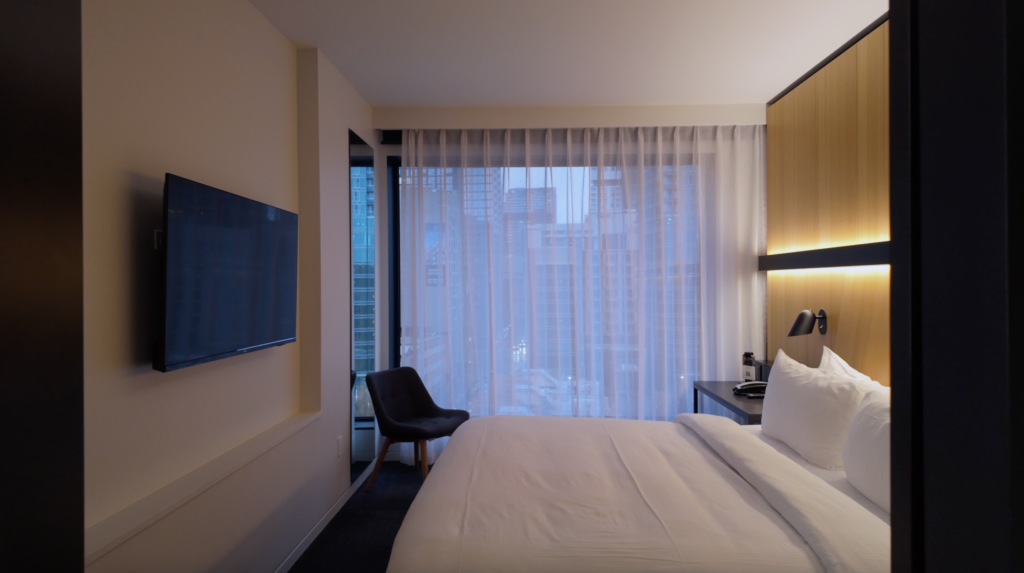
The building that now houses the Elora Mill Hotel dates back to the 1830s, when it was originally built as a gristmill. Over the following decades, the property morphed through various uses. First as a gristmill, then it became a sawmill, a flour mill, a wool factory and a distillery. It was rebuilt after a fire in 1859, became a hotel in the 1970s and eventually closed and went bankrupt in 2010. The Pearle Hospitality Group acquired the property in 2010, renovating it into a 30-room, four-storey luxury hotel and spa that reopened on July 6, 2018, turning the tiny town of Elora into a full-fledged luxury destination. This single act by a renowned hospitality group was a signal to the market that Elora was worth investing in as an overnight destination, and a huge bet on what Elora could become.
The economics of an overnight visitor are quite different to those of a day guest. If you visit Elora for the day, you might walk through the gorge, visit the quarry, walk through downtown, grab lunch, buy a coffee or ice cream and visit a few shops before driving home. For an overnight guest, there’s the hotel bill, an additional meal and maybe drinks that are purchased, perhaps a spa treatment, and then another coffee the next morning. A visitor who stays longer has more opportunities to spend money locally. The government of Ontario recognized that potential when the Elora Mill project was being developed, projecting 110 new jobs, transformation of Elora into a year-round tourism destination, expanded conference and luxury tourism, and increased overnight visitation.
Multiplier Strategy of Tourism Spending
Once visitors start staying overnight, the economic impact doesn’t stop at the hotel. The money moves not just at the hotel; restaurants, cafés, galleries, gift shops, and boutiques all benefit. Weddings and corporate events being hosted at the hotel also pave the way for photographers, florists, wedding planners, musicians and event-rental companies. Construction also benefits from hotel renovations, condominium development and heritage restoration. Even agriculture becomes part of the system when restaurants source from farms in Wellington County. One single visitor can therefore create a chain of transactions across the local economy.
Employment changes as well. Tourism has created job categories in Elora that barely existed twenty years ago, including hotel operations, spa services, culinary careers, event and conference management, outdoor recreation, arts administration and destination marketing. According to Centre Wellington’s 20-year economic strategy, Accommodation & Food Services was one of the fastest-growing sectors in the township, increasing by 83%, or 657 positions, since 2015.
The Diversification Question
Fergus, although not as successful as Elora in terms of tourism, has a different economic model, and arguably has something Elora doesn’t have to the same degree: diversification. Its economy is focused more on manufacturing, industrial employers, agriculture, healthcare, retail, and local services, which means it is exposed to a different set of risks. Elora has more upside as tourism grows, but an economy more exposed to tourism is also more susceptible to changes in visitor demand. Fergus’ broader employment base makes it less dependent on whether tourists show up on a particular weekend. Elora’s success comes with costs, which raises an uncomfortable question: Should Fergus even want to become Elora?
Tourism success sounds great theoretically, and economically, it can be great. But what happens when the strategy works too well?
Elora now has to deal with overtourism, parking pressure and housing affordability concerns. The township’s strategy specifically acknowledges the need to balance tourism growth against community needs. The 2024 Christmas Market provides a useful example. A local investor invested around $300,000 into marketing the initiative and destination. Although winter visitation that year surpassed summer visitation, which sounds like an enormous success, the volume of visitors became so high that local businesses and infrastructure were overwhelmed.
Managing tourism flow becomes a more important strategy as visitors flock more to a destination.
Manufacturing Destination Gravity
Centre Wellington’s current strategy is to spread Elora’s tourism gravity into Fergus. Its strategy says that while Elora has strong brand recognition, Centre Wellington wants to promote Elora and Fergus as a unified destination and disperse tourism income between the two communities more equally.
This is in fact not a new idea. The joint Elora & Fergus Tourism brand dates back to a 2017 Regional Tourism Organization 4 report that was also looking to re-engineer the two-town brand into a high-impact destination marketing and management organization. This experiment has been running for years, yet almost a decade later, the imbalance still exists.
Can destination gravity actually be manufactured, and how do you move tourists from one town to a neighbouring one?
The township has developed some pretty concrete ideas for its goal to manufacture destination gravity in Fergus. One recommendation is to expand the Elora-Fergus Downtown Shuttle and pilot a service connecting the two downtowns to primary visitor markets. In other words, physically move visitors between the towns. Another recommendation is to activate the Fergus Grand Theatre as a tourism asset, suggesting that Fergus already has an asset that could become a tourism anchor, but it hasn’t yet become the kind of draw that the Elora Mill became. The strategy also recommends placemaking projects connecting Fergus, Elora and Belwood and investigating a dedicated destination brand separate from the municipal corporate brand. The broader ambition is clear: increase collaboration between Elora and Fergus and distribute tourism more evenly across the township and throughout the year.
The strategy isn’t just about marketing. Centre Wellington is also building the system to finance and measure tourism. Recommendations include a Municipal Accommodation Tax, a Destination Management Organization, as well as enhanced data collection, including continued mobile visitor analytics through RTO4 and exploring point-of-sale data to track visitor spending.
These are actually fantastic plans, because if you’re trying to redistribute tourism, you eventually need to know whether you’re actually doing it.
Are people visiting Fergus? Are they spending money there? How long are they staying? Where are those dollars going?
The township is essentially building the measurement system needed to answer those questions.
The Reality in Fergus
It’s not all doom and gloom in Fergus. Fergus currently has key infrastructure- the Scottish Festival, Templin Gardens, the Grand Theatre, its own limestone downtown, and about ten minutes’ proximity to Elora. But while the assets are there, are they necessarily enough to attract tourists?
Elora had a major anchor investment- the Elora Mill- which required millions of dollars in private investment to transform the town. So what would an equivalent anchor investment look like in Fergus, nd perhaps more importantly, who bears the risk?
Centre Wellington’s long-term vision is for Elora, Fergus and Belwood to function as complementary assets, with tourism activity taking place across the township. Can marketing, shuttles and placemaking create the same kind of destination gravity that a major private investment created in Elora?
A 100-Year-Old Economic Experiment
There’s a fascinating historical parallel here. A 1926 account of the area’s history in the book The Early History of Elora and Vicinity by John Connon looked forward to a future in which Fergus, Elora and Salem would become one large manufacturing centre. More than a century later, Centre Wellington’s 2025 Economic Development & Tourism Strategy envisions Elora, Fergus and Belwood as complementary assets within a four-season tourism destination. In 1926, the shared future was factories; in 2025, the shared future is tourism.
The 1926 vision unfortunately did not survive contact with economic reality, so now the township has another long-term economic vision. The question is whether this one will work.
The Economics of Place
I don’t think Elora became successful because it’s somehow more beautiful than Fergus. Honestly, I think they’re both beautiful. The difference is that Elora eventually found a way to turn those assets into an overnight tourism economy, with the Elora Mill as a major catalyst. With overnight guests, the economic equation changes. Fergus, meanwhile, remained a more diversified small-town economy, anchored by manufacturing, agriculture, healthcare and local commerce. Centre Wellington now recognizes that Elora captures a disproportionate share of tourism activity and is pursuing strategies to channel more visitors—and more visitor spending—into Fergus. We’ll check back in five years and see whether that attempt to manufacture destination gravity worked.