If you find yourself in Canada, your $5 cup of coffee is going to cost you more than $5. Once you add tax and tip, you could be looking at $9, $12, maybe even more. These days, a tip is not just appreciated, it is expected.
You already know the moment. The screen spins around. The barista’s eyes are on you. Three large buttons stare back: 18%. 22%. 25%. When did getting a cup of coffee become a moral dilemma?
Tipping in Canada
Tipping is a tricky subject, and when you travel, it gets more confusing. Is it mandatory? How much? When exactly do you tip, and is it genuinely optional?
In Canada, tipping 15 to 20 percent on top of your final bill is generally expected. Leaving less than that can be read as dissatisfaction with the service or that you’re just being cheap.
There are two sides to this story, and both are valid. On one end are those who say that if you don’t want to tip, you shouldn’t go out. On the other end are those who feel that the entire burden of tipping exists because employers have decided not to pay workers a proper wage. Now, Canadians are generally a nice people. But not “hand over an extra quarter of the bill every time I want a latte” nice. Especially not right now, when the cost of living has made every transaction feel like a negotiation.
There’s also the question of who, exactly, is supposed to receive a tip. The waiter at the restaurant, sure. The barista at the coffee shop; the pizza delivery driver; the person doing your nails; the hair salon. Pretty much anyone in a service role, at this point. But my optometrist provides a service; my lawyer provides a service; my dentist provides a service, I don’t tip any of them. I don’t even tip my personal trainer.
So where is the line, and who drew it?
The frustration most Canadians have isn’t really with the workers asking for tips. It’s with the system that made this necessary in the first place — and the technology that quietly expanded it well beyond where it ever made sense.
History of Tipping
The history of tipping goes back further than most people realize. The practice has roots in sixteenth-century feudal Europe, where giving small amounts of money to servants for good service was a mark of social status. American and Canadian travellers encountered it in Europe and, in their infinite wisdom, decided to bring it back to North America in the late nineteenth and early twentieth centuries.
At first, tipping was reserved for truly exceptional service, for someone who went meaningfully above and beyond. Over time, it evolved from an occasional recognition into a standing expectation. But the version of tipping that took hold in North America carried something European tipping never did- a direct connection to wage structure.
As tipping became embedded in American hospitality and food service through the early twentieth century, employers discovered it could function as a wage subsidy. If customers could be counted on to tip, employers could pay less. Over decades, this logic hardened into law with the American tipped minimum wage, a legally lower wage floor for tipped workers that persists to this day.
Canada absorbed the tipping culture through proximity to the United States, through shared media, shared travel, and shared economic patterns. The social expectation crossed the border, but the legal wage architecture did not cross in the same form, and that gap is where a lot of the current frustration lives.
By the mid-twentieth century, tipping in Canada had settled into a fairly stable contract. You sat down at a restaurant, a server looked after you over the course of a meal. At the end, you left fifteen percent. Everyone understood the deal, and that held for a long time. Until it didn’t
The Structural Contrast- Europe, Canada, United States
To understand what changed in Canada, it helps to map the three tipping cultures that exist in the developed world because they look similar from a distance but are actually doing very different things.
In most of Western Europe (France, Germany, the Netherlands, Scandinavia) tipping exists but it is genuinely optional. Five percent is considered adequate and ten percent is generous. In Scandinavian countries like Sweden, Denmark, and Iceland, tipping isn’t really customary at all; rounding up is acceptable, but a separate tip is often unnecessary. In most European countries, credit card slips don’t even have a tip line. If you want to tip, you leave cash. European hospitality workers are generally paid a full living wage, so the cost of service is priced into the bill.
Then there’s the United States, where the system that Canada inherited was actually built. As of 2025, the federal minimum wage in the US is $7.25 an hour. For tipped workers, the federal minimum cash wage is $2.13 an hour. The law assumes that tips will bring tipped workers up to at least the standard minimum, and if they don’t, the employer is legally required to make up the difference. This is why tipping twenty percent in an American restaurant is not just a custom, it is a genuine economic function. For many servers in the United States, tips are the difference between making rent and not making rent. The moral case for tipping in America is real because the structural case is real. The wage floor was designed with tips as part of the equation.
And then there’s Canada. Canada imported the tipping culture but not the wage architecture that justified it. There is no federal tipped minimum wage in Canada that sits below the general minimum wage the way the American system does. Most provinces pay servers the general provincial minimum wage — somewhere around $15 to $17 an hour depending on where you are. Canadian servers are not working for $2.13 an hour.
The custom imported the expectation but the law didn’t import the justification. For a long time, that gap stayed quiet. What blew it open was a combination of rising wages and new technology arriving at exactly the same moment.
Wage Architecture and Expectations
Between 2017 and 2023, most Canadian provinces went through significant minimum wage increases. Ontario’s minimum wage is now $17.60 an hour as at May 2026. British Columbia, Alberta, and Quebec have similar pay as well.
Which raises an obvious question: if servers are already earning minimum wage, why are tips still expected?
A study commissioned by H&R Block found that 93 percent of Canadians are annoyed by tip prompts. 89 percent think tipping amounts are too high. 67 percent want tipping abolished altogether. 41 percent say they actively avoid businesses with aggressive tipping practices.
Which is kind of ironic. We built this whole system to support workers, and now the majority of Canadians think it’s actually doing the opposite.
The argument for tipping has always been that it rewards great service and supplements wages that would otherwise be too low. But if minimum wages have risen, if tips are being taxed before they reach a worker’s paycheque, and if the prompt now appears whether you ordered at a counter or sat through a three-course meal, what exactly are we solving for at this point?
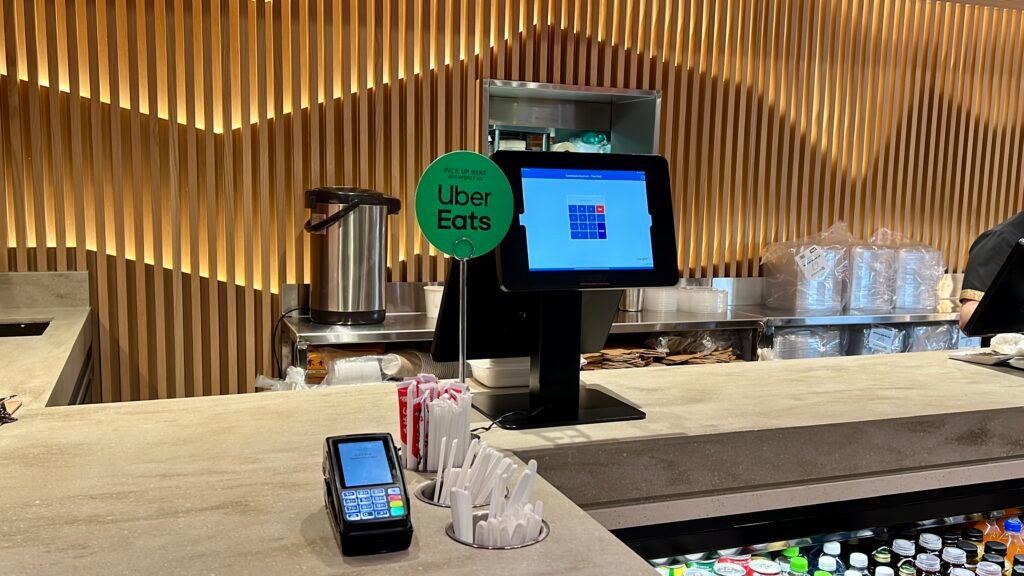
Tipping has also expanded well beyond its original context. What used to be reserved for clearly service-heavy interactions at sit-down restaurants, taxis, or hotel staff, now appears at coffee shop counters, bubble tea windows, food courts, self-serve kiosks, and some retail environments. Delivery apps are a whole other story. Many of them now allow drivers to see estimated tip amounts before accepting an order. If a tip is supposed to be appreciation for good service, why am I tipping before the service has been delivered?
The lines have blurred and the technology that blurred them is worth understanding in detail.
The Payments Layer
Think about how tipping used to work. You paid in cash, you looked at the bill, you made a decision consciously and privately, and you left something behind. Or you didn’t. No screen, no judgement, no audience.
Product Design
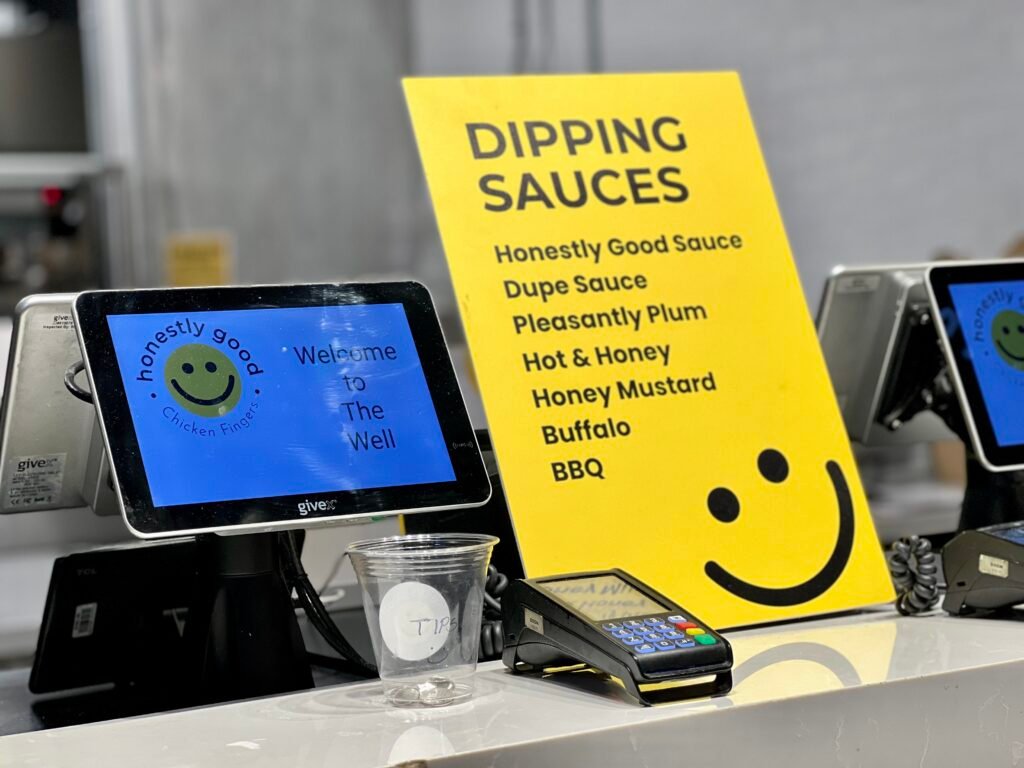
Today, the decision happens before you complete your payment with the worker right in front of you, a line of people behind you, and three large buttons suggesting amounts by default. You’re not just choosing a tip, you are reacting to how the system is designed.
Around 2010, tablet-based point-of-sale systems began replacing traditional cash registers across Canadian food service. And with that shift came the default tip percentage on a POS system that is not set by industry custom or by servers but is configured by the merchant, and in many cases, influenced by the software vendor’s own defaults and recommendations.
Every business owner can choose what percentages appear, how many buttons to show, whether “no tip” is a visible primary option or buried in a secondary menu, and what order the options appear in. The vendors have data on all of this across millions of transactions. They know that higher default percentages produce higher average tips, and that minimizing the no-tip option raises average tip rates. So the defaults are optimized to reflect this. The merchant who configures a higher default sees higher average tip revenue.
There’s one more detail worth flagging. Some terminals calculate the tip percentage on the post-tax total rather than the pre-tax bill. So if your meal is $50 before tax and the terminal applies 20 percent to $56.50 after HST, you’re tipping on the tax. The effective tip on the actual service is higher than the percentage on the screen suggests. Invisible to the customer. Baked into the design.
The Interchange Angle
There’s a second dimension here that almost never gets discussed, and it sits in the economics of how card payments actually work.
When you tap your credit card at a Canadian merchant, the merchant pays a processing fee to accept that payment. On a Visa or Mastercard credit card, the interchange rate (the fee that flows to the card-issuing bank, like RBC, TD, CIBC, or Scotiabank) typically runs between 1.4 and 2.4 percent of the transaction value in Canada, depending on the card type. Premium travel rewards cards sit at the higher end of that range.
When you add a tip to a card transaction, the tip is included in the total that the interchange fee is calculated on. So if you pay $6 for a coffee and add a $1.50 tip, the merchant pays interchange on $7.50, not $6. The merchant paid interchange on the tip you left for someone else. That cost is invisible to you at the counter, and it’s built into every single card transaction in the country.
The Death of Cash and Evolution of Canada Faster Payments
Canadian cash usage has declined dramatically over the past fifteen years. Contactless payment accelerated that decline sharply during the pandemic, and electronic payments now account for the majority of Canadian retail transactions by value.
The relevance to tipping is direct. Cash transactions don’t produce tip prompts. When you hand over a twenty dollar bill and get change, the tip decision belongs entirely to you. It’s private, it’s physical, and no screen is involved. As cash declined, exposure to the tip prompt increased proportionally. More transactions now pass through a digital checkout flow where the ask is built into the process. The architecture of the tip request is now the default experience of paying for almost anything.
That architecture is about to get faster. Canada is currently rolling out its Real-Time Rail — a faster payments infrastructure that will make digital transactions instant. Which means the design decisions happening right now — who controls the default percentages, what the no-tip path looks like, how visible that option even is — are going to carry a lot more weight than they already do. The infrastructure is being built and the tipping question is a design question that’s riding along with it.
Extension of Tipping
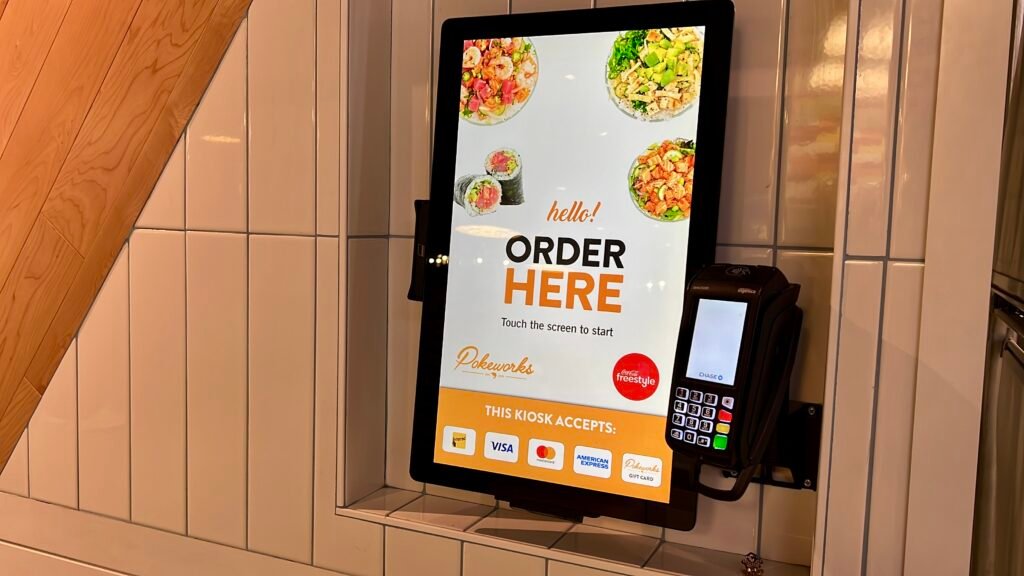
The original container for the tipping norm in Canada was full-service restaurant dining but the POS system has no concept of that container. It goes wherever the merchant goes — counter service, takeout windows, bakeries, coffee shops, bubble tea, fast-casual chains where you order at a kiosk and pick up your own food, nail salons, bottle shops, delivery apps. The prompt now appears in contexts where there is no table, no ongoing relationship between a server and a diner, no extended period of labour on the customer’s behalf. The screen is the same screen but the context is completely different.
The Outcome
So with all of this — higher tips, more prompts, more places asking — who actually benefits? Because this isn’t just about consumers being annoyed, there is a real question about whether all this tipping is actually helping the workers it’s supposed to help.
On the surface, it seems obvious. More tips should mean more money for workers, and in some cases, that’s true. In full-service dining, where the case for tipping is strongest, tips represent a meaningful supplement to base wages, and many servers do meaningfully better than minimum wage in busy establishments.
But when you tip through a card machine, that money often doesn’t go directly into someone’s pocket. It typically goes to the business first. From there, it may be pooled, redistributed across staff, or added to payroll. How tips are distributed is set by the employer. As a customer, you have very little information about where that money actually goes.
For businesses, tipping functions as a way to partially offset labour costs. Instead of bearing the full cost of competitive wages from the operating budget, part of a worker’s effective income comes from the customer. Which means the cost of service is shared between the employer and the person standing at the counter.
The POS software vendors, for their part, have designed checkout flows with full awareness of how default effects work. They know their defaults produce higher tip averages, and they sell this as a feature to merchants: higher tips mean happier staff and better retention. Their commercial interests are structurally aligned with tip prompt optimization. For the card networks that collect interchange on every dollar that moves through a card transaction, including tips, higher transaction values mean marginally higher interchange revenue at scale across millions of daily transactions.
Nobody disclosed any of this to you at the point of sale. The screen just asked if you wanted to leave 18, 22, or 25 percent.
So that tip you left thinking it was going straight into someone’s pocket is very likely passing through a system with multiple hands before it gets anywhere near that pocket, each of them with their own rational interest in the transaction.
Conclusion
There’s also a whole other dimension to this story around how tips get reported as taxable income, but the CRA has never needed my help finding money, and I don’t intend to start now.
What I can tell you is this, tipping in Canada is not a simple cultural habit. It is a compensation system built on an American wage model that Canada never fully adopted, expanded by technology that had no interest in keeping it contained, and sustained by a payments infrastructure that benefits from every dollar that moves through it.
If you work in the service industry, do you expect tips? Do you look down on customers who don’t tip? If you work at a restaurant, do you receive all of the tip that comes through via card payments, or does it get shared with the kitchen? For everyone else, do you still tip everywhere, or have you started drawing a line somewhere? Drop it in the comments. This is a completely judgement-free zone.
Honestly, I cannot tell you how much to tip, or whether to tip at all. But next time you’re staring down that screen, just know you’re not alone, there are a lot of Canadians facing the same dilemma, and now, at least, you understand the system behind it.