After leaving Charlottetown, PEI, my next stop was to Moncton, New Brunswick to see the Hoepwell Rocks. For those who don’t know, this place is home to the highest tides in the world.
The Hopewell Rocks Provincial Park are located in Hopewell Cape. Moncton, New Brunswick is only about 30 minutes drive so this was going to be my base during my time in New Brunswick.
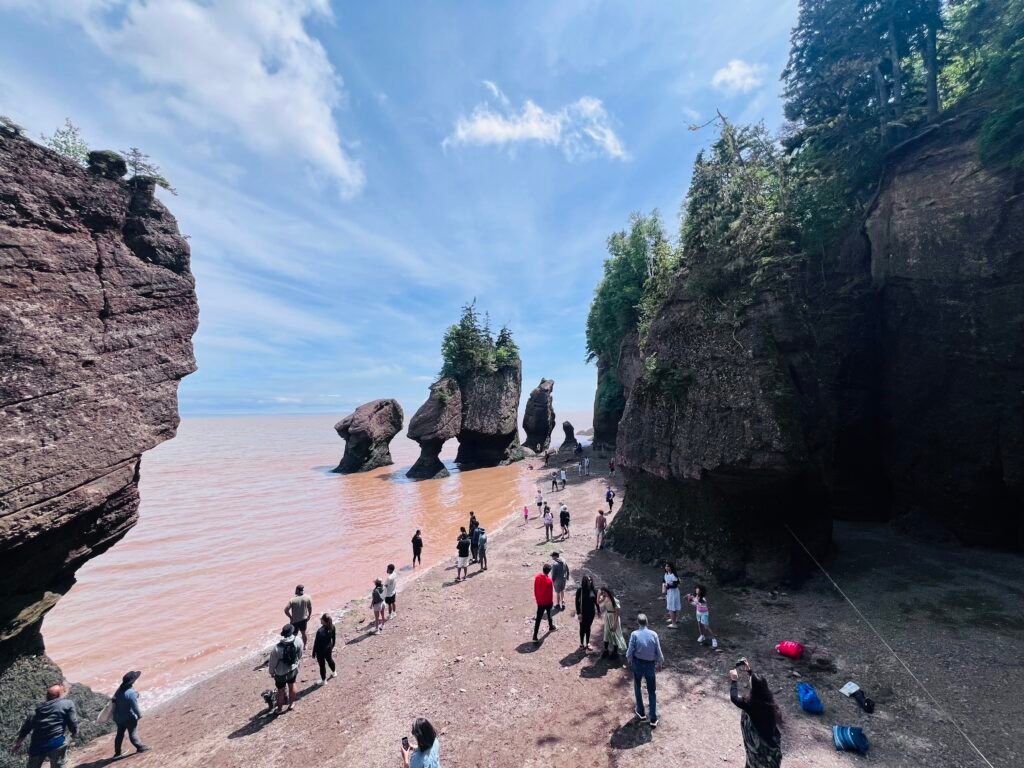
Located between New Brunswick and Nova Scotia, this bay is famous for having the highest tides in the world. One of the best places to experience this natural wonder is Hopewell Rocks, where dramatic tides transform the landscape every six hours. During my visit, I experienced both low tide and high tide on the same day, and it was incredible experience!
Location of the Bay of Fundy?
The Bay of Fundy sits along Canada’s Atlantic coast between New Brunswick and Nova Scotia. It’s famous for tides that can rise up to 16 meters (about 52 feet) every day. To put that into perspective, that’s roughly the height of a four-story building. At low tide, the water disappears far out into the bay, exposing the ocean floor. A few hours later, the water rushes back in, completely transforming the landscape. This is one of the few places in the world where you could walk on the ocean floor, leave footprints in the mud, and then return a few hours later to see kayaks floating over the exact same spot.
The World’s Highest Tides
The dramatic tides here are caused by the unique shape of the bay. The Bay of Fundy is shaped like a giant funnel, wide at the entrance from the Atlantic Ocean but becomes narrower and shallower inland. When ocean water flows into the bay with the incoming tide, it gets squeezed into a smaller space. This forces the water level to rise higher and higher. It’s a little similar to squeezing a garden hose- the pressure builds, and the water surges upward. The result is some of the largest tidal swings anywhere on Earth.
The Science Behind Tidal Current Reversal
Another fascinating phenomenon here is called tidal current reversal. When high tide reaches its peak, the massive volume of water that rushed into the bay must eventually flow back out to sea. This creates powerful shifting currents.
- When the tide comes in, water flows toward the shore
- When the tide goes out, water flows away from the shore
These changing currents cause the direction of water flow to reverse several times a day.
How the Famous Hopewell Rocks Were Formed
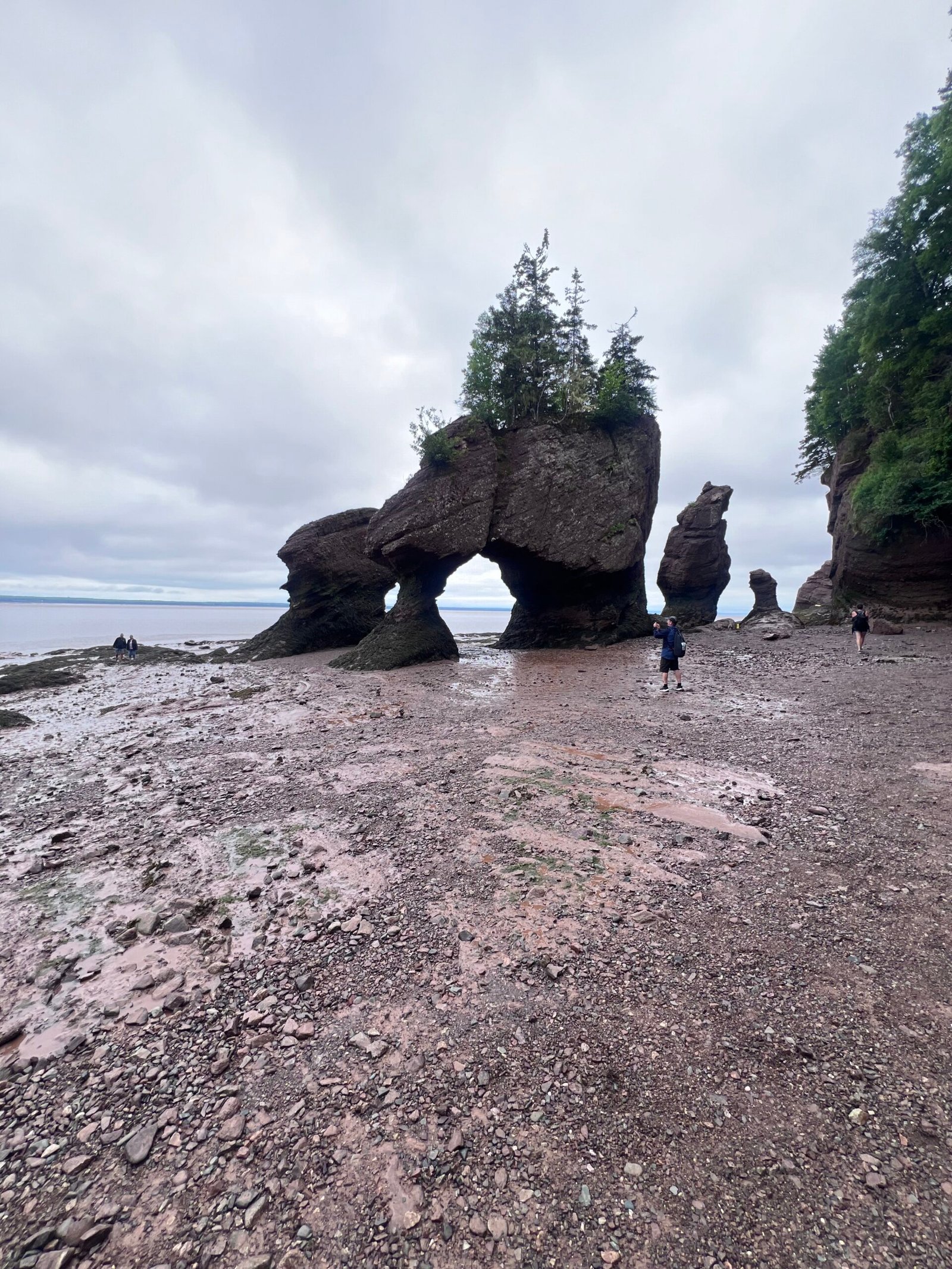
The towering rock formations at Hopewell Rocks are the result of thousands of years of erosion. The extreme tides gradually wear away the base of the coastal cliffs. Over time, caves and arches form in the rock. Eventually, sections of the cliffs collapse or separate, leaving behind tall pillars known as sea stacks. Because the tops are wider than the bases, they resemble giant flowerpots, which is why, as you can guess, they’re often called flowerpot rocks.
Walking on the Ocean Floor at Hopewell Rocks
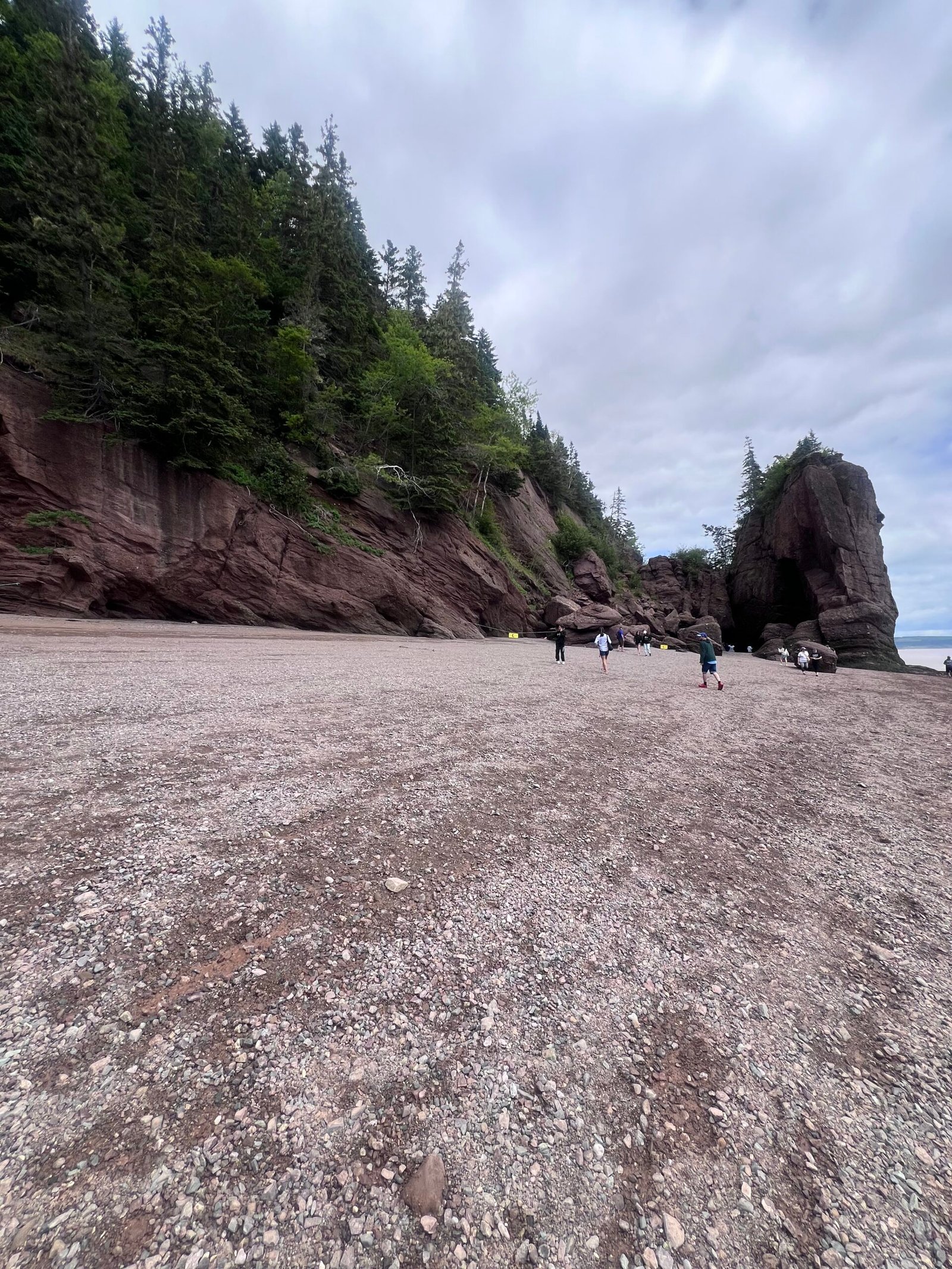
At low tide, visitors can walk directly on the ocean floor, surrounded by towering flowerpot rock formations. The ground is made of soft mud and sand, and you can see the base of massive cliffs rising above you. Six hours later, that same location becomes deep enough for kayaking. Seeing the transformation in person is one of the most unforgettable travel experiences I had during my time in Atlantic Canada.
Tips for Exploring Bay of Fundy
If you decide to come to come to the Bay of Fundy at Hopewell Rocks to experience the tides, the tips below will help you make the most of your experience.
Tip #1: Your Ticket Is Valid for Two Days
One helpful thing about visiting Hopewell Rocks is that your entry ticket is valid for two consecutive days. This gives you flexibility so you can visit low tide on one day and high tide the next if you do not want to stay the entire time to experience both tides on the same day. I decided to see both low and high tide in one day, which meant waiting about six hours between visits. There are many options for you to wait out the time. I spent a couple hours sitting in the car by the parking lot where I saw a group making a barbecue (lol), so this may be a good option. There is a restaurant spot and a gift shop where I also spent a couple of hours. By afternoon, before the water started coming in, I decided to go back to the Bay. If you walk further right away from the major rocks, you will reach a ‘sandy beach’ area. It’s less muddy here so I sat down to enjoy the view. I got my tickets on TripAdvisor Bay of Fundy Hopewell Rocks which I recommend to help you skip the lines at the gate.
Tip #2: Shuttle or Walk to the Rocks
Once you arrive at Hopewell Rocks, you’ll need to get from the parking area to the rocks. The walk takes about 15 minutes, but there is also a shuttle service available. The shuttle costs about $2 each way, and it’s especially useful if you plan to visit the rocks more than once on the same day. If you’re doing both low and high tide, the shuttle can save some energy. Also useful for anyone with mobility issues.
Tip #3: Always Check the Tide Tables
Timing is very important at the Bay of Fundy. The tides change approximately every six hours, but the exact timing shifts slightly each day. Before you visit, check the official tide tables to know when low tide occurs and when the water will begin returning. Park staff typically start guiding visitors up the stairs a couple of hours before high tide arrives, so it’s important not to cut it too close. If you want to walk on the ocean floor, make sure you arrive at low tide.
Tip #4: Be Prepared for Mud
Walking on the ocean floor is amazing, but it’s also very messy. The mud is soft and sticky, and your shoes will definitely get dirty. That’s because the powerful tides constantly stir up sediment from the sea floor, while nearby rivers add even more mud to the bay. If you plan to walk on the ocean floor (and I think you should- it’s the main reason you’re here after all), it’s best to wear waterproof boots or any shoes you don’t mind getting muddy. Fortunately, there’s a wash station near the entrance where you can clean your shoes afterward.
Tip #5: Book Kayaking Tours Early
Kayaking around the Hopewell Rocks during high tide is a popular activity here. Paddling between the towering rock formations while the water fills the bay is a completely different perspective from walking the ocean floor. However, kayaking tours can fill up quickly especially during peak travel season. If you want to try it, it’s best to book your tour in advance.
Watching the Ocean Return: The High Tide Experience
Six hours after walking on the ocean floor, I returned to the lookout point above the rocks. Earlier in the day, I had been standing down below, walking across the mudflats. Then, I was looking down at kayaks floating over the exact same area. The footprints left in the mud were gone, replaced by deep water. Tomorrow, someone else will walk across that same ocean floor again. That constant transformation is what makes the Bay of Fundy so incredible.
If you’re traveling through Atlantic Canada, this is one place you definitely don’t want to miss. Moncton, NB was my second stop on my solo tour of Atlantic Canada. I have a detailed review, itinerary and cost breakdown of my trip linked here.