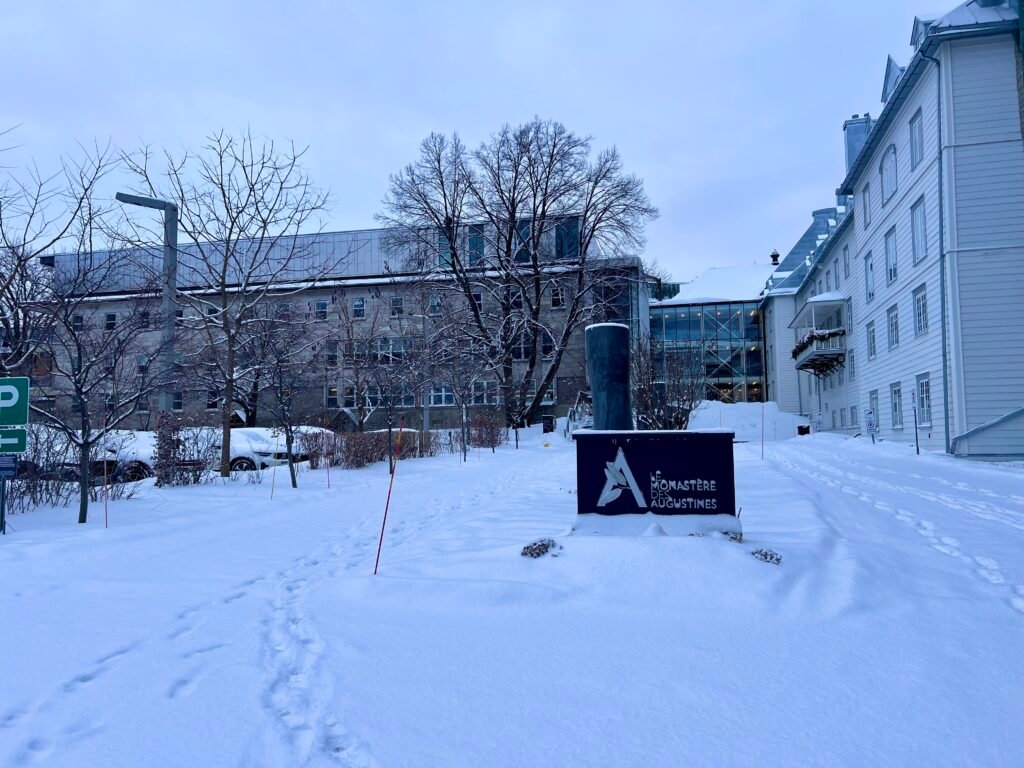
Le Monastère des Augustines in Québec City is technically a hotel, but it is also a museum, a wellness retreat, an archive centre, and a living piece of history. Staying here feels very different from checking into a regular hotel. I spent four nights here on a solo retreat, and from the moment I arrived, I knew this would not be a typical stay. There were no televisions in the rooms, no loud lobby energy, and no pressure to do anything except slow down, breathe, and be present. If you are looking for a place that offers more than just a bed for the night, this is one of the most unique stays in Canada.
Table of Contents
- Uniqueness of Le Monastère des Augustines
- Arriving at the Monastery in Québec City
- The 385-Year History Behind the Property
- A Hotel, Museum, and Wellness Retreat in One
- Architecture: Heritage Meets Modern Design
- Historic Authentic Rooms
- Contemporary King Room
- The Bathroom
- The Museum and Archives
- Common Spaces for Reflection and Connection
- The Silent Breakfast Experience
- Wellness Programs and Holistic Health
- The Boutique and Social Mission
- Cost
Uniqueness of Le Monastère des Augustines
Le Monastère des Augustines is not the kind of place you book if you want a standard hotel stay in Quebec City. This is a property built around the idea of healing the whole person: body, mind, and spirit. That philosophy comes directly from the Augustinian Sisters, whose presence and work shaped the site for centuries. Today, the monastery welcomes people from all over the world, but it still carries a calm, reflective atmosphere. Even if you are not especially interested in religion or wellness retreats, the experience of staying here feels meaningful.
Arriving at the Monastery in Québec City
I arrived at Le Monastère des Augustines on a winter night, after a nearly four-hour train ride from Montreal. I had visited Québec City many times before, but interestingly, I had never stayed here. I think a guided trip during my first visit to Quebec City had a stopover at this place, but I only remember details from here very faintly. This trip felt like the right time to finally experience it for myself. After the long journey, I kept things simple that first evening. I checked in, settled into my room, and went straight to sleep. The real exploring would begin the next morning.
The 385-Year History Behind the Property
The story of this place begins on August 1, 1639. That was when three young Augustinian sisters from Dieppe, France arrived in Québec after a 3-month Atlantic crossing. They came with a mission supported by King Louis XIII and funded by the Duchess of Aiguillon, to establish a hospital. That mission became the Hôtel-Dieu de Québec, the first hospital in the Americas north of Mexico. These women were far more than religious figures, they were healthcare pioneers. They managed hospitals, practiced nursing, prepared medicines, and cared for both Indigenous peoples and European settlers, regardless of wealth or status. Because they were far from France and could not always depend on imported medicine, they grew medicinal plants and developed strong expertise in pharmacy. Over time, their work expanded well beyond this single site.
In 1693, they opened what is now Hôpital général de Québec, and over the centuries they founded 12 monastery-hospitals throughout Québec. By the 1960s, those hospitals were integrated into Québec’s public healthcare system, but the sisters’ legacy did not disappear. In 2000, they created a trust to preserve their heritage, gathering roughly 50,000 artifacts from the 12 monastery-hospitals. Then, between 2013 and 2015, this monastery was carefully restored and reimagined. The result was Le Monastère des Augustines, which opened in 2015 as a nonprofit dedicated to preserving this history while continuing the sisters’ mission of care.
A Hotel, Museum, and Wellness Retreat in One
What makes this place so special is how many roles it holds at once. It is a hotel, a museum, an archives centre, a wellness retreat, a church, an event space, and a restaurant. And somehow, all of those functions fit together naturally. Everything is connected by the same larger purpose: preserving heritage while creating a space for rest, reflection, and healing.
Architecture: Heritage Meets Modern Design
As I explored the building, one thing quickly became clear; the monastery has two distinct architectural identities. The first is the heritage wing, where the original monastic character is still strongly felt. Here, you will find old wood beams, long corridors, restored wooden floors, simple natural wood doors, arched windows, and religious artworks. Walking through this part of the building feels like moving through a monastery and an art gallery at the same time.
Then there is the modern wing, which introduces a more contemporary design with sleek black ceilings, concrete walls, clean Scandinavian-style wood elements, and minimalist finishes.
The contrast works beautifully. One side speaks to history and tradition. The other brings in modern comfort and calm. Together, they reflect the larger mission of the property in honouring the past while supporting present-day wellbeing.
Historic Authentic Rooms
One of the most fascinating parts of the hotel is that some rooms are actually the former nun cells. The sisters’ living quarters used to follow strict rules. According to the Constitutions of 1923, each sister’s cell was to be furnished almost identically, with only the essentials: a simple bed, a wardrobe, a small desk that also functioned as a prayer space, and very few personal belongings. Today, the hotel offers Authentic Rooms that preserve this spirit.
These rooms include simple furnishings with replica beds inspired by what the sisters used, a sink and mirror inside the room, and shared bathrooms at the end of the hallway. I visited the shared bathrooms, and they were much cleaner and more spacious than many people might expect. There are several along the hallway, so availability does not seem to be a major issue. Staying in one of these rooms would be the closest thing to experiencing monastic life without actually taking vows.
Contemporary King Room
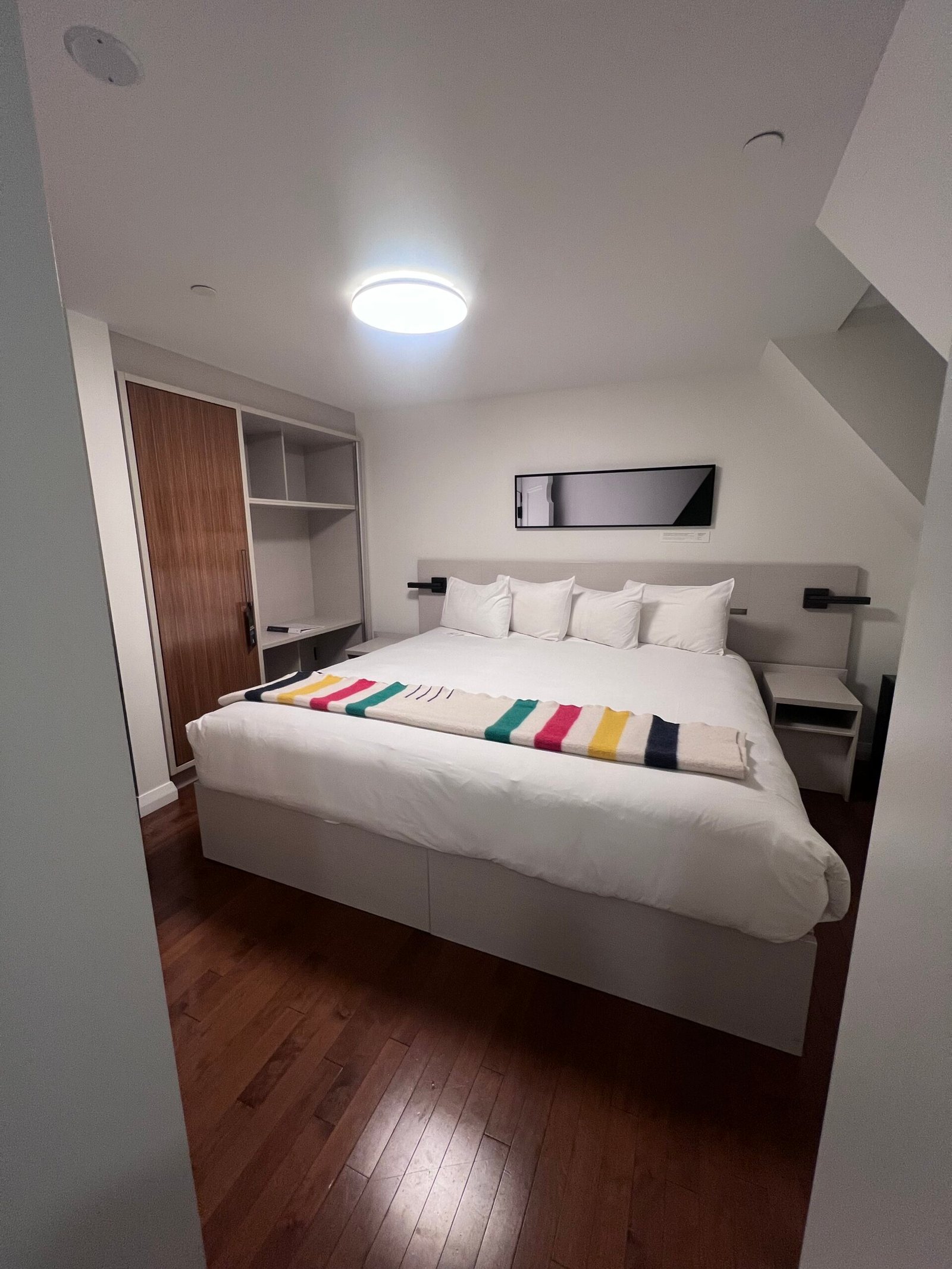
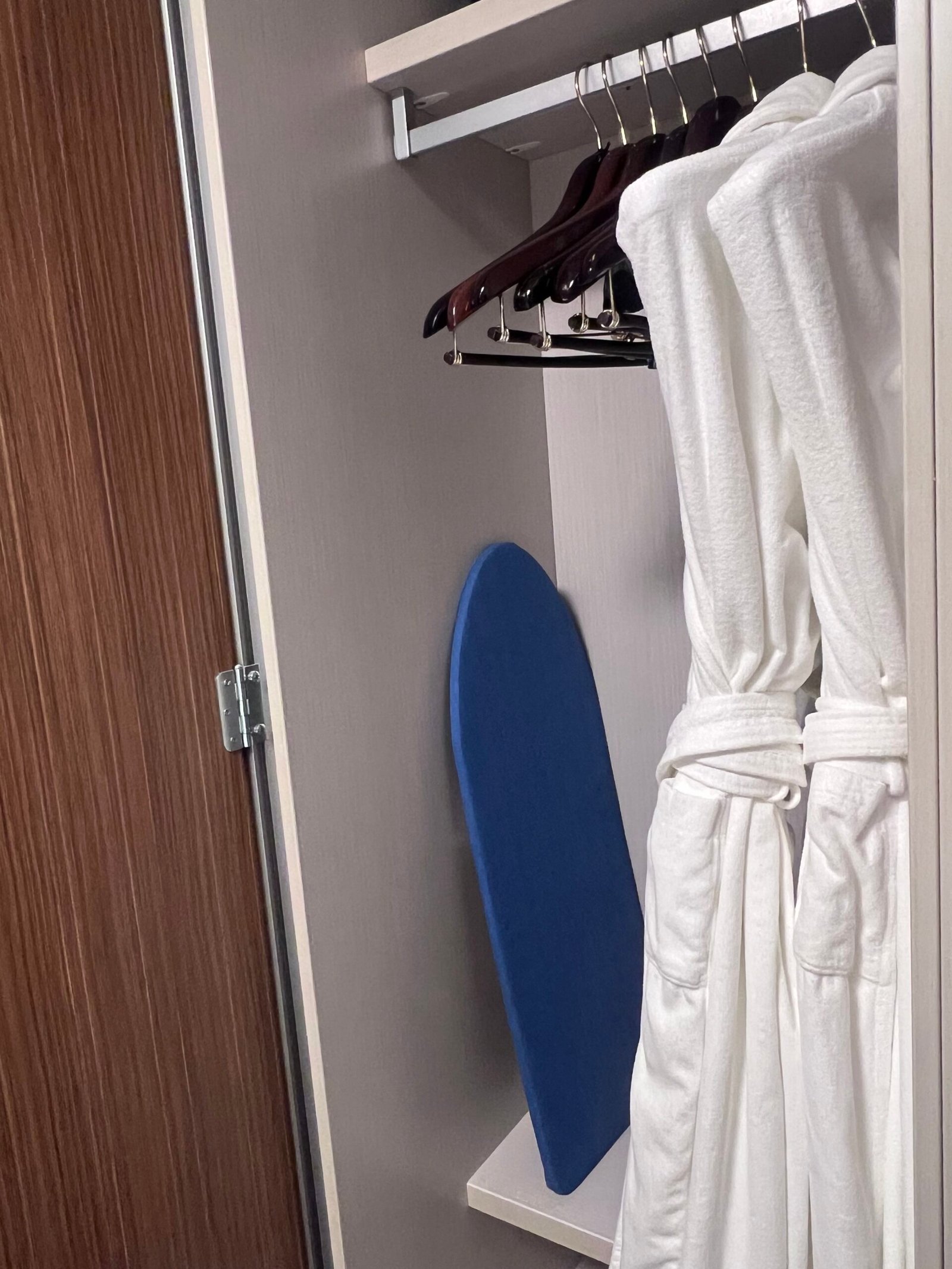
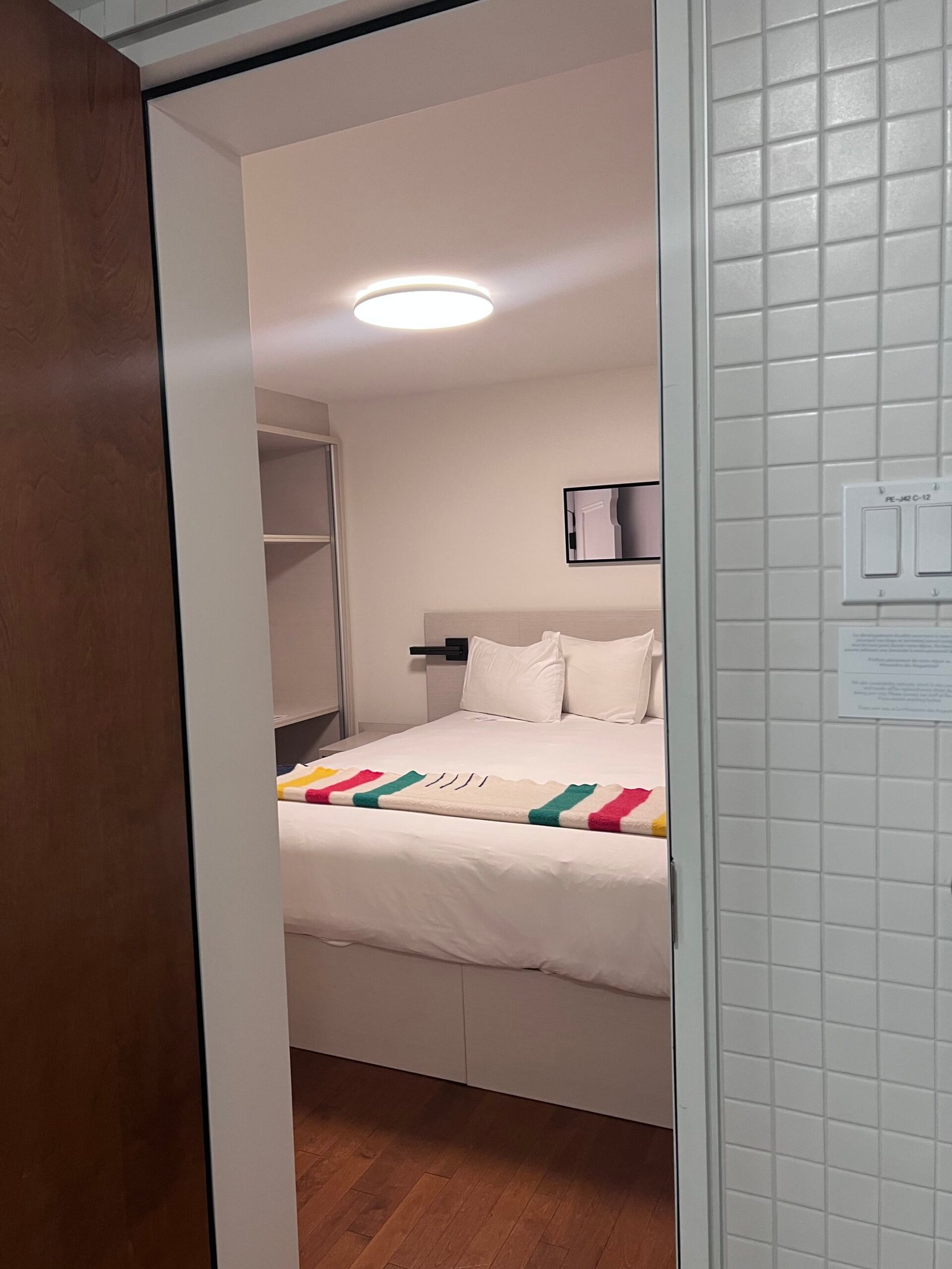
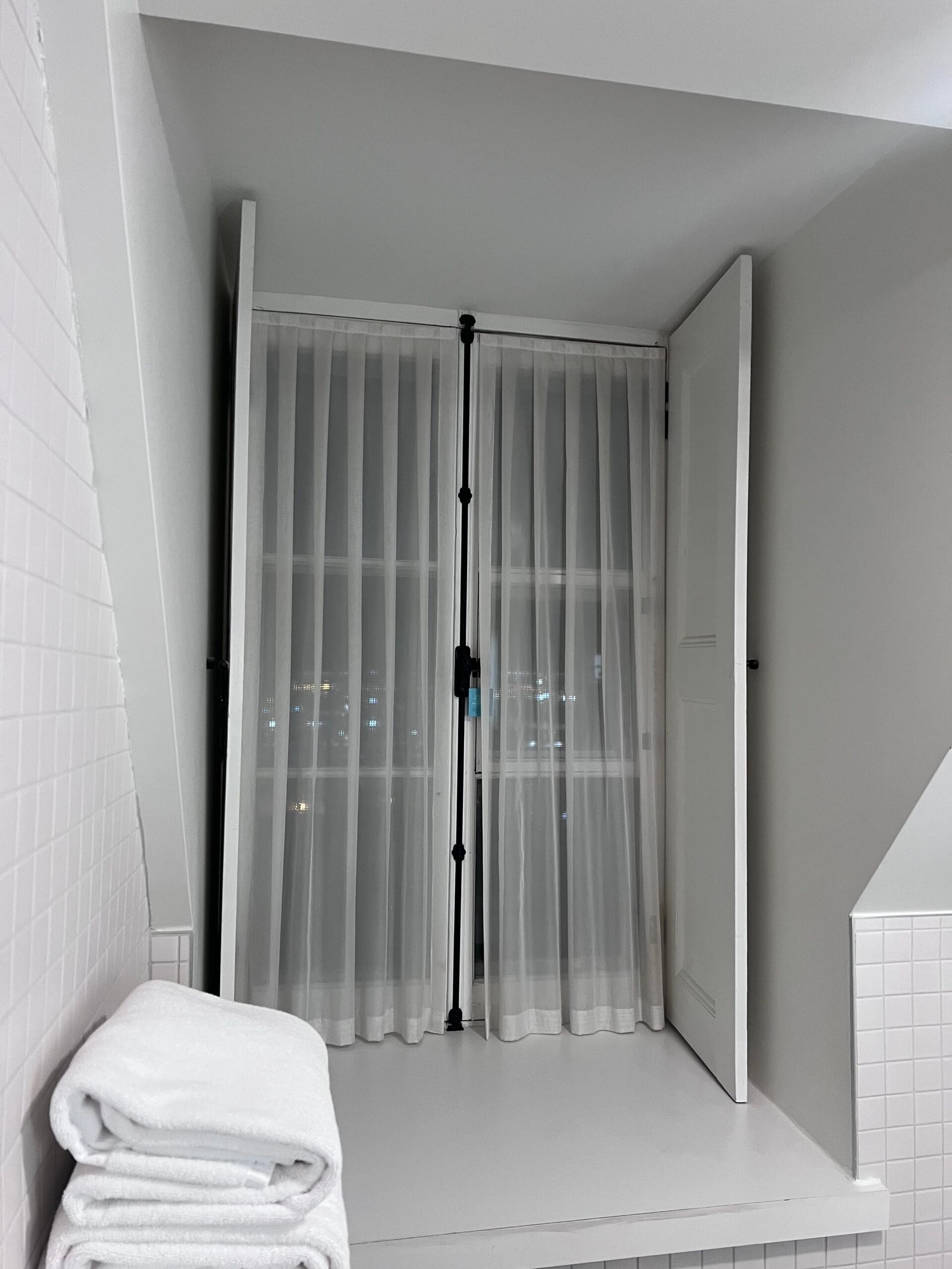
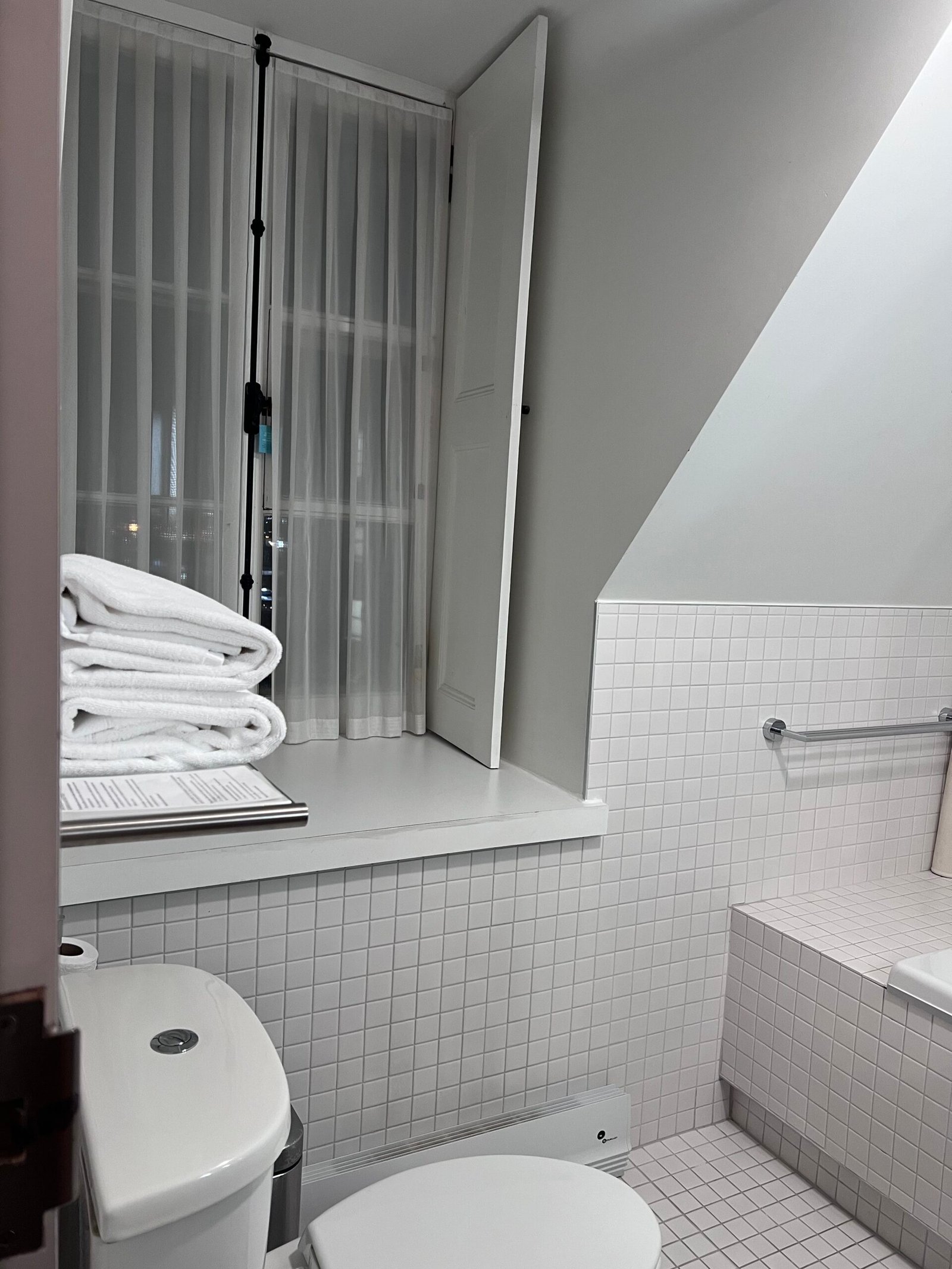
For my stay, I chose a Contemporary King Room, located in what used to be the attic of the building. This part of the monastery has been renovated into modern guest rooms with private bathrooms. My room was not large in the way a chain hotel room might be, but it felt well designed and very comfortable. The style blended Scandinavian minimalism, mid-century modern touches, and heritage loft character. What I loved most were the sloped ceilings and dormer window, which gave the room a cozy, attic-like feel while still reminding you that this is a historic building.
One of the most unusual features of Le Monastère des Augustines is what is not in the room. There are no televisions and no telephones. This is part of the property’s wellness philosophy. The goal is to encourage guests to disconnect from noise and distraction so they can focus more on rest and inner calm. If you want to take that even further, the hotel even allows guests to leave their mobile phones and electronic devices at the front desk during their stay. There is still free Wi-Fi throughout the property, so you are not completely disconnected unless you want to be. I don’t watch a lot of TV but the absence of a television changed the energy of the room in a surprisingly positive way. It makes it easier to actually relax, rather than being tempted to just collapse in front of a screen.
The Bathroom
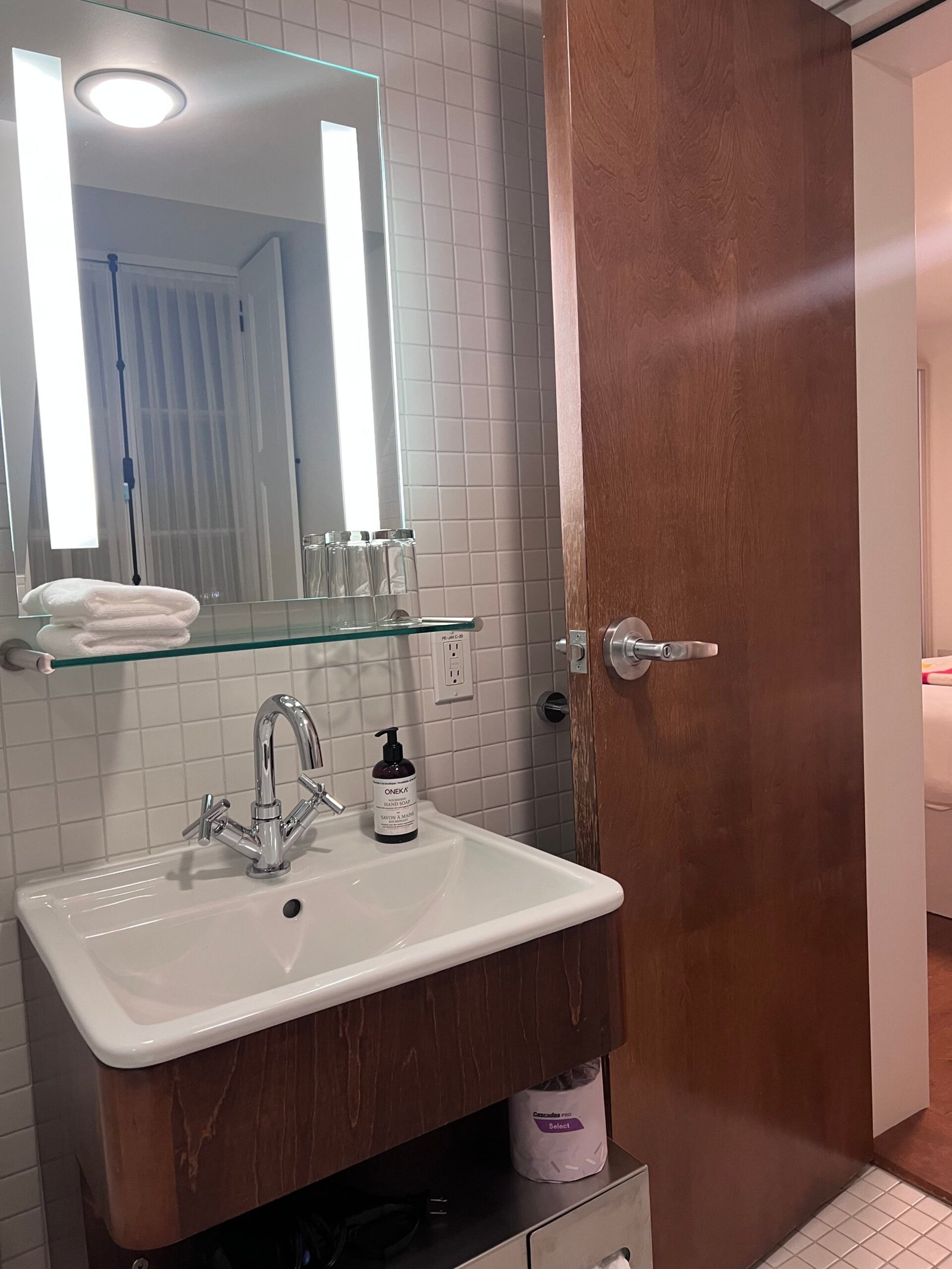
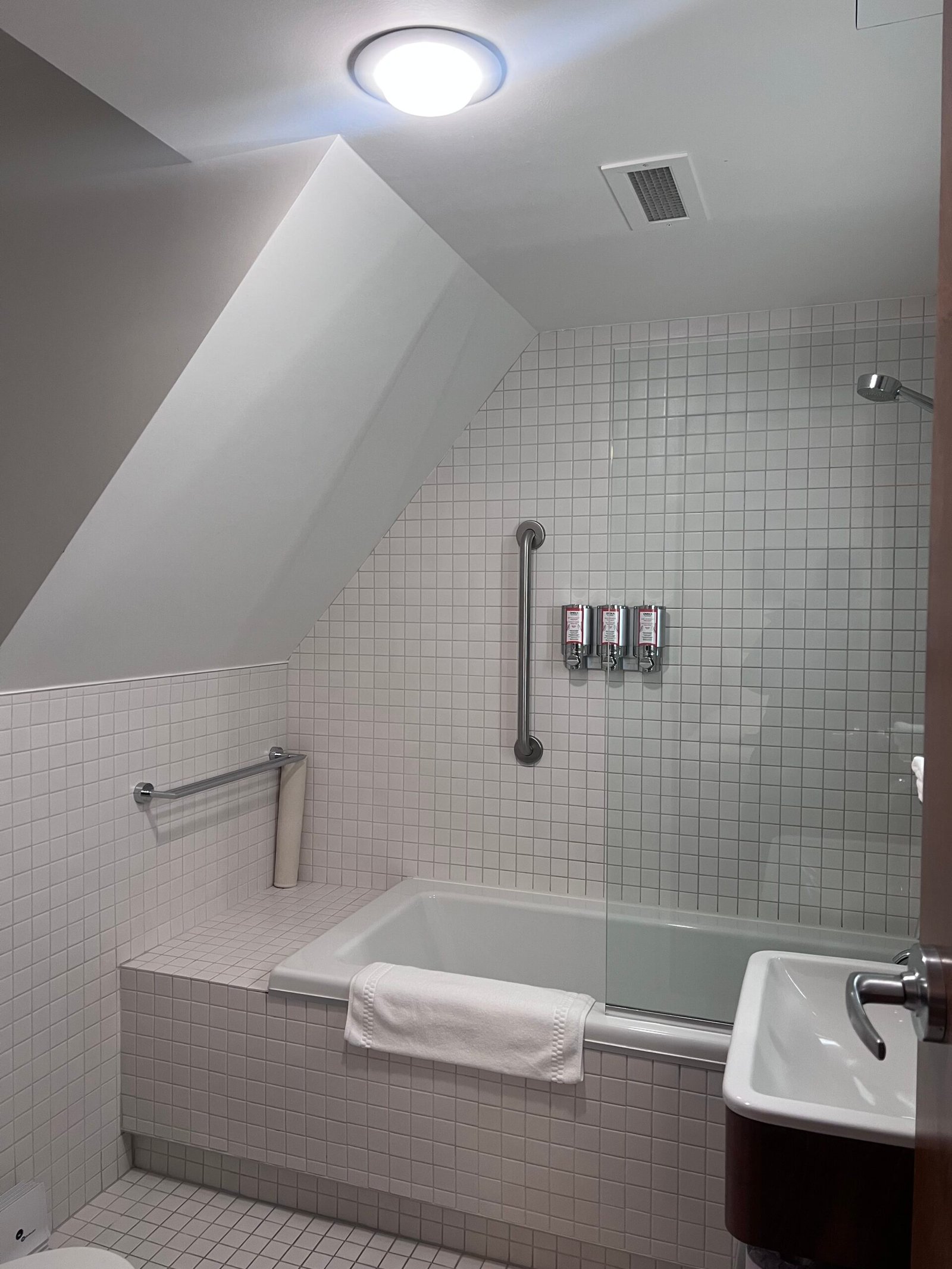
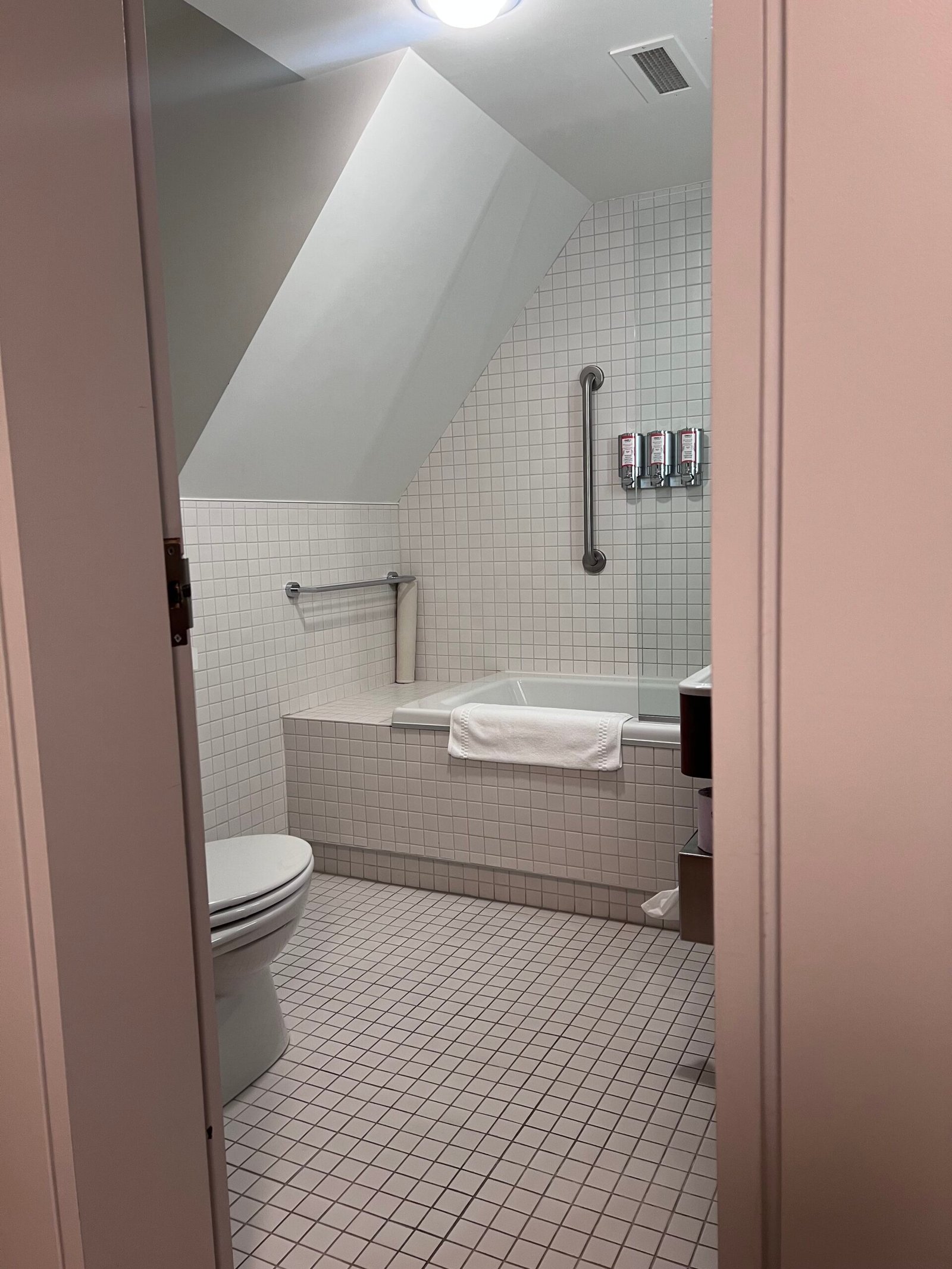
The bathroom in my room continued the same blend of simplicity and modern comfort featuring small square white tiles across the walls and floor, a minimalist vanity, clean chrome fixtures, and a bright, uncluttered design. The sloped ceiling was a reminder that this room had once been part of the attic, which added character without making the space feel awkward. It was not oversized, but it felt clean, functional, and calm.

The Museum and Archives
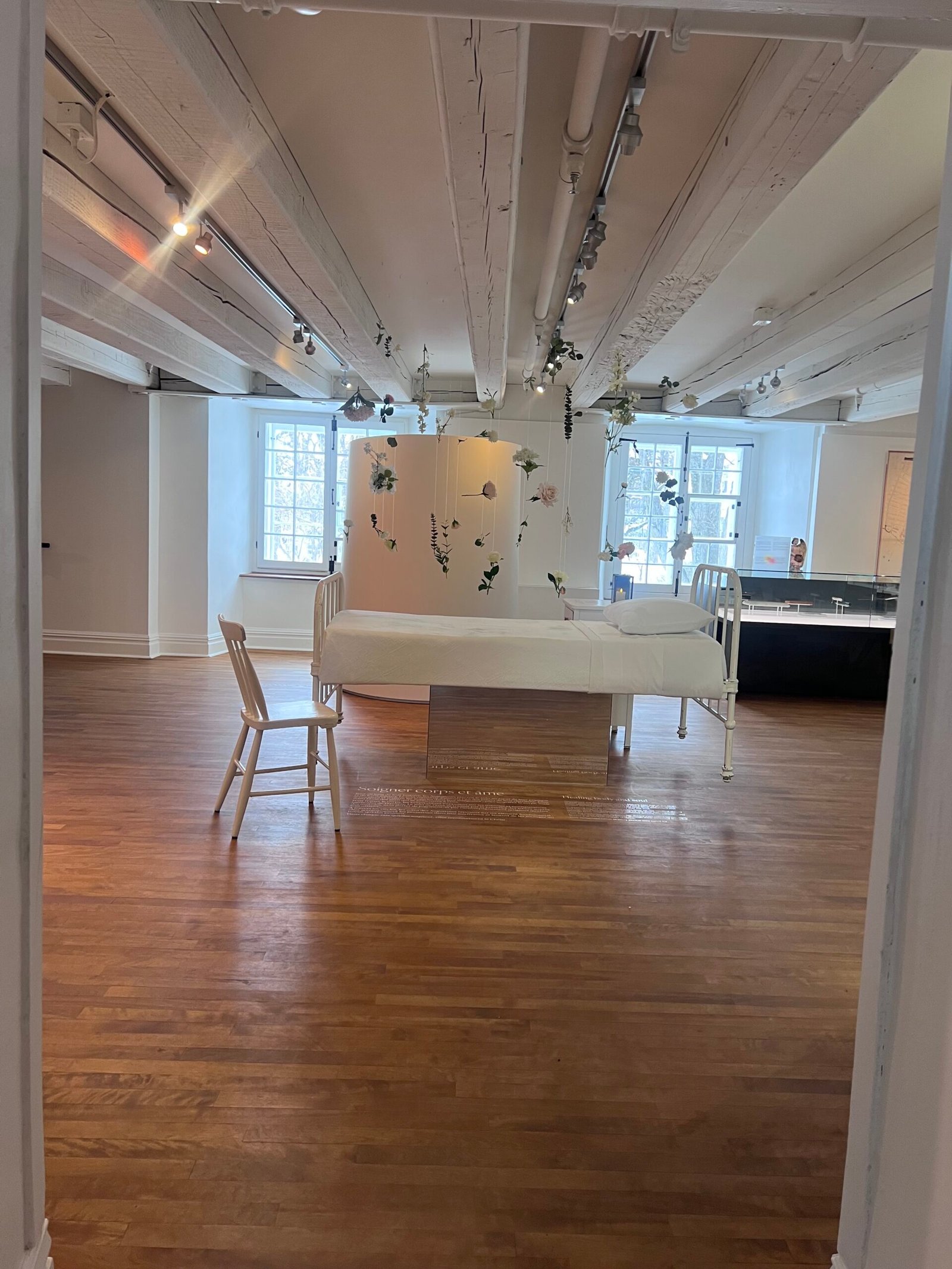
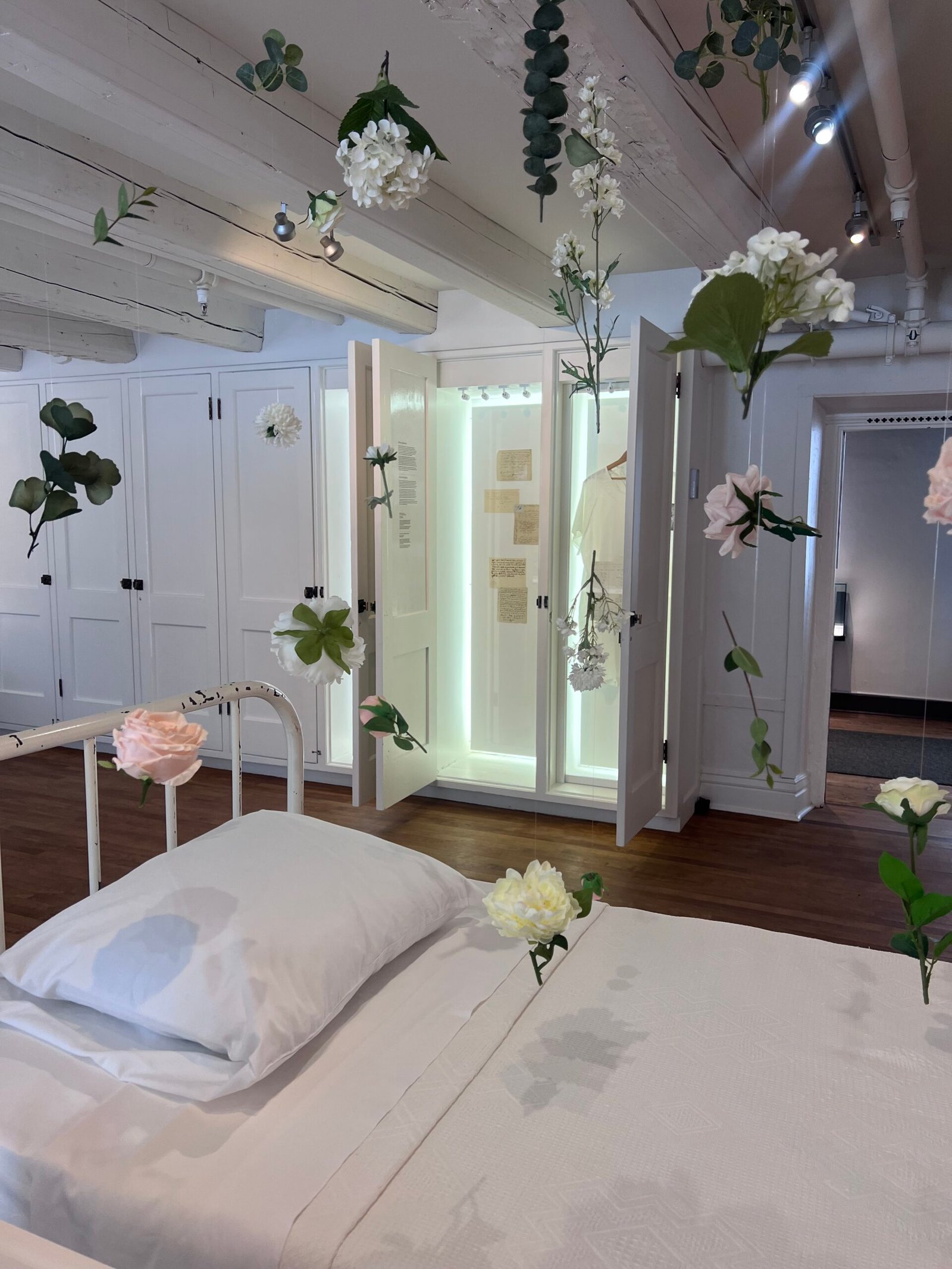
One of the biggest advantages of staying here is that museum access is included in the room packages. The museum draws from the collection of roughly 50,000 artifacts gathered from the 12 Augustinian monastery-hospitals across Québec. It offers an extraordinary look at nearly four centuries of history. The permanent exhibition, “Resonances: From Their Lives to Ours,” explores the lives of the Augustinian Sisters through objects, archival documents, and stories that connect their experience to modern questions about meaning, presence, and care. During my stay, there was also a temporary exhibition called “Re-Connect.” It focused on relaxation and renewal through a museotherapy approach, using the sisters’ own balance of action and contemplation as inspiration.
What I appreciated most was that the museum did not feel static or overly academic. It felt personal and reflective, more like an invitation into dialogue than a traditional display of artifacts.
Common Spaces for Reflection and Connection
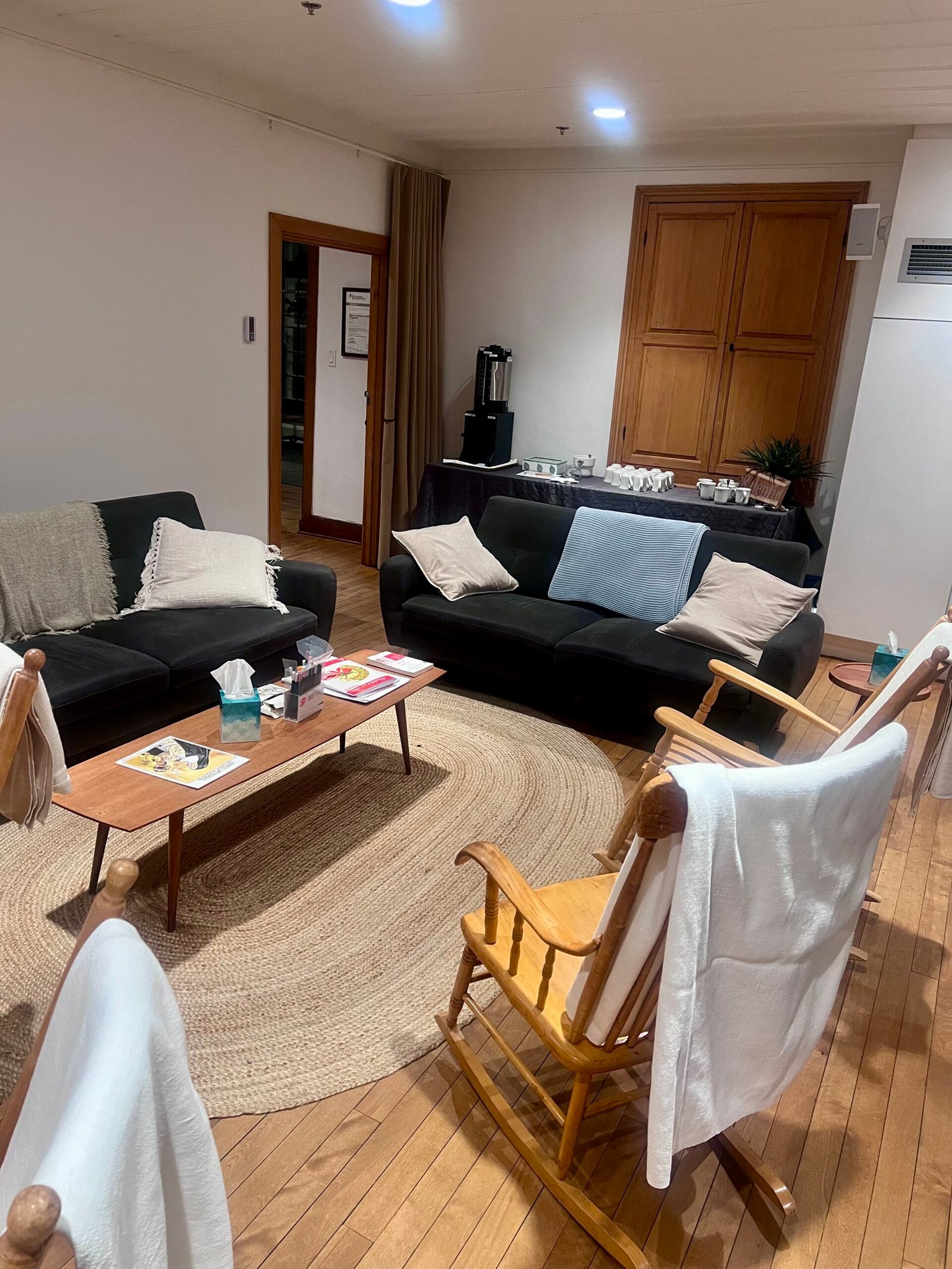
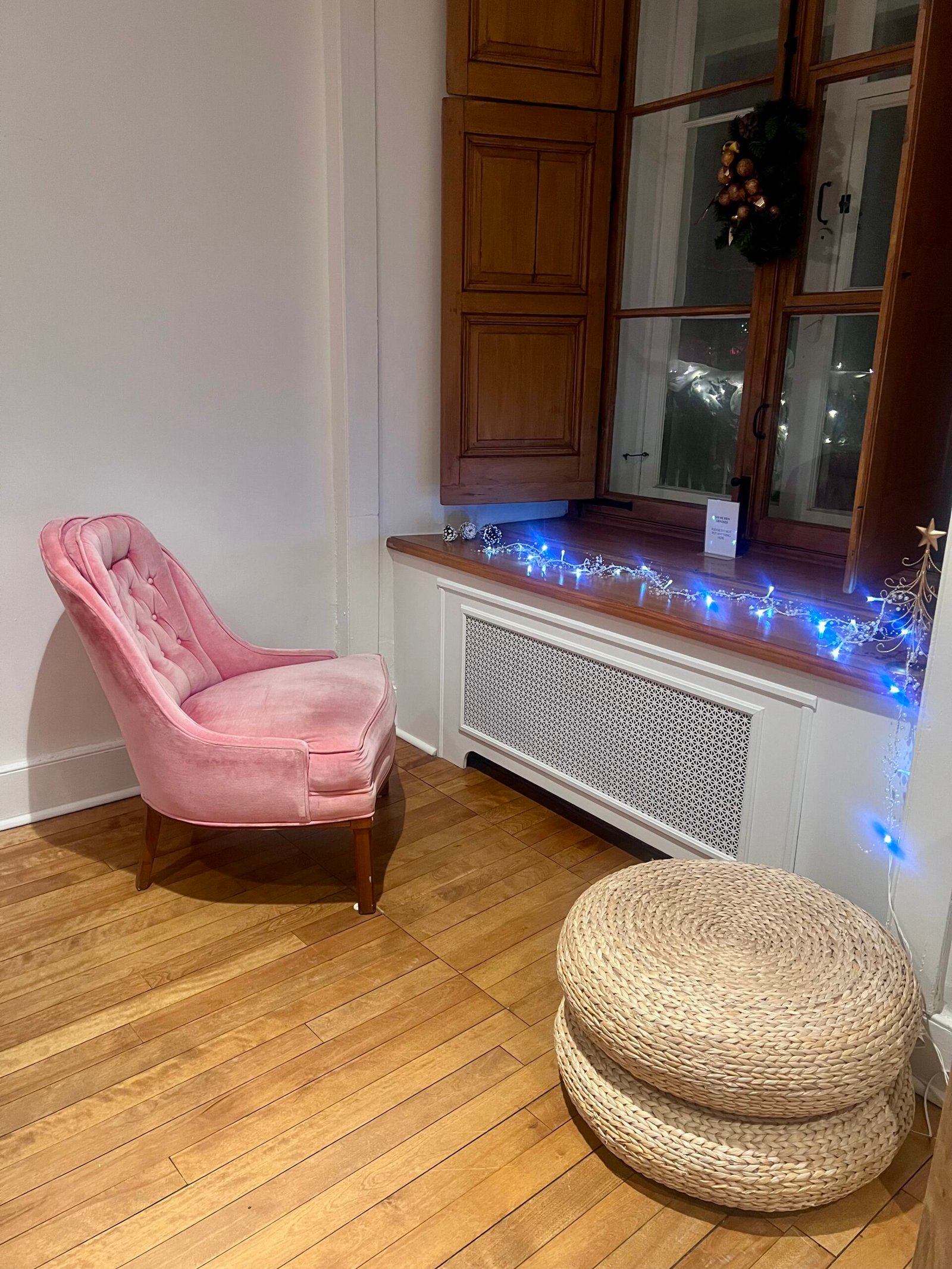
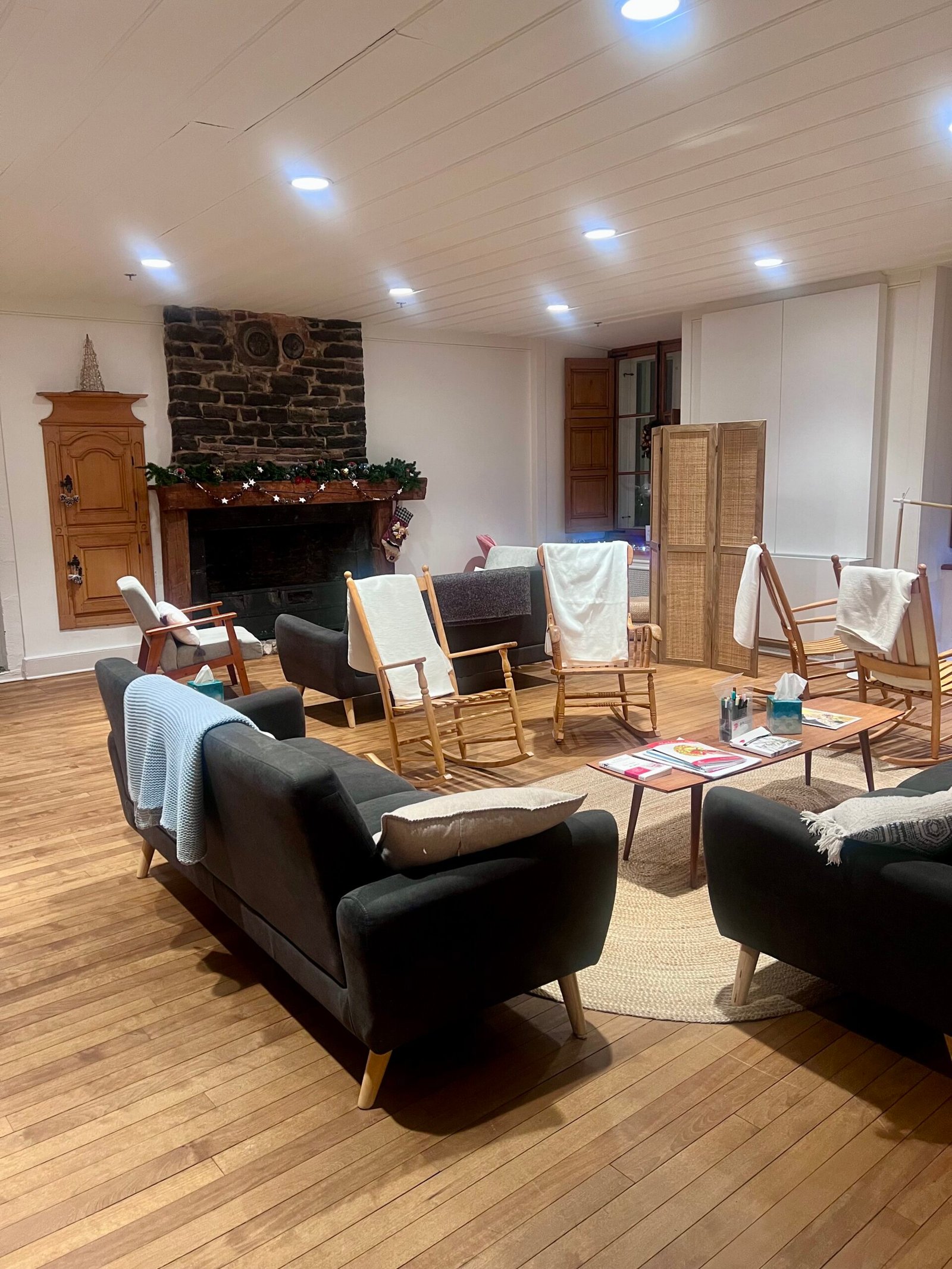
Throughout the monastery, there are spaces designed for relaxation. On Level 2, there are multifunctional rooms used for meetings, retreats, celebrations, and wellness gatherings. There are also smaller living rooms and quiet corners where you can sit, read, reflect, or simply look out the window. During the holiday season when I was here, one of the living rooms had been turned into a cozy Christmas lounge.
On Level 1, there are additional hallway sitting areas and shared dining spaces. Outside, there is also a courtyard garden, which becomes another peaceful place to slow down in the summer months when it’s warmer.
One thing I noticed during my stay is that the social atmosphere here feels very gentle. People do talk, but softly. Conversations happen naturally, without pressure. You can be alone without feeling isolated, and you can connect with others without having to perform or make small talk.
The Silent Breakfast Experience
One of the most memorable parts of my stay was the silent breakfast. Each morning, breakfast is served in silence at the onsite restaurant in keeping with the sisters’ tradition. At first, that might sound a little uncomfortable. Most of us are used to filling meals with conversation, scrolling through our phones, or planning the day ahead. If you prefer a more social atmosphere, lunch and dinner are served in a more relaxed setting, but the silent breakfast is worth experiencing at least once. It was one of the most grounding moments of my stay.
Breakfast at Le Vivoir was healthy, generous, and made with local and organic ingredients. Much of the produce comes from the monastery’s own gardens.
Wellness Programs and Holistic Health
The Augustinian Sisters believed in holistic care long before the concept became trendy. For them, healing was never just about treating symptoms. It was about caring for the whole person: mind, body, spirit, and emotions. That philosophy still shapes the wellness offerings at Le Monastère des Augustines today. Available experiences include:
- holistic health consultations
- meditative walks through Old Québec
- daily yoga or Qi Gong sessions
- massage and specialized treatments
- structured retreat programs throughout the year
The Boutique and Social Mission
Near the main entrance, there is a small boutique selling products designed to extend the experience of the monastery. Most items are made in Québec, often by hand, and many are connected to wellness, rest, or local craft traditions. What makes purchases here feel more meaningful is that they support the monastery’s social mission. Every stay or purchase helps fund programs and stays for caregivers, patient companions, and health and social services workers. So even the boutique is tied back to the original mission of care.
The few remaining Augustinian Sisters still live in the building, in a separate wing. They’re in their eighties now. You might catch a glimpse of them in their white habits heading to Mass or Vespers. Their presence turns what might otherwise feel like a beautifully preserved historical site into something living — a place that is still, in a genuine sense, being inhabited by the people whose story it tells.
Le Monastère welcomes visitors from all cultures and spiritual backgrounds. Religion is approached from a historical and cultural perspective; no worship is offered as part of the hotel’s activities, and guests are free to practice their own spirituality privately. It is a secular space that has not lost its sacred quality.
Cost
For my four-night stay in the Contemporary King Room, including museum access and breakfast, the total came to CAD $1,659.11. That works out to about CAD $415 per night.
You are not just paying for a room. You are paying for a deeply unique historical setting, museum access, a wellness-focused environment, breakfast, a quieter, more intentional travel experience, and a chance to step out of the noise of modern life. I cam expecting a hotel, I found something closer to a reset.
Le Monastère des Augustines may not be for every type of traveler. If you want a conventional luxury hotel with televisions, nightlife, and lots of distraction, this may not be your place. But if you are looking for a quiet stay with history and wellness, then it is one of the most special places you can experience in Québec City.