Just off the coast of Saint-Pierre is a small island with no cars, no shops, no trees, and no permanent residents.
Île aux Marins is a hauntingly beautiful island that once housed a thriving fishing community. Today, it feels like a living museum with weathered houses facing the sea, an old church standing quietly on the hill, and the remains of a once-busy village sitting frozen in time.
If you’re visiting Saint Pierre and Miquelon, this small island is one of the most fascinating places you can explore, especially if you enjoy history, or abandoned places with interesting stories.
Table of Contents
- Ferry Ride Through the Fog
- Thriving Fishing Village
- The Cod Fishing Industry
- The Gravel Beaches
- Life on the Island: Harsh Winters and Isolation
- The Historic Wash House on the Hill
- The Cemetery
- The World War II Memorial
- The Church of Notre Dame des Marins
- The Former School and Archipelitude Museum
- What Île aux Marins Is Like Today
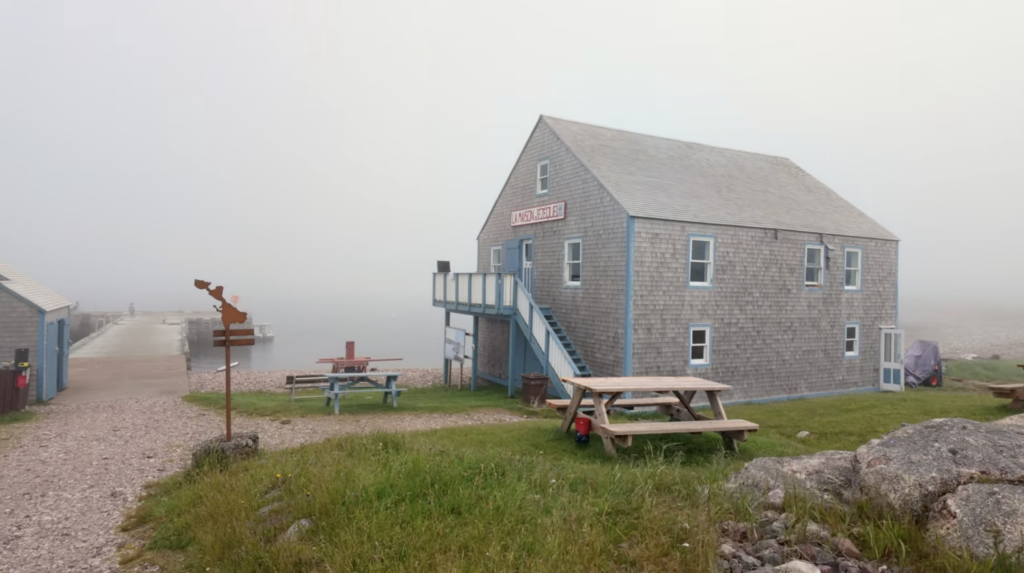
Île aux Marins sits just off the coast of Saint-Pierre, the main town in the French territory of Saint Pierre and Miquelon. The island is only a short boat ride away, making it one of the easiest day trips from Saint-Pierre. But the moment you arrive, it feels like stepping into another world. On the day I visited, the entire island was wrapped up in a thick layer of fog with wind blowing across the rocky coastline, and a very deafening silence.
Ferry Ride Through the Fog
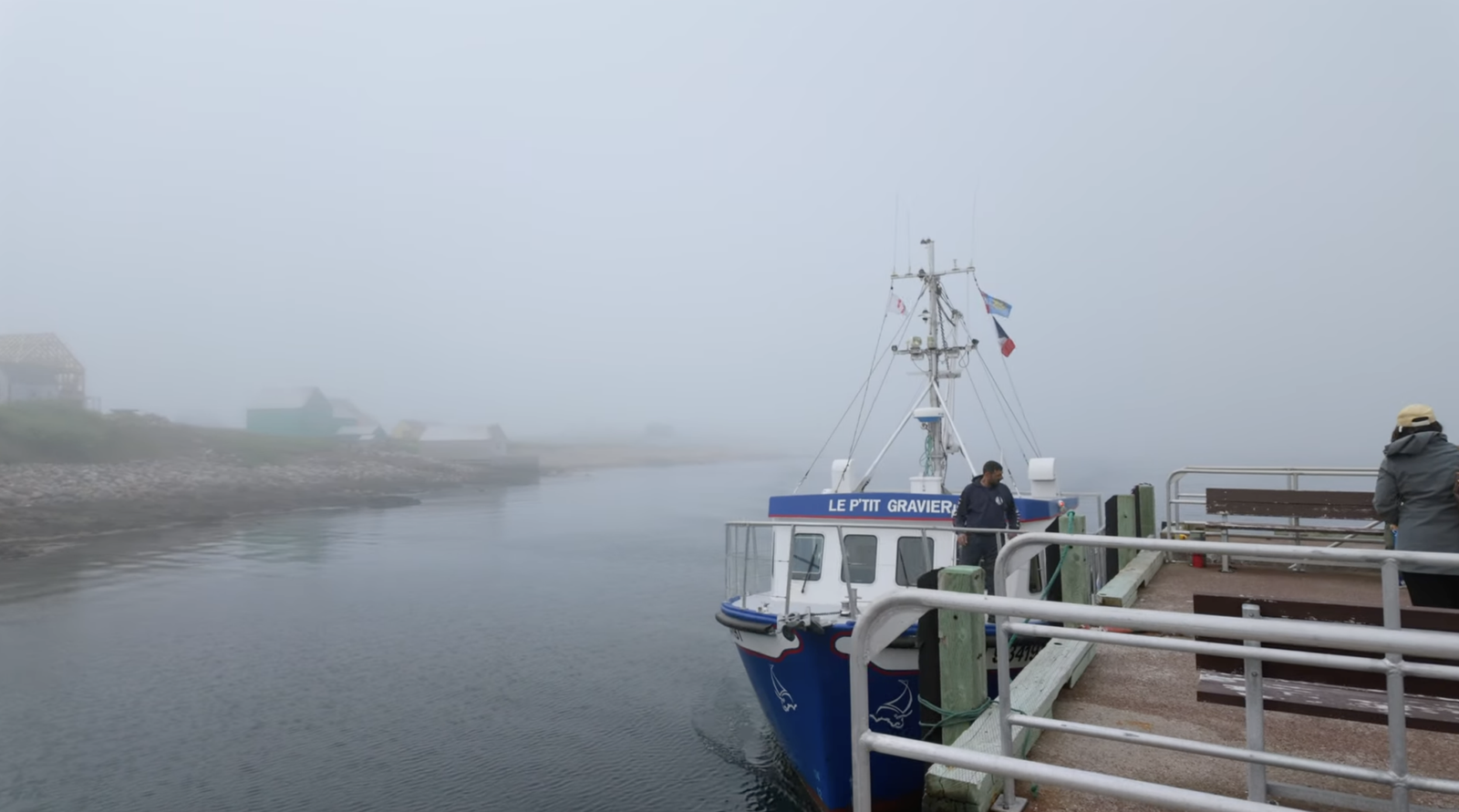
Getting to the island is part of the experience. When I boarded the small ferry, the fog was so thick that the surrounding coastline almost disappeared. It felt like we were sailing into a cloud. Within minutes, a faint outline of the island appeared. There were no crowds waiting at the dock, no taxis, no shops, just colourful wooden houses standing quietly along the shoreline. It immediately became clear why this place is often described as a ghost island.
Thriving Fishing Village
Today, Île aux Marins is empty. But in the 19th century, the island was home to more than 600 residents. At the time, this small island was one of the most important fishing communities in the North Atlantic. Life revolved entirely around the sea. You can imagine what the island sounded like decades ago; children playing near the docks, fishermen repairing their nets, women preparing fish for drying and export.
Families lived here year-round, building their entire lives around the fishing industry. However, the story of the island would eventually change. In 1967, the last resident left Île aux Marins, officially ending centuries of permanent settlement.
The Cod Fishing Industry
The reason people settled here in the first place was simple: cod fishing. For generations, the waters around the island were rich with cod. The island became a major center for processing and exporting dried fish across the Atlantic, and families endured incredibly harsh conditions because the fishing industry provided their livelihood. By the 1960s, everything began to shift. Fishing technology improved, boats became larger and more efficient, capable of staying at sea for longer periods without needing to return to shore. Eventually, fishing practices changed, and the traditional cod industry collapsed. The moratorium on cod fishing in Canada also had a significant impact. The very industry that had sustained the island for over 150 years suddenly became unnecessary.
The Gravel Beaches
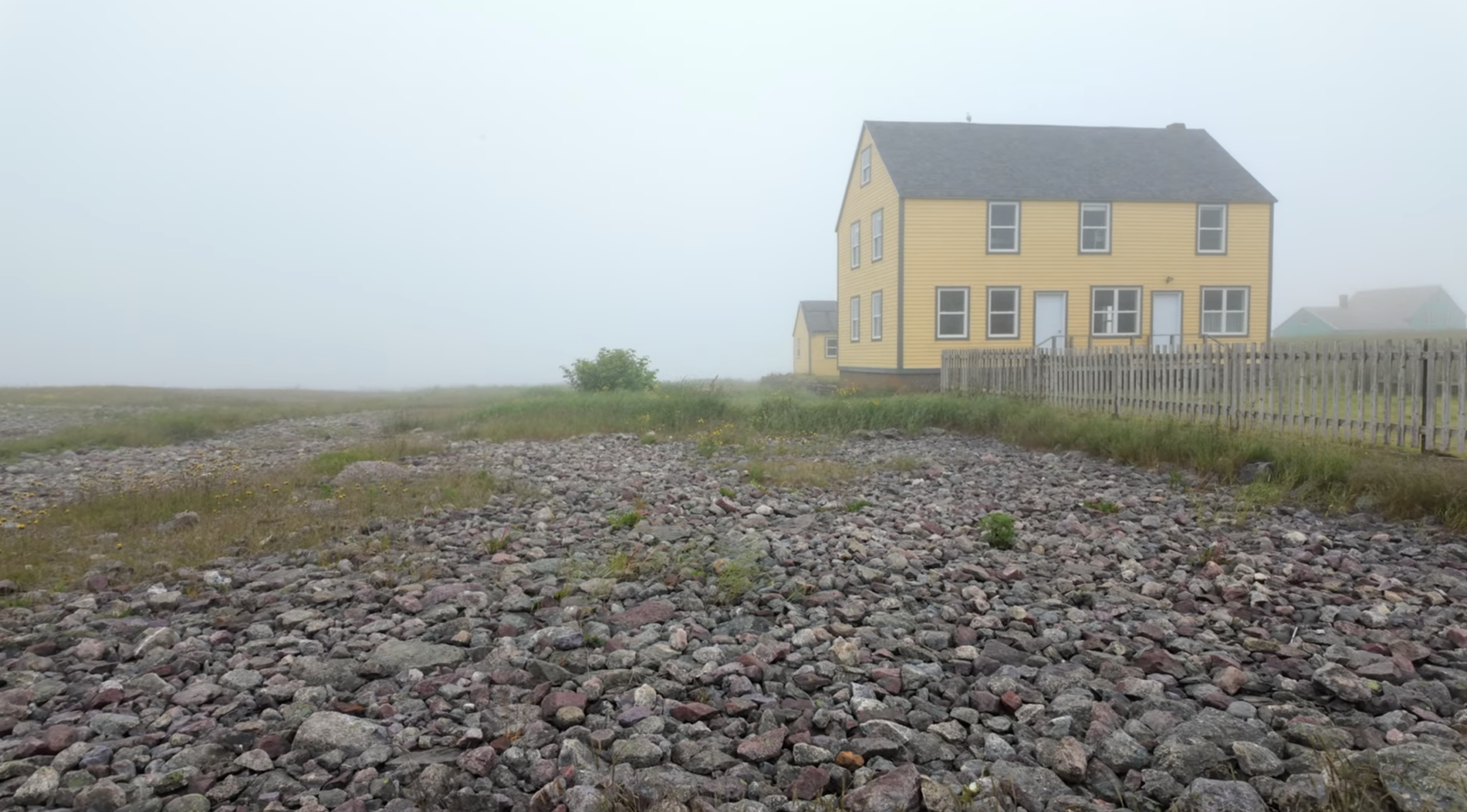
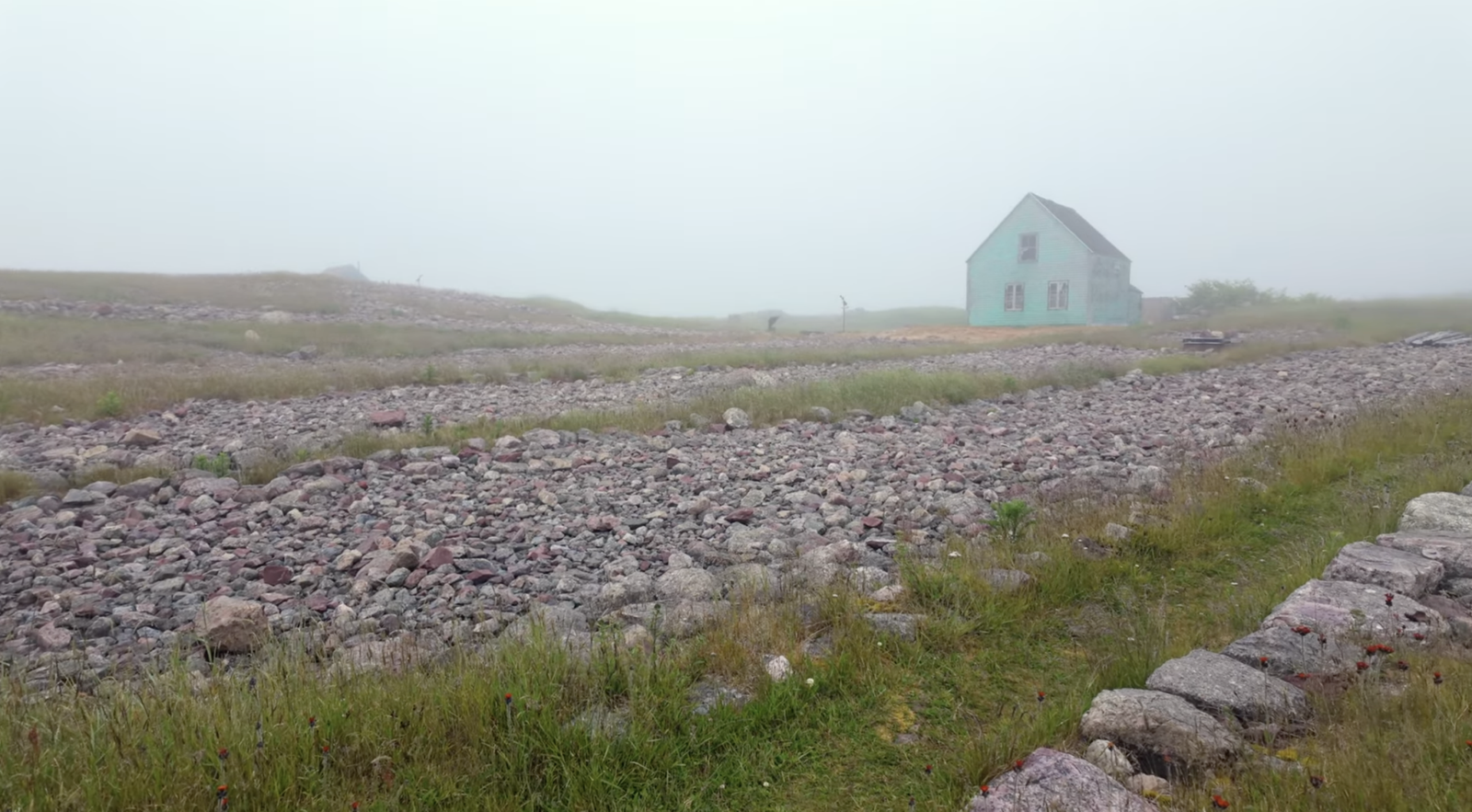
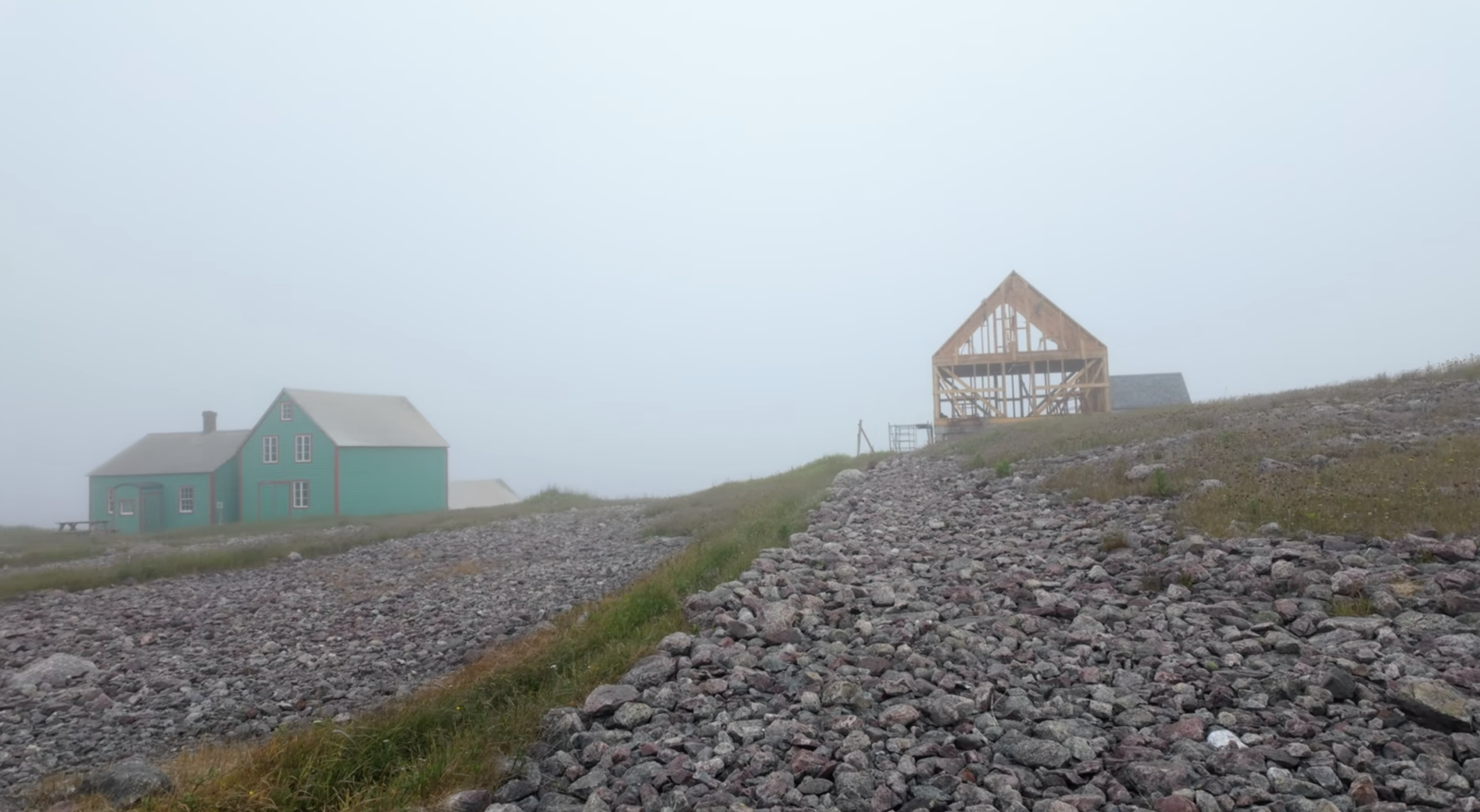
One of the most interesting features of the island is its gravel-covered shoreline. At first glance, the stones look like ordinary rocks, but historically, these gravel fields were the island’s economic engine. Hundreds of cod fish were laid out across the stones to dry before being exported. The process relied on two natural elements- the gravel stones absorbed moisture, and strong coastal winds helped dry the fish. Drying cod could take up to eight sunny days. Unfortunately, there was always a lingering risk. If thick fog rolled in- which it often did- weeks of work could be ruined.
Life on the Island: Harsh Winters and Isolation
Living on Île aux Marins was never easy. Winters were long, cold, and incredibly isolating. For many years, the island had no electricity and no running water, and the surrounding Atlantic waters could be dangerous during storms. Yet families stayed for generations, with their lives revolving around fishing, community, and survival in a harsh but beautiful environment.
The Historic Wash House on the Hill
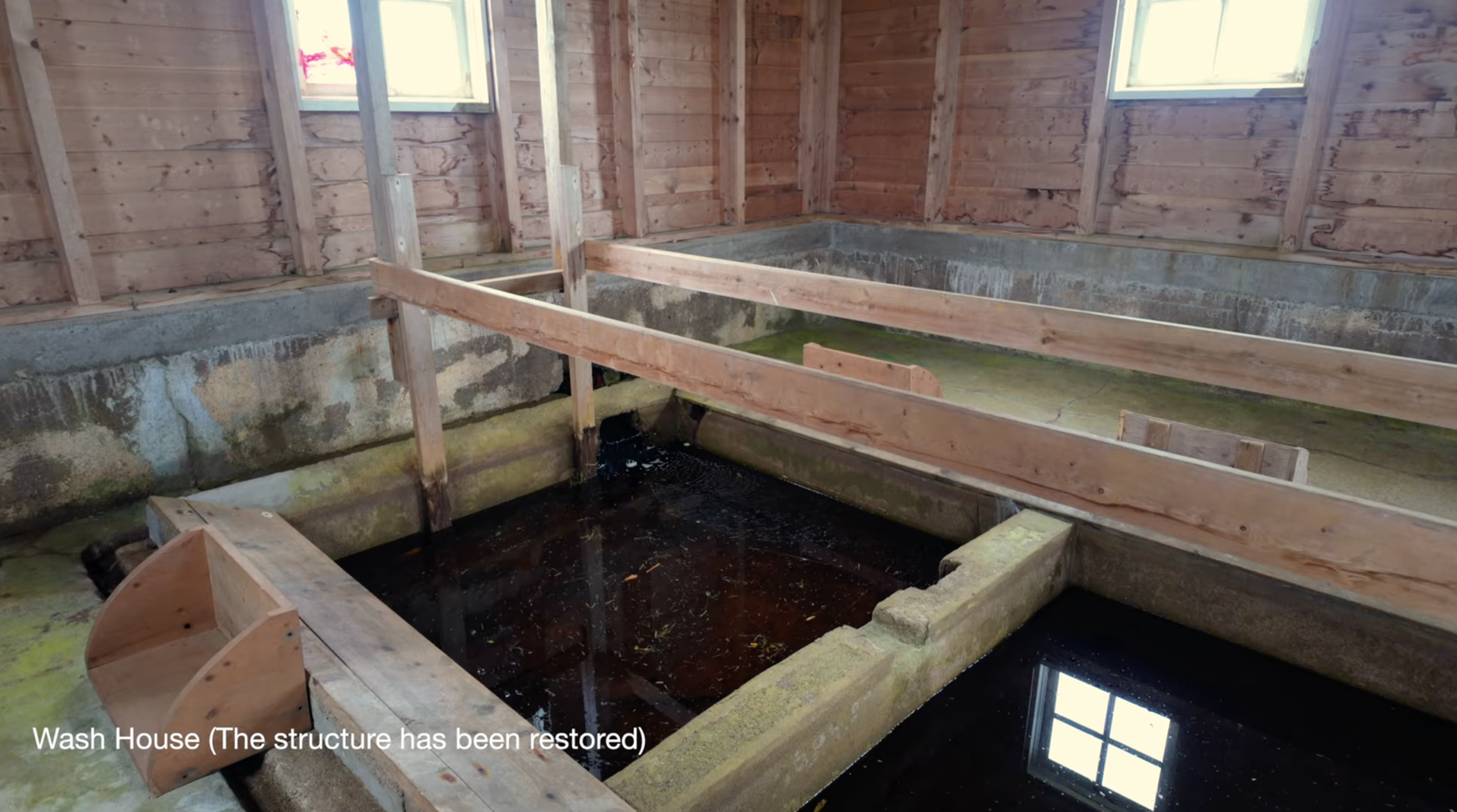
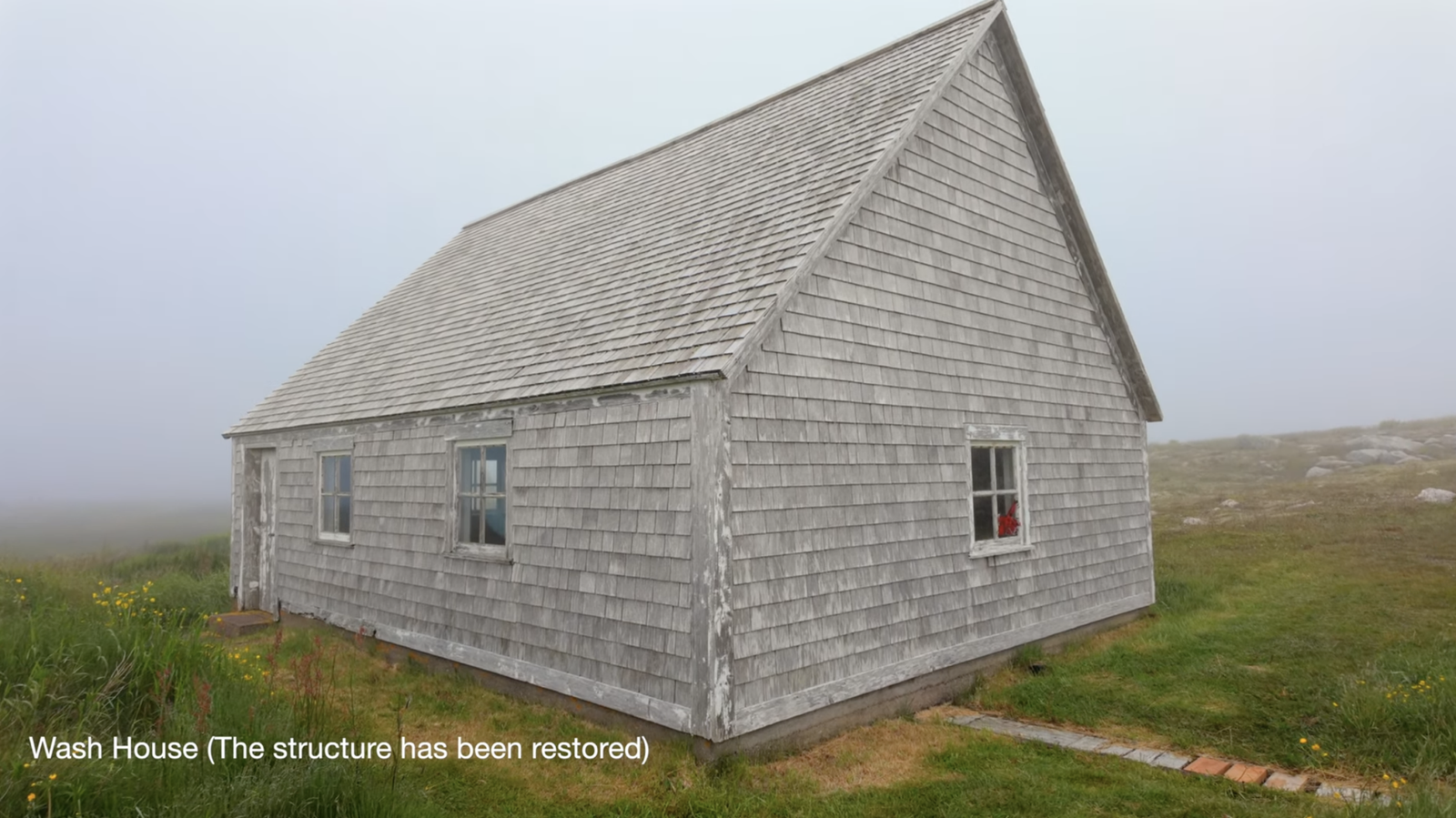
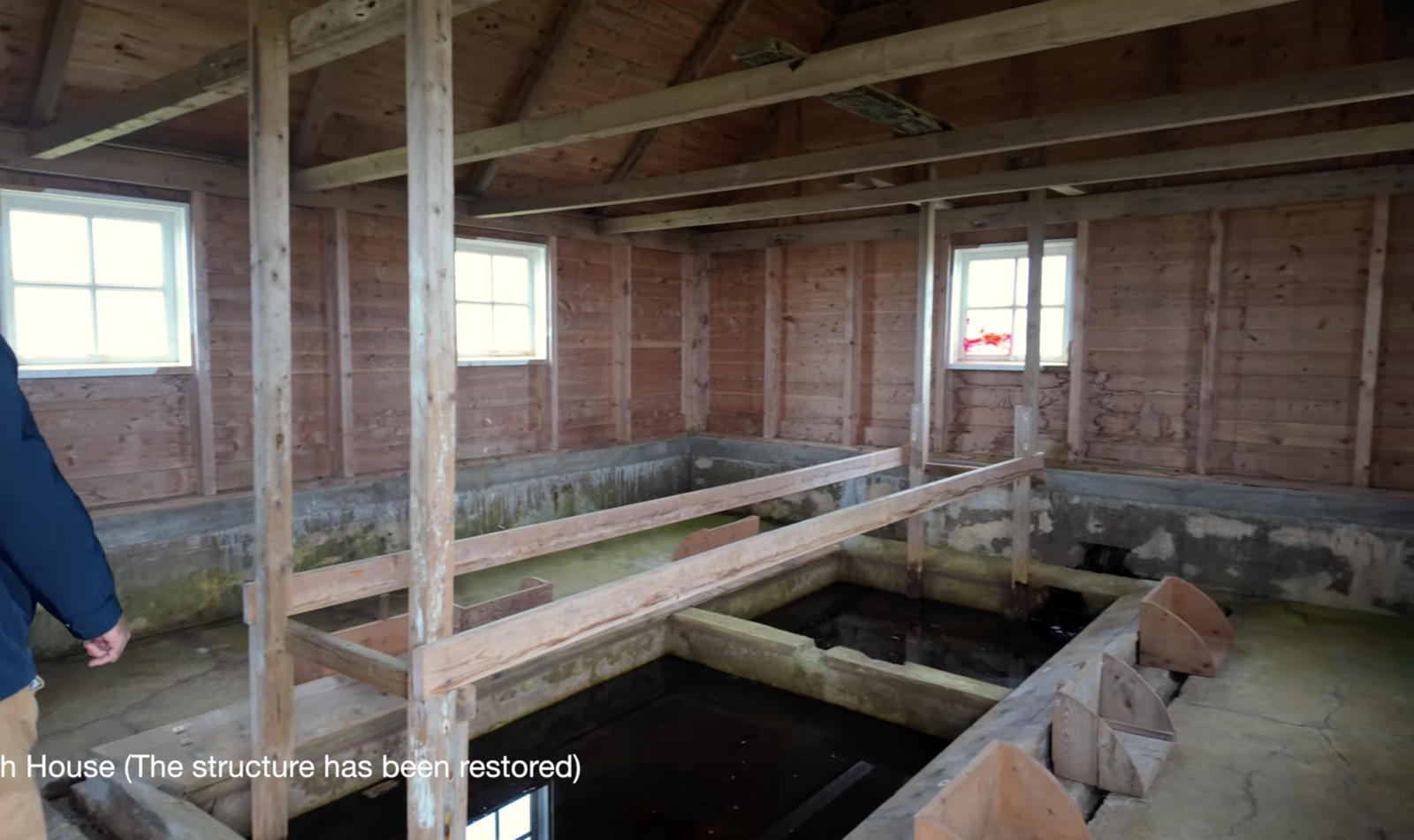
One of the most fascinating buildings on the island is the wash house, built in 1817. Before this building existed, women had to row across rough seas to the neighboring island of Saint Pierre just to wash their laundry. Imagine doing that during the winter! Any complaint I make about doing my own laundry at home now sounds completely unreasonable.
The wash house changed everything. It became more than just a place to clean clothes, it was also a social gathering place, where women shared news, stories, and everyday conversations. Today, the structure has been carefully restored, offering visitors a glimpse into daily life on the island.
The Cemetery
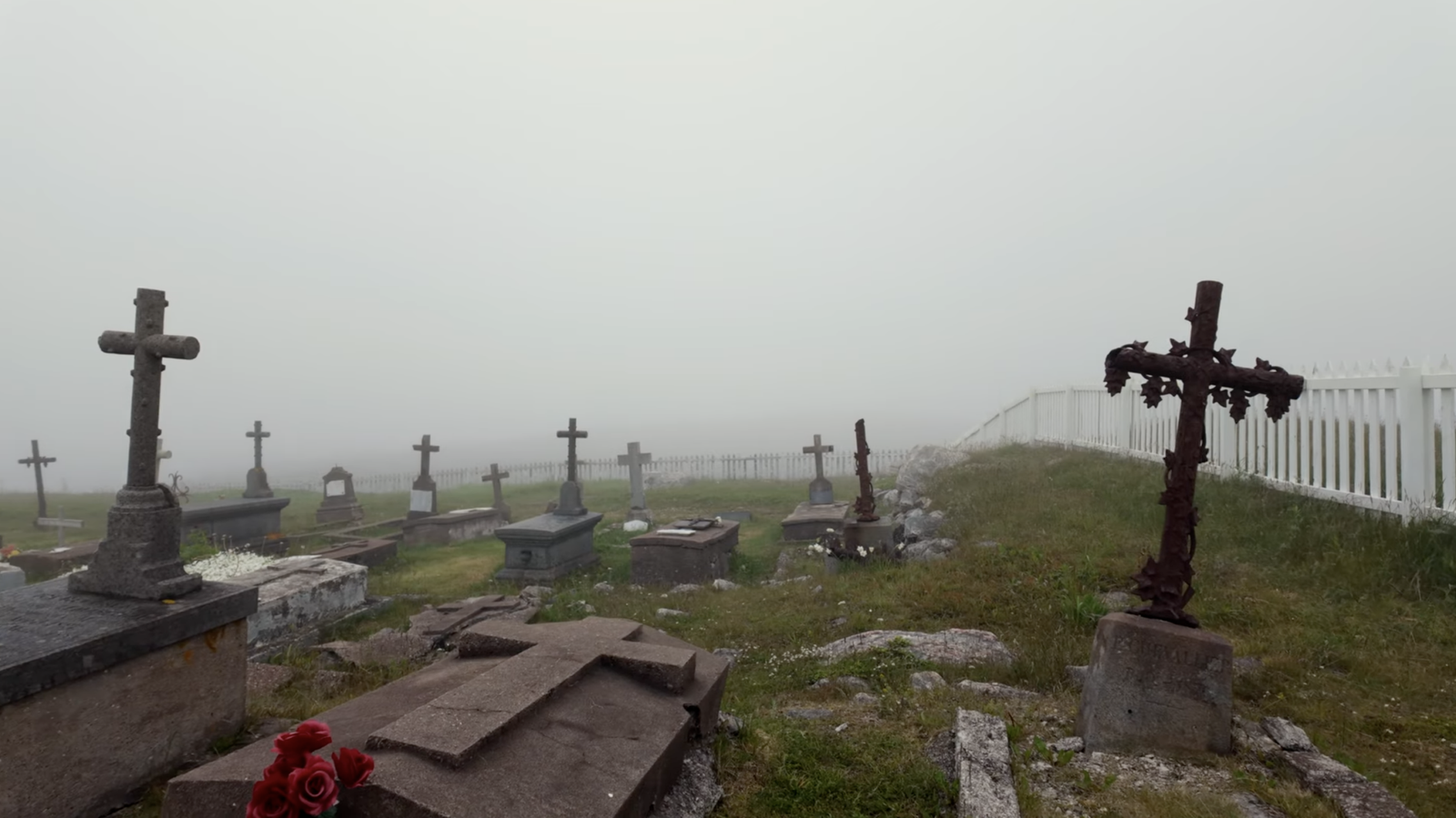
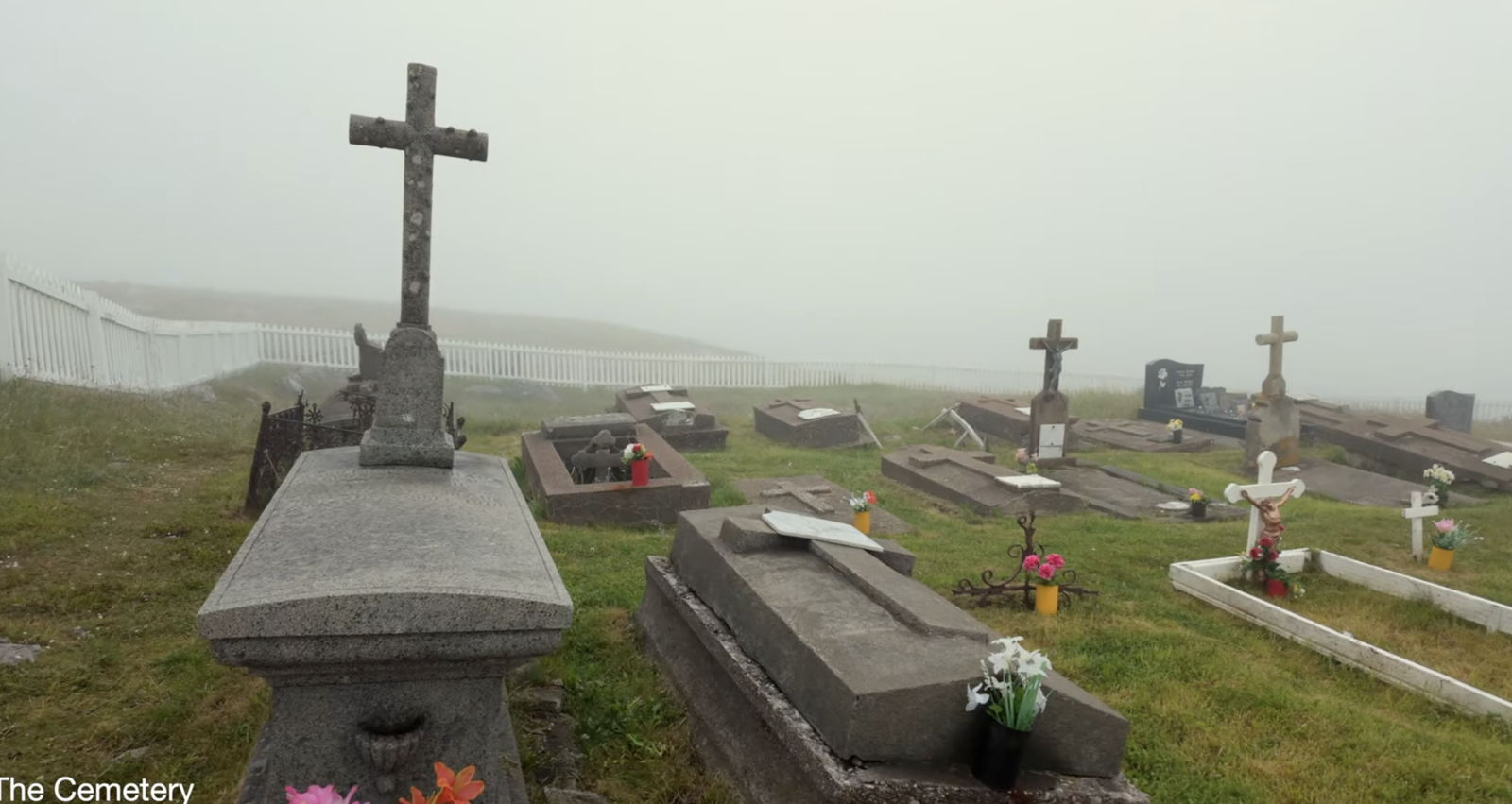
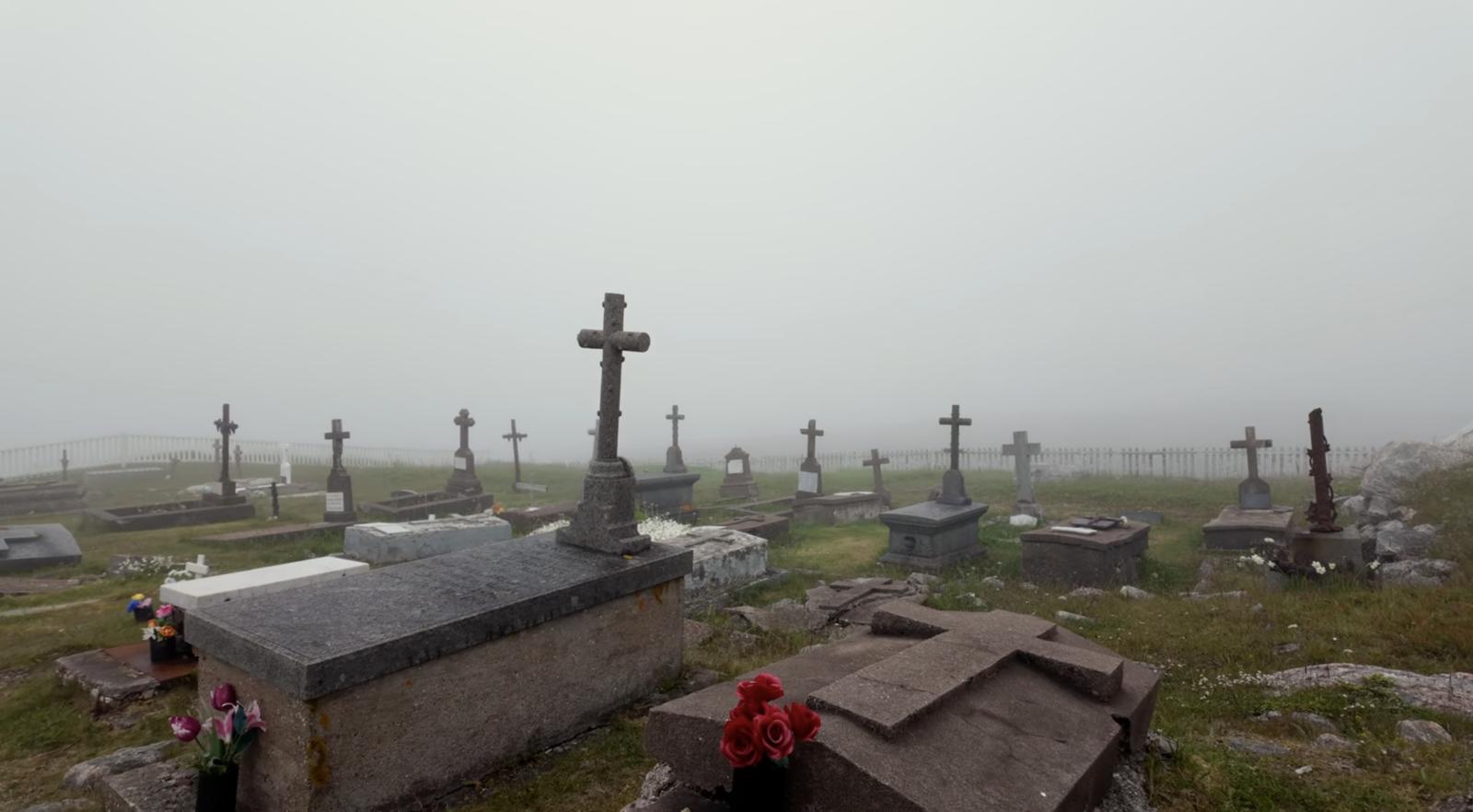
Walking through the island’s cemetery in the thick fog can be a powerful experience. Many graves belong to fishermen and sailors who lost their lives at sea. Before the cemetery was built, families would transport the deceased by traditional dory boat to Saint-Pierre for burial. The cemetery now serves as a quiet tribute to the generations who endured the harsh realities of life on the island.
The World War II Memorial
Île aux Marins also has connections beyond fishing. A World War II memorial honours local sailors and residents who contributed to the war effort. It stands as a reminder that even this small island played a role in global events.
The Church of Notre Dame des Marins
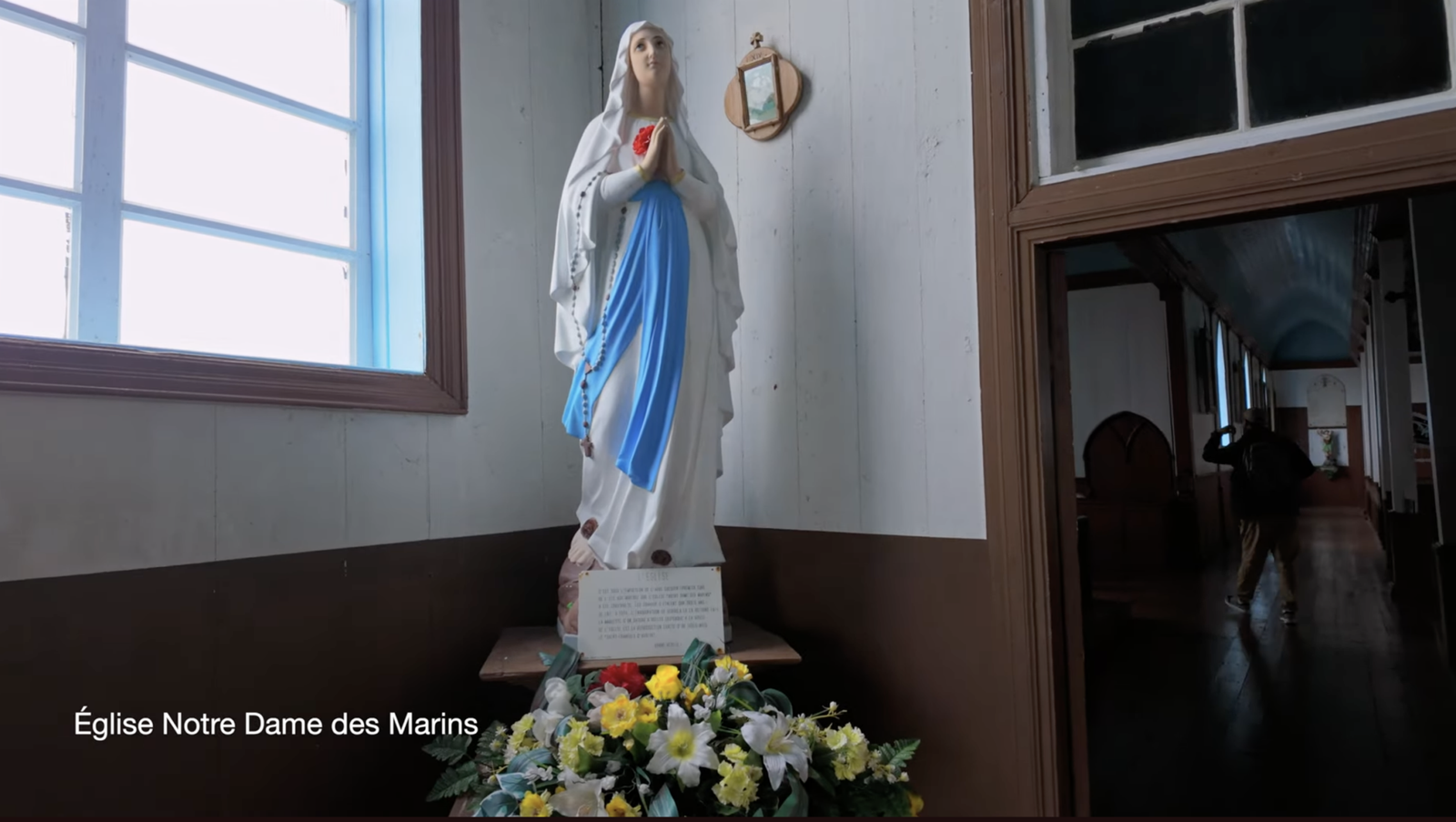
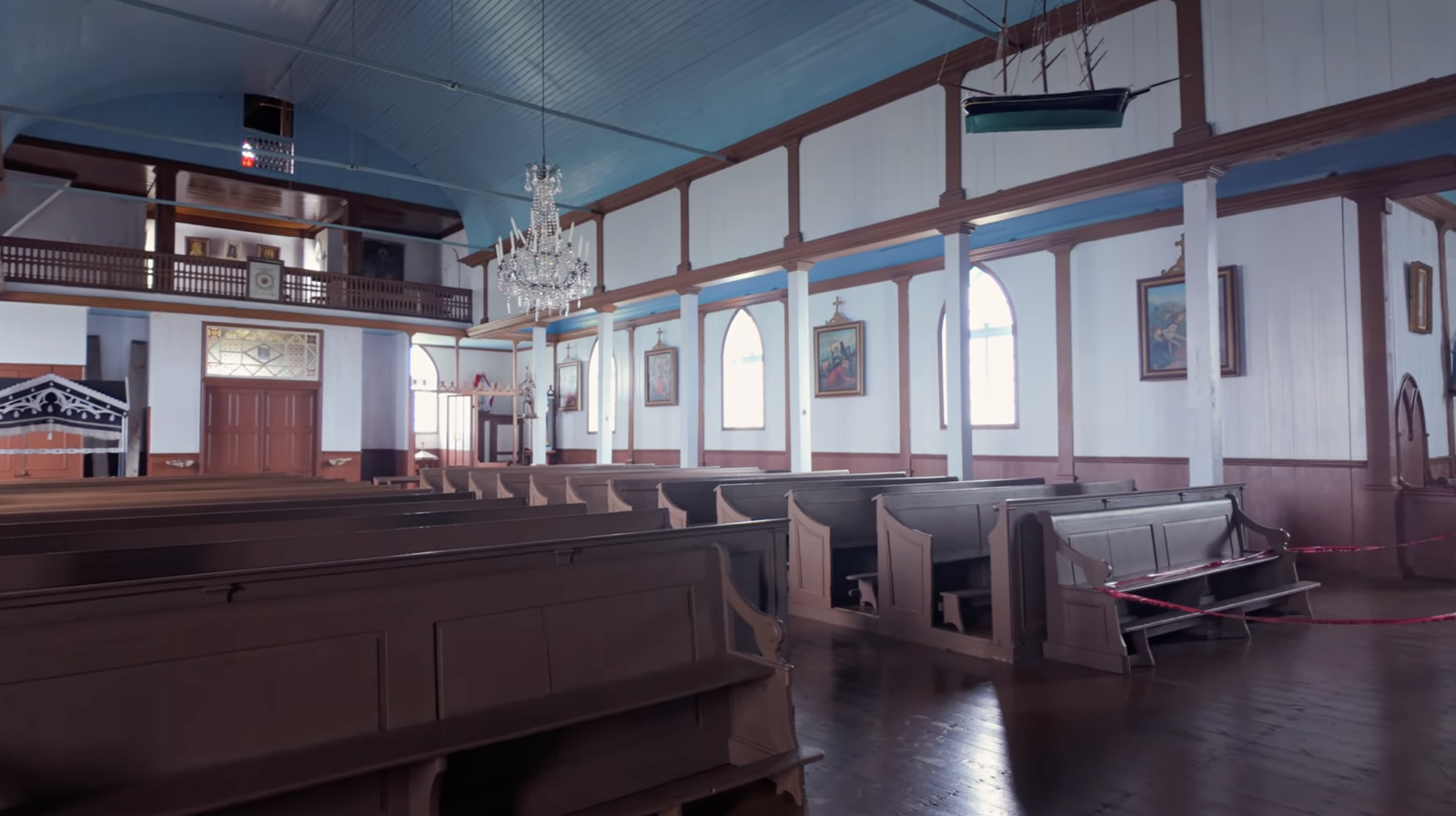
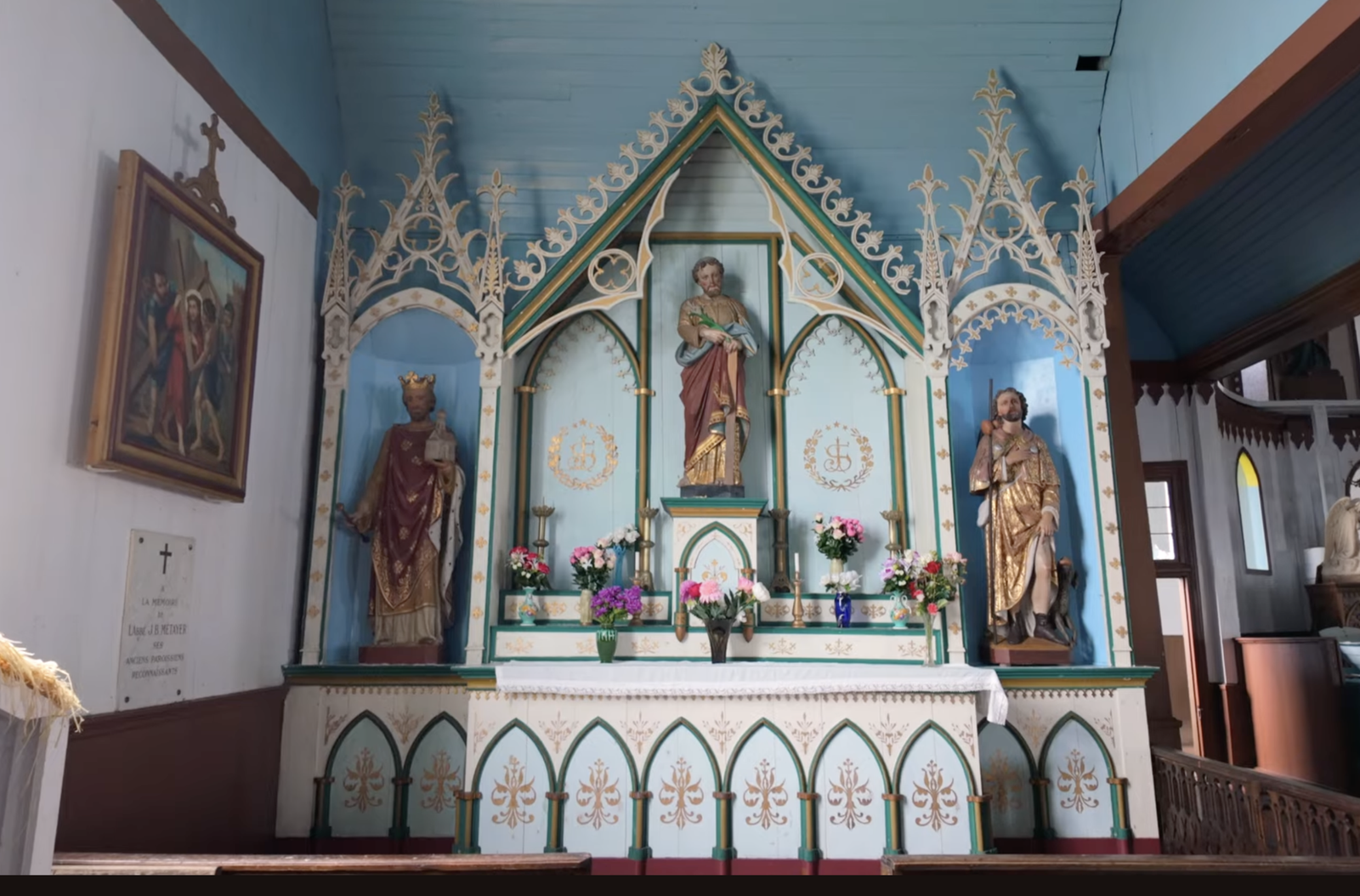
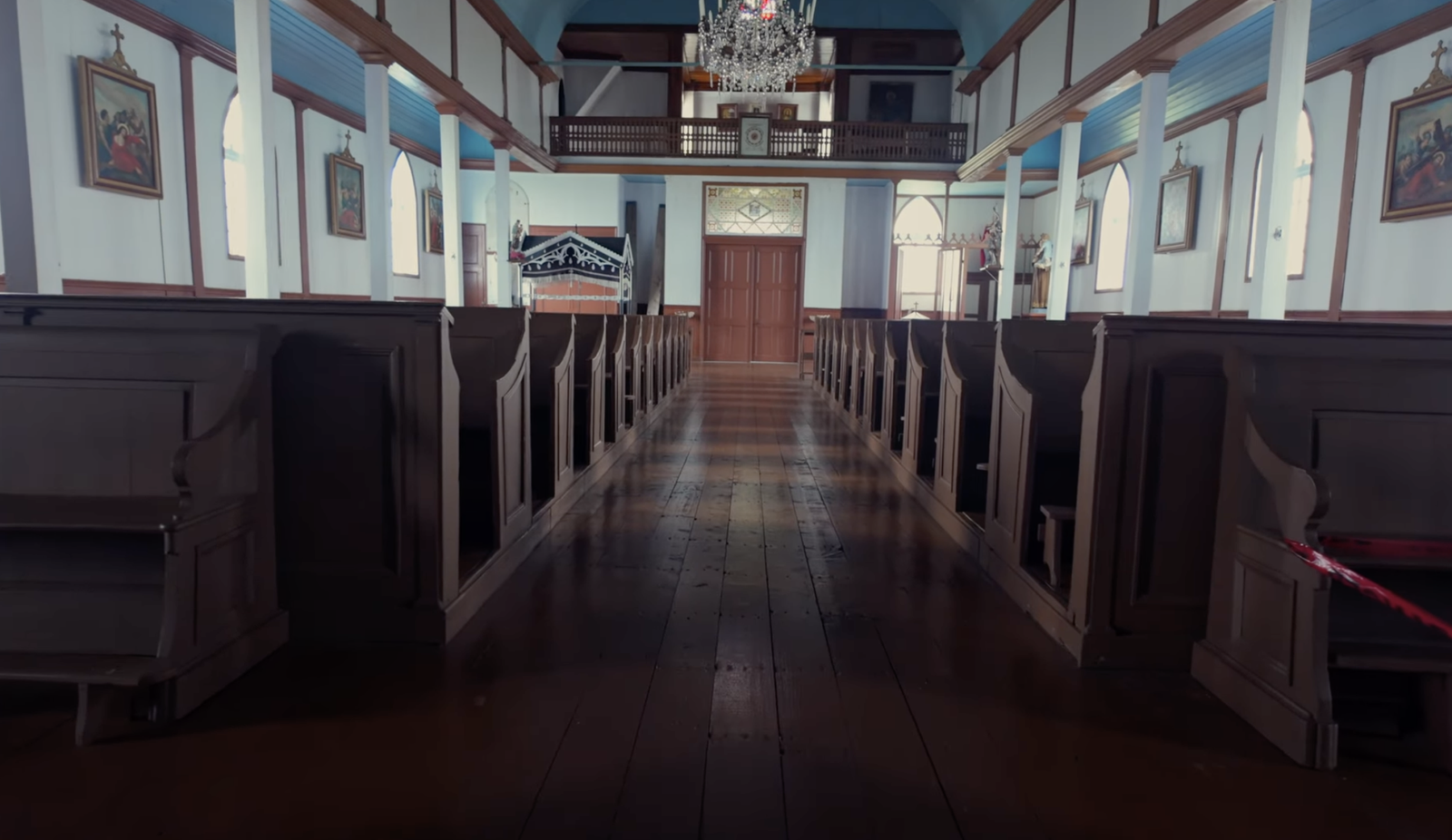
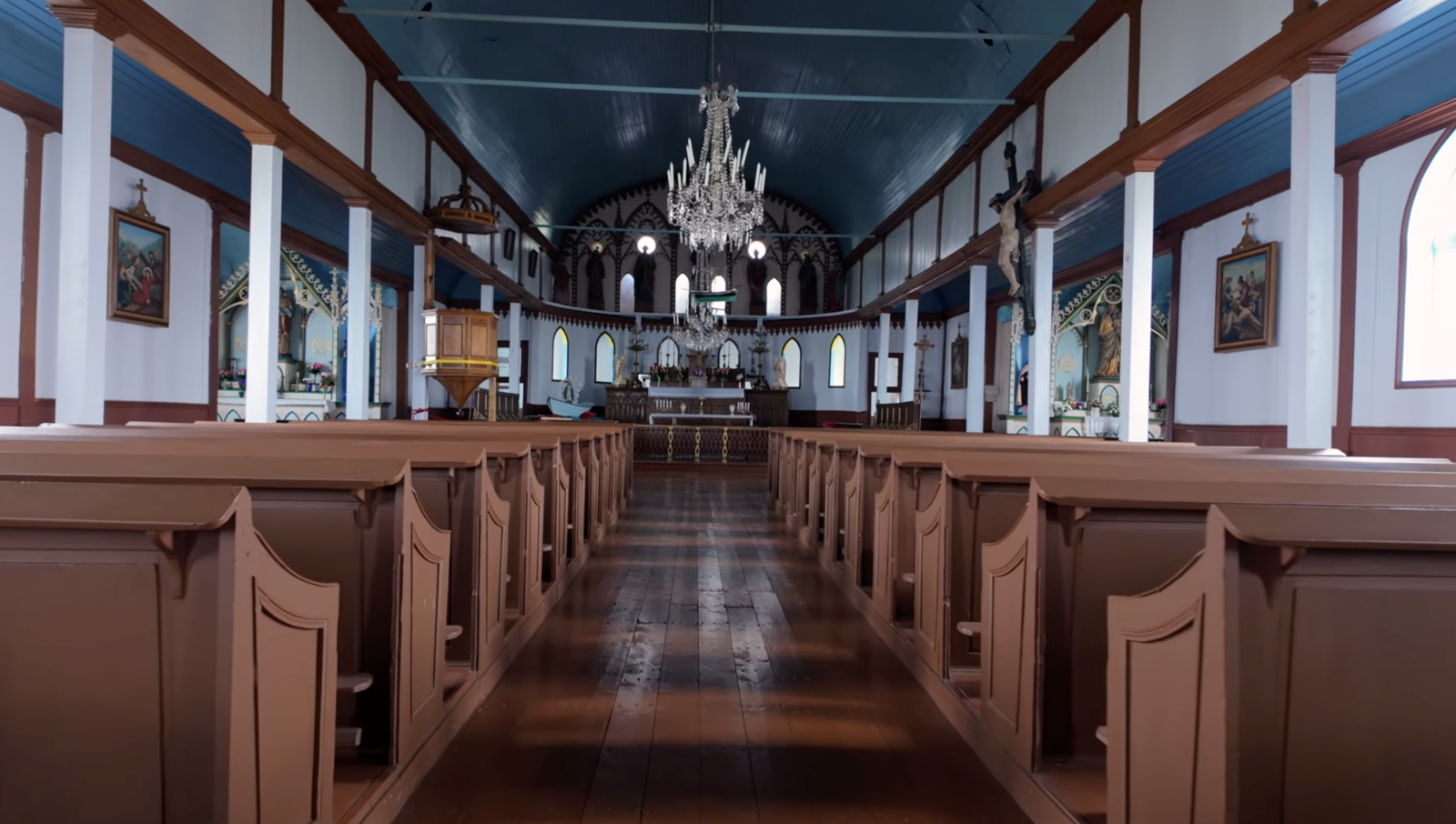
One of the island’s most striking landmarks is Église Notre Dame des Marins. The church was built between 1872 and 1874. The exterior has been restored, but the interior remains largely untouched. What makes the church especially unique is its construction. Every piece of wood used in the building including the pews, beams, and altar was shipped from Halifax. Because the island has no trees! The strong Atlantic winds prevent tall vegetation from growing here.
The Former School and Archipelitude Museum
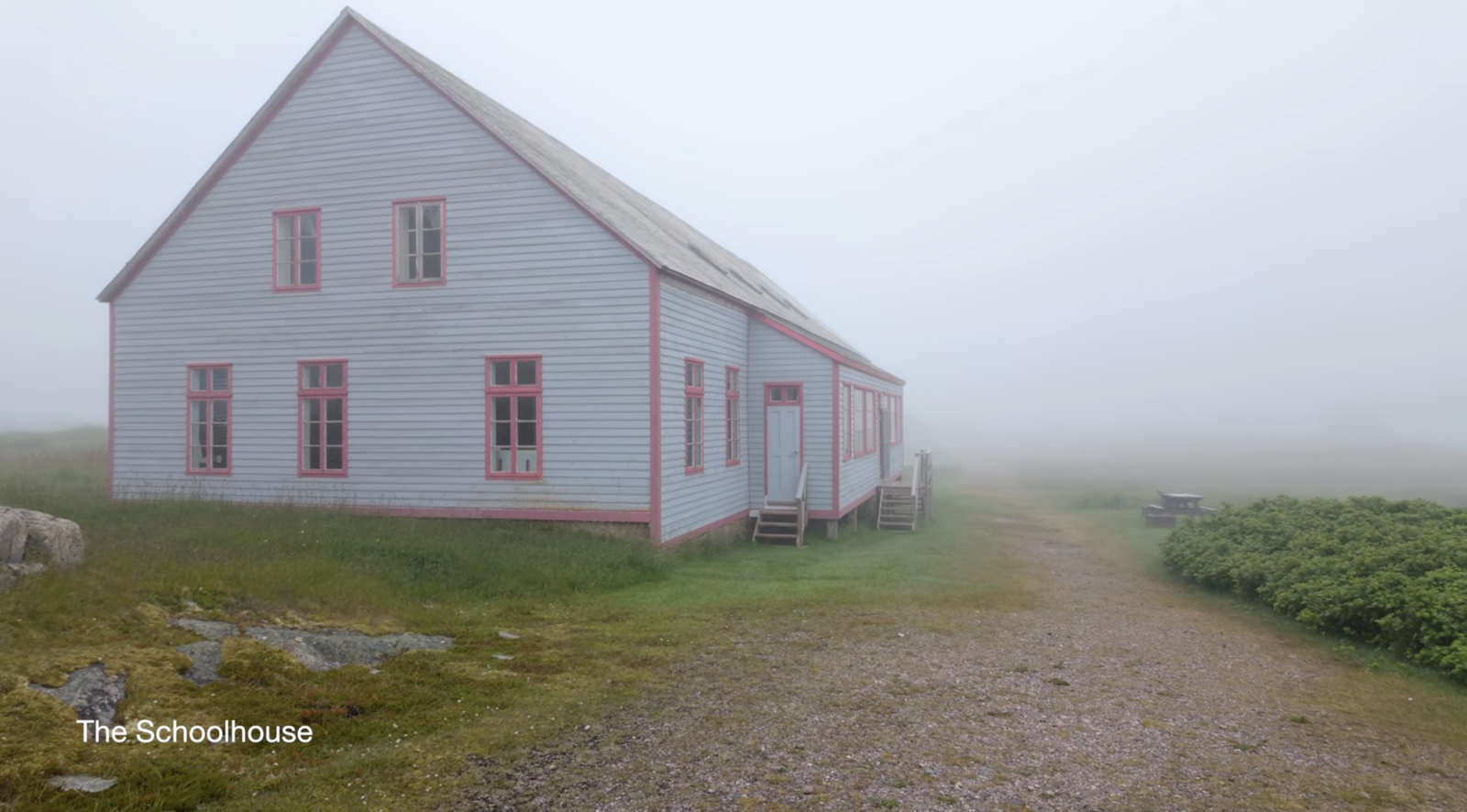
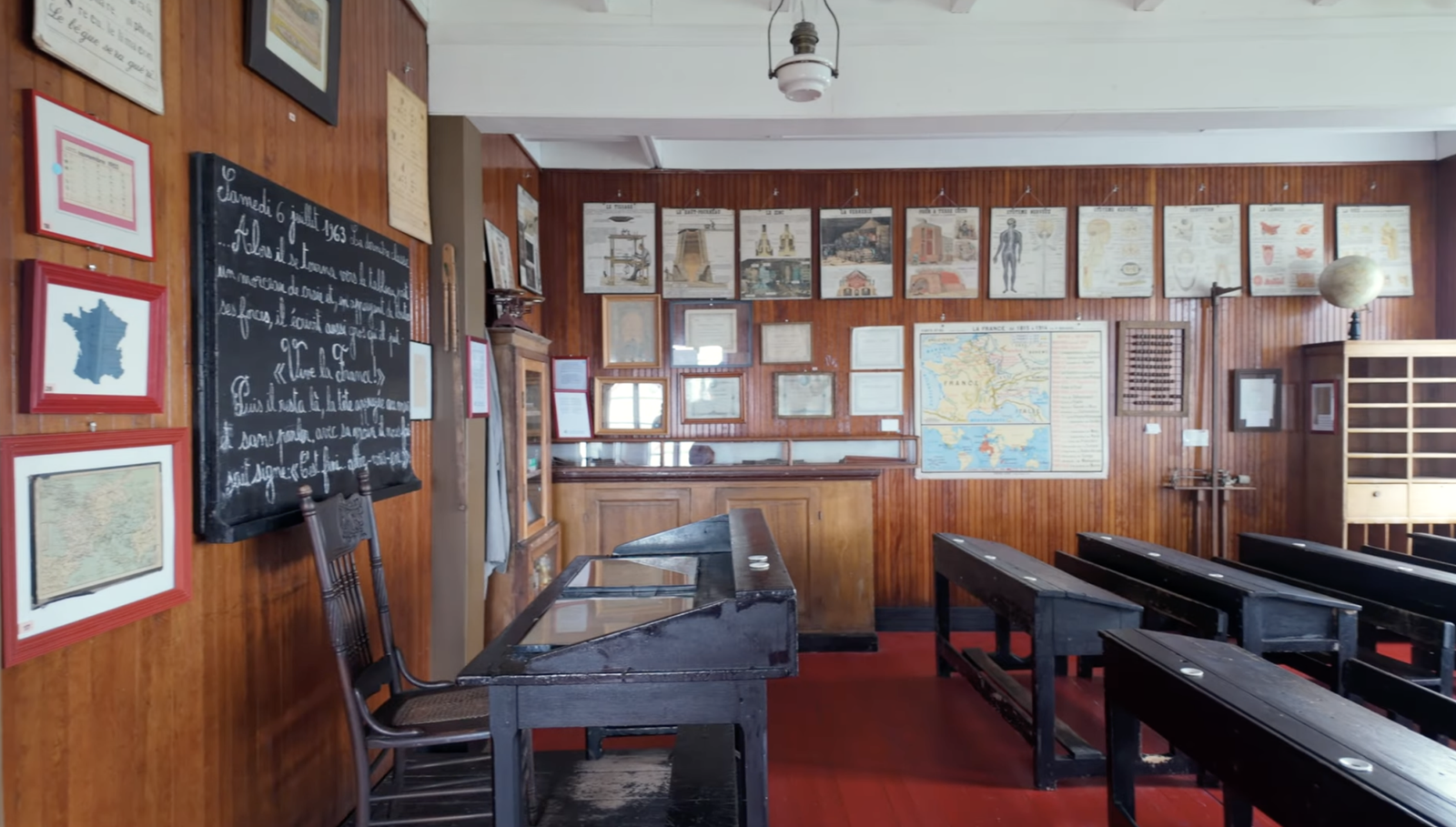
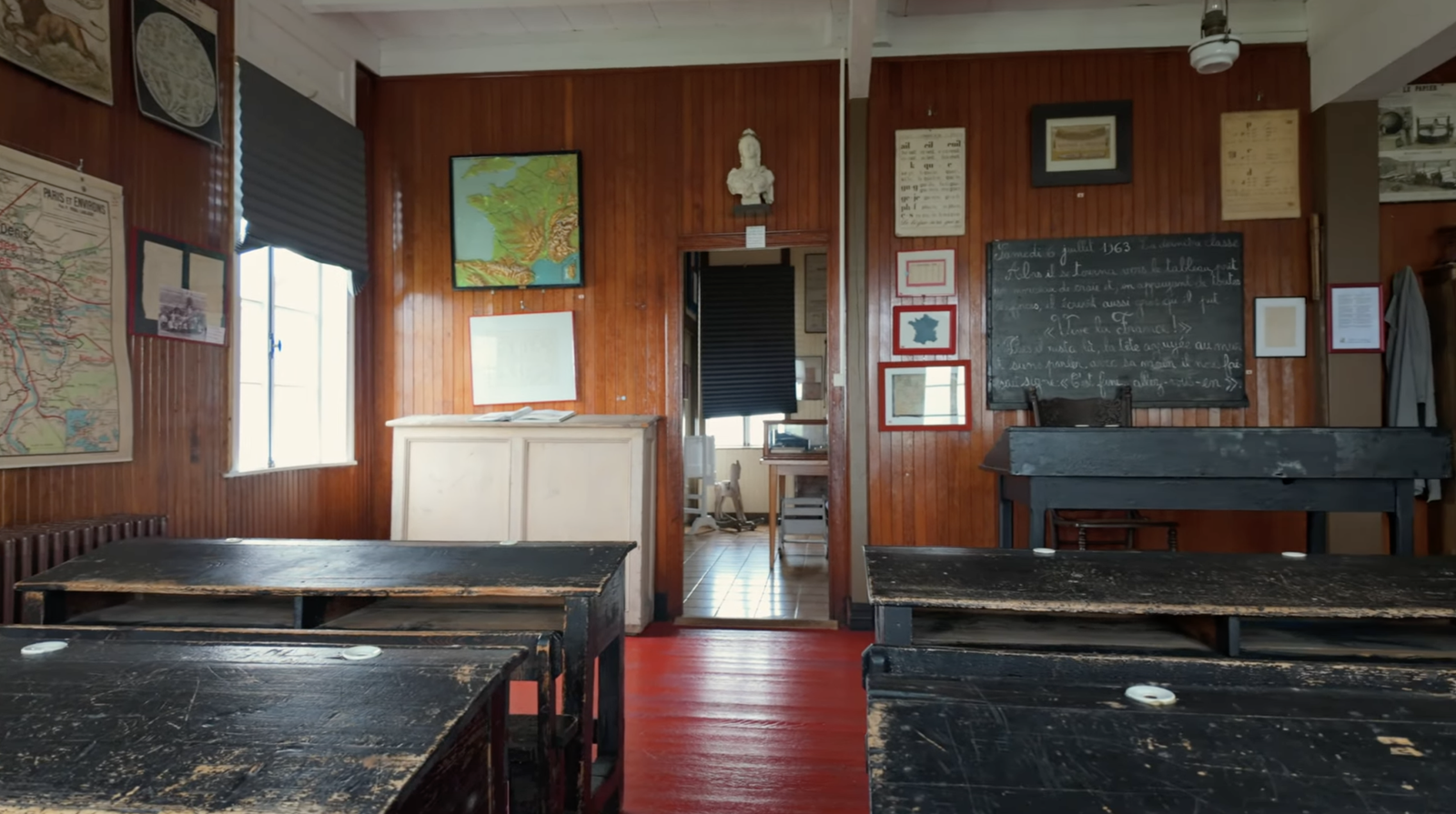
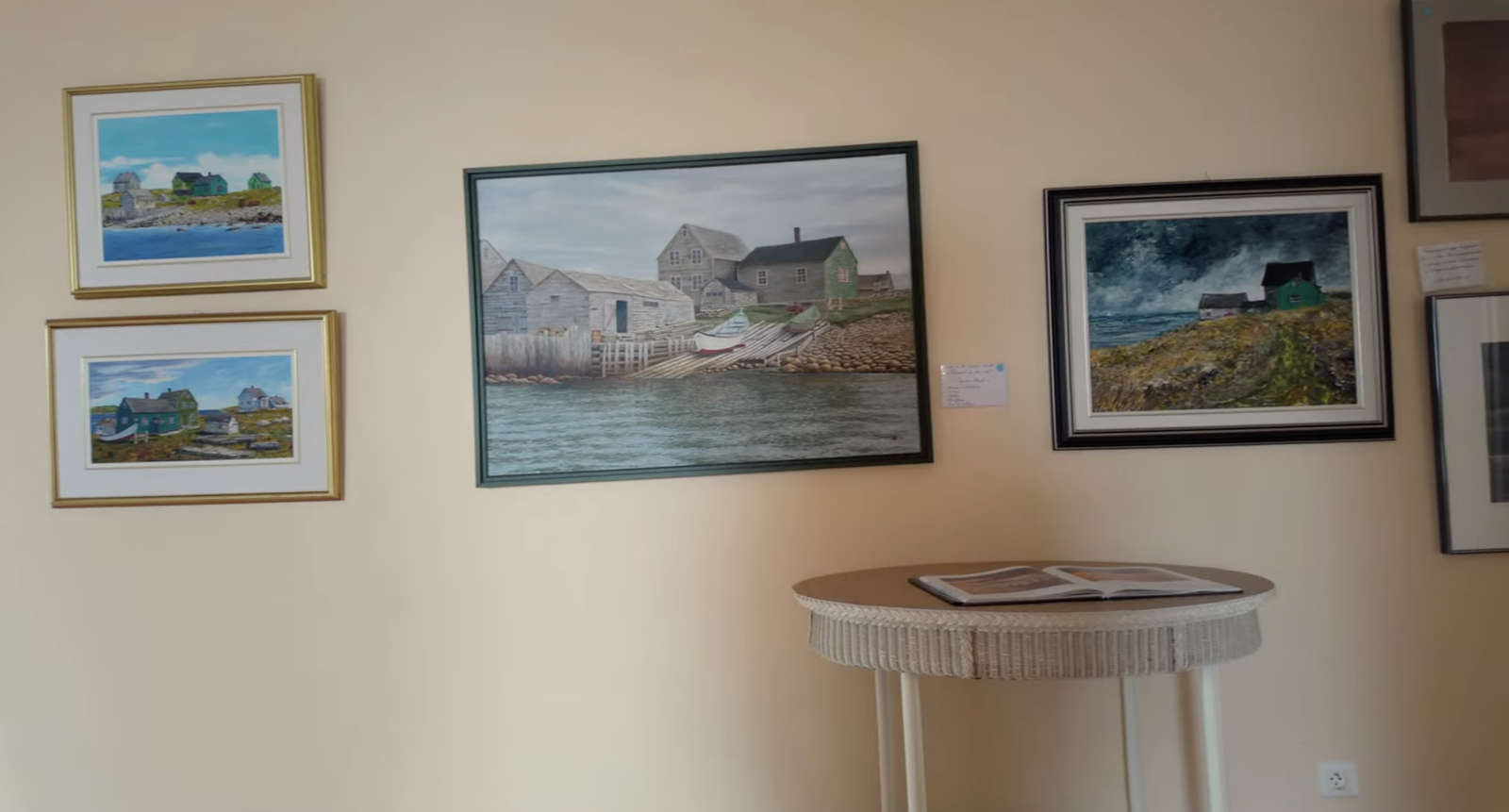
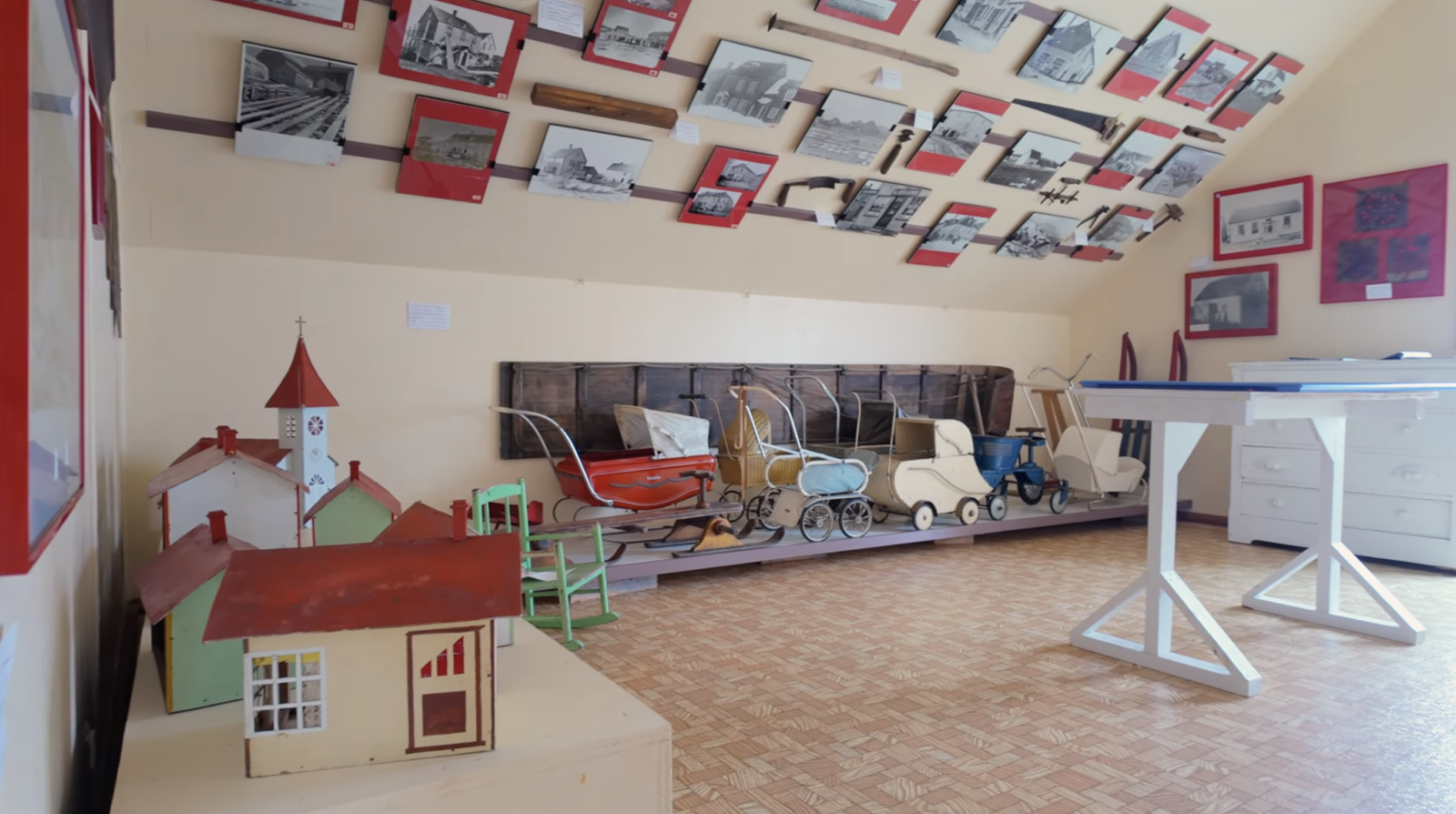
Another fascinating building on the island is the former school, which opened in 1863. The school operated for exactly 100 years, closing in 1963. Inside, many of the classrooms have been preserved exactly as they were. Desks remain arranged neatly in rows, and in some places, you can still see chalk marks on the blackboards. It almost feels as though the students simply stepped outside for lunch and never returned. Today, the building serves as the Archipelitude Museum, displaying artifacts from the island’s fishing past and remnants from shipwrecks found in the surrounding waters.
What Île aux Marins Is Like Today
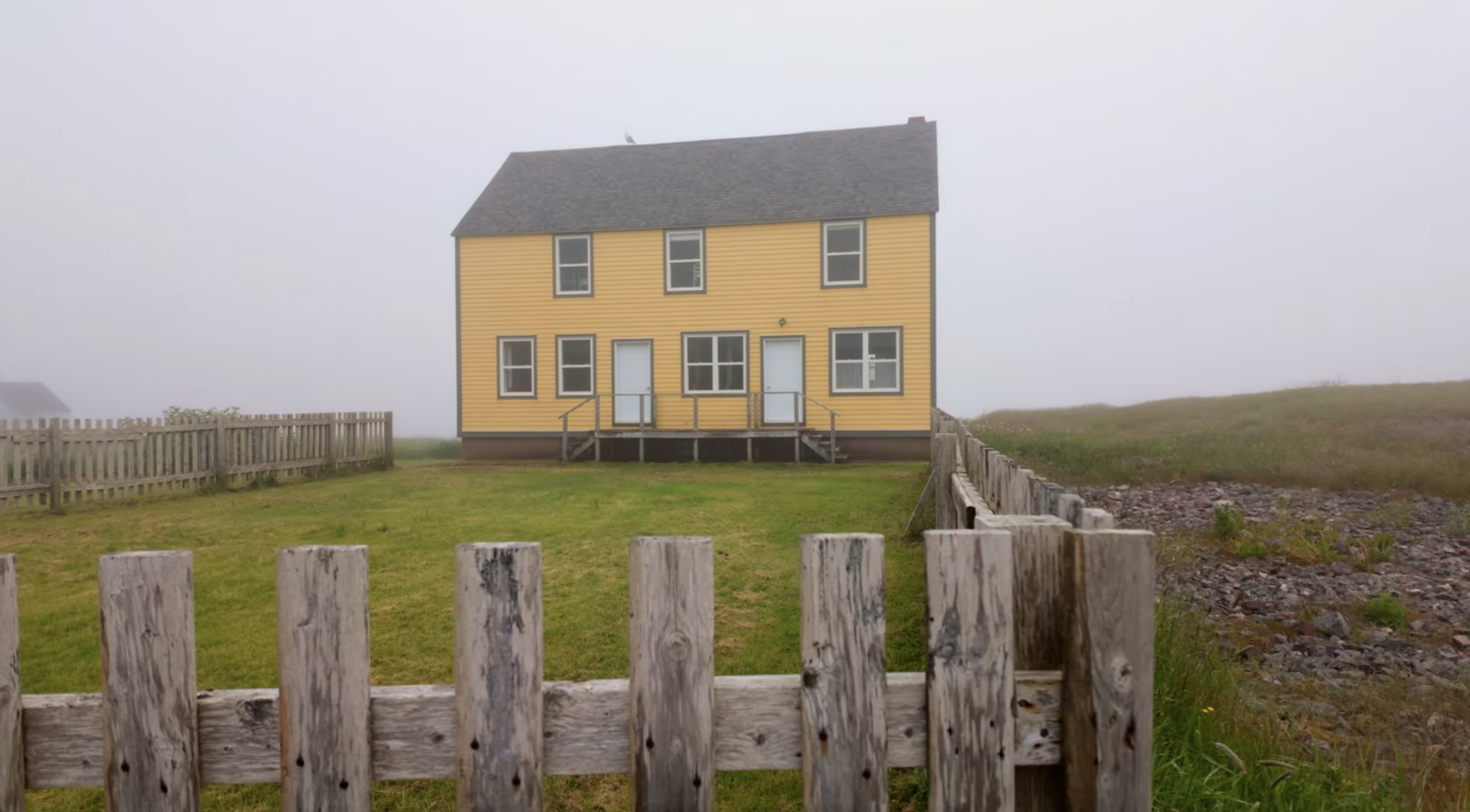
Today, no one lives on the island permanently. A few houses have been restored and used as summer cottages, mostly by people from Saint-Pierre who want a quiet escape. There is still no running water or electricity, and the island remains largely untouched by modern development.
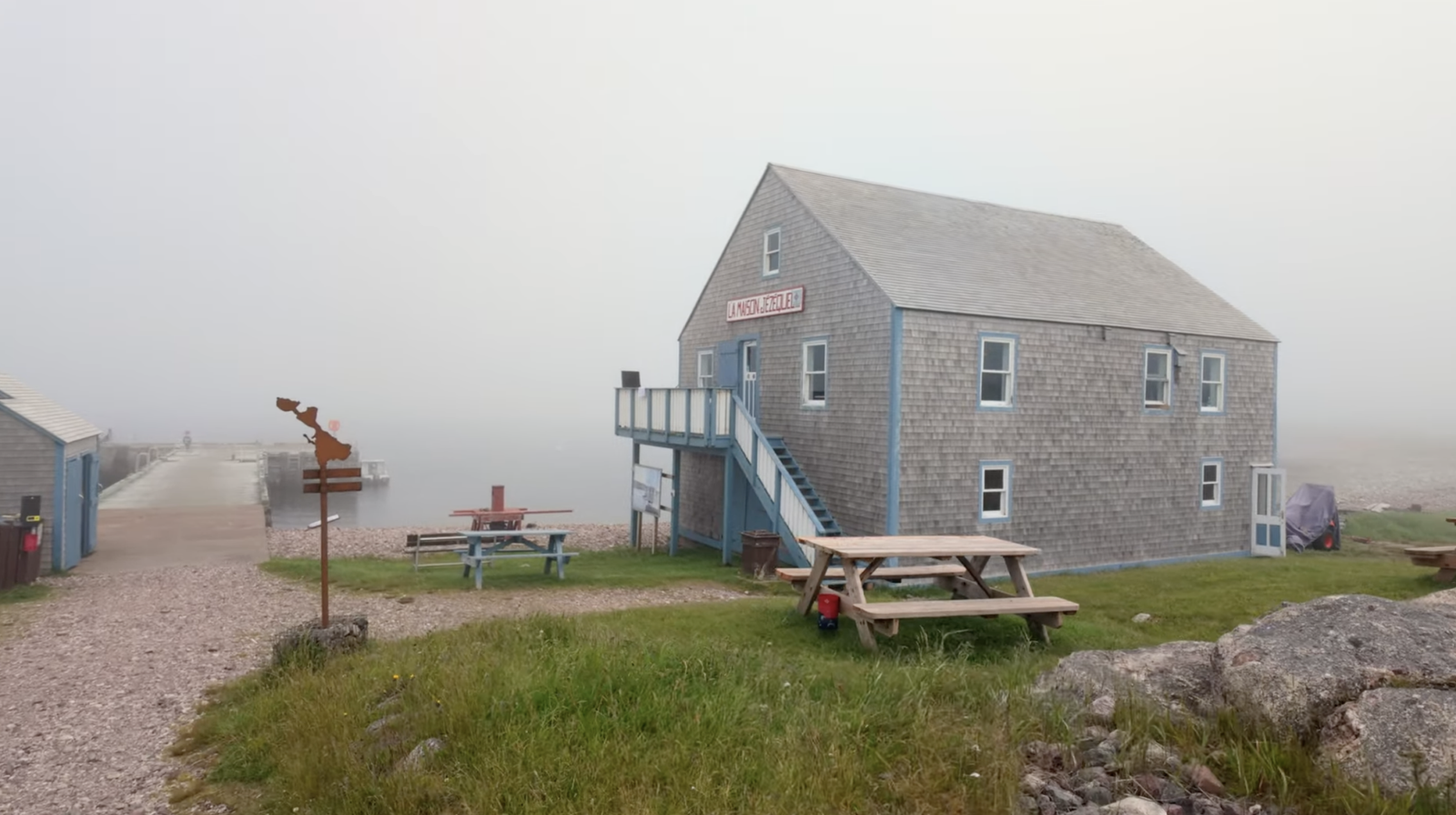
It’s difficult to describe how this island feels. Part of it feels sad; an entire community that once thrived here is gone. Another part feels incredibly beautiful. The quiet streets, historic buildings, and foggy coastline create a powerful reminder of how people once lived here. If you find yourself in Saint Pierre and Miquelon, this haunting little island is absolutely worth the short boat ride.